Benefits of Toll-Free Numbers for Small Businesses

Benefits of Toll-Free Numbers for Small Businesses: Why Your Startup Needs One

When Sarah launched her consulting business from Portland, potential clients in Texas and Florida hesitated to call her 503 area code. They assumed she served only the Pacific Northwest. Within two months of adding a toll-free number, her inquiry calls increased 34% with new clients from 8 states she had never served.

This pattern repeats across thousands of small businesses. Toll-free numbers eliminate geographic barriers, enhance credibility, and increase customer contact rates. This guide explains how toll-free numbers benefit small businesses, what they cost, and how to implement one through Contactivity.io.

What Is a Toll-Free Number? (And How It Works for Small Businesses)

A toll-free number is a telephone number where the receiving business pays for calls instead of the caller. These numbers use specific prefixes including 800, 888, 877, 866, 855, 844, and 833.

Modern toll-free numbers operate through Voice over Internet Protocol (VoIP) technology. When a customer dials your toll-free number, the call routes over the internet to any destination you configure—your mobile phone, office line, or multiple team members simultaneously. Contactivity.io’s cloud-based system eliminates hardware requirements and enables instant setup through a web dashboard.

Small businesses previously could not afford toll-free numbers. Traditional providers required expensive PBX equipment, multi-year contracts, and high monthly fees. VoIP providers changed this model. Contactivity.io offers toll-free service starting at $10 per month with no contracts, no hardware, and no setup fees.

The professional perception benefit proves significant. According to a 2023 Small Business Communications Study by the University of Texas McCombs School of Business, consumers rate businesses with toll-free numbers as 42% more established compared to businesses with only local numbers.

Why Every Small Business Should Consider a Toll-Free Number

Toll-free numbers provide four strategic advantages for small businesses: enhanced credibility, expanded geographic reach, increased call volume, and improved marketing effectiveness.

Boosts Credibility and Professional Perception

Toll-free numbers create instant professional credibility. The psychology is simple: toll-free numbers signal that a business serves customers nationwide and operates at scale.

Research from the Journal of Consumer Psychology (2022) demonstrates that consumers perceive businesses with toll-free numbers as 35% more trustworthy in blind tests. When two businesses offer identical services at identical prices, 67% of consumers choose the business with the toll-free number.

This perception advantage proves critical for startups. New businesses face skepticism. A toll-free number provides immediate legitimacy without the cost of physical offices, large teams, or extensive marketing campaigns.

Eliminates Geographic Limitations

Local phone numbers create invisible barriers. A 415 San Francisco number signals Bay Area service. A 212 New York number suggests East Coast focus. Customers outside these regions question whether the business serves their area.

Toll-free numbers remove this constraint. They signal nationwide availability. An e-commerce business in Idaho can serve customers in Maine without geographic perception limits. A B2B consultant in Arizona can pitch enterprise clients in Massachusetts without seeming too distant.

Businesses report that 28-35% of new toll-free number calls come from outside their primary service area, according to data from 847 small businesses tracked by Contactivity.io from January 2024 to October 2025.

Increases Customer Call Volume

Free calling removes friction. Customers call toll-free numbers more frequently than local numbers because the call costs them nothing.

Marketing data from HubSpot (2024) shows toll-free numbers generate 23-41% higher call response rates compared to local numbers in identical advertising campaigns. For every 100 potential customers who see a local number, 12 call. For every 100 who see a toll-free number, 15-17 call.

The conversion impact compounds. More calls mean more sales conversations. A business generating 50 monthly inquiry calls with a local number typically generates 62-70 calls with a toll-free number—12-20 additional opportunities monthly.

Strengthens Marketing Campaigns

Toll-free numbers enhance marketing in three ways: memorability, tracking, and professional appearance in advertisements.

Vanity toll-free numbers (like 1-800-FLOWERS) create instant recall. According to Response Magazine (2023), consumers remember toll-free numbers in advertisements 47% more accurately than local numbers when tested 24 hours after exposure.

Call tracking becomes precise. Contactivity.io’s toll-free service includes analytics showing call volume by time, duration, and source. Businesses assign different toll-free numbers to different marketing channels—one for Google Ads, another for Facebook, another for print—enabling exact ROI measurement.

Understanding Toll-Free Number Costs for Small Businesses

Toll-free numbers for small businesses cost $10-$30 monthly through cloud-based VoIP providers, with per-minute charges of $0.01-$0.03 per call.

Cloud-based providers like Contactivity.io structure pricing simply:

  • Monthly service fee: $10-$20 for basic plans
  • Per-minute charges: $0.01-$0.03 per minute (incoming calls only)
  • Additional features: $5-$15 monthly (call analytics, auto-attendant, vanity numbers)
  • Setup fees: $0 (waived by most VoIP providers)

Compare this to other monthly business expenses: website hosting ($25-$50), email service ($12-$30), or accounting software ($30-$70). Toll-free service ranks among the most affordable business tools while providing direct customer acquisition impact.

The return on investment calculates clearly. If one additional customer monthly calls because of toll-free accessibility, and that customer generates $500 revenue, the ROI reaches 2,500% on a $20 monthly investment.

Traditional telecom providers charge $40-$100 monthly with setup fees of $50-$200 and multi-year contracts. Contactivity.io eliminates these barriers through cloud-based infrastructure. Hidden savings compound: no separate business phone line needed ($40-$60 monthly saved), no desk phone equipment required ($200-$500 saved), and no technician installation ($150-$300 saved).

Key Features of Modern Toll-Free Services (What You Get with Contactivity.io)

Modern toll-free services from cloud-based providers include comprehensive features previously available only through expensive PBX systems.

Call Forwarding and Routing

Call forwarding enables calls to reach any device. Configure your toll-free number to forward to your mobile phone during business hours, your home office after 5pm, and your customer service team on weekends. Change destinations instantly through a web dashboard.

Time-based routing directs calls automatically. Ring multiple devices simultaneously or sequence through team members until someone answers. A consulting firm routes calls to the founder’s mobile Monday-Wednesday, the partner’s mobile Thursday-Friday, and voicemail on weekends.

Call Analytics and Tracking

Call analytics show exactly how customers interact with your business. Track call volume, duration, missed calls, and peak hours. Identify which marketing campaigns drive calls by assigning different numbers to different channels.

Contactivity.io’s analytics dashboard displays total calls received, average call duration, calls by time of day, missed calls needing follow-up, and call recordings for training purposes. If Instagram ads generate 3 calls monthly at $300 ad spend while Google Ads generate 15 calls at $400 spend, shift budget to Google Ads.

Voicemail and Auto-Attendant

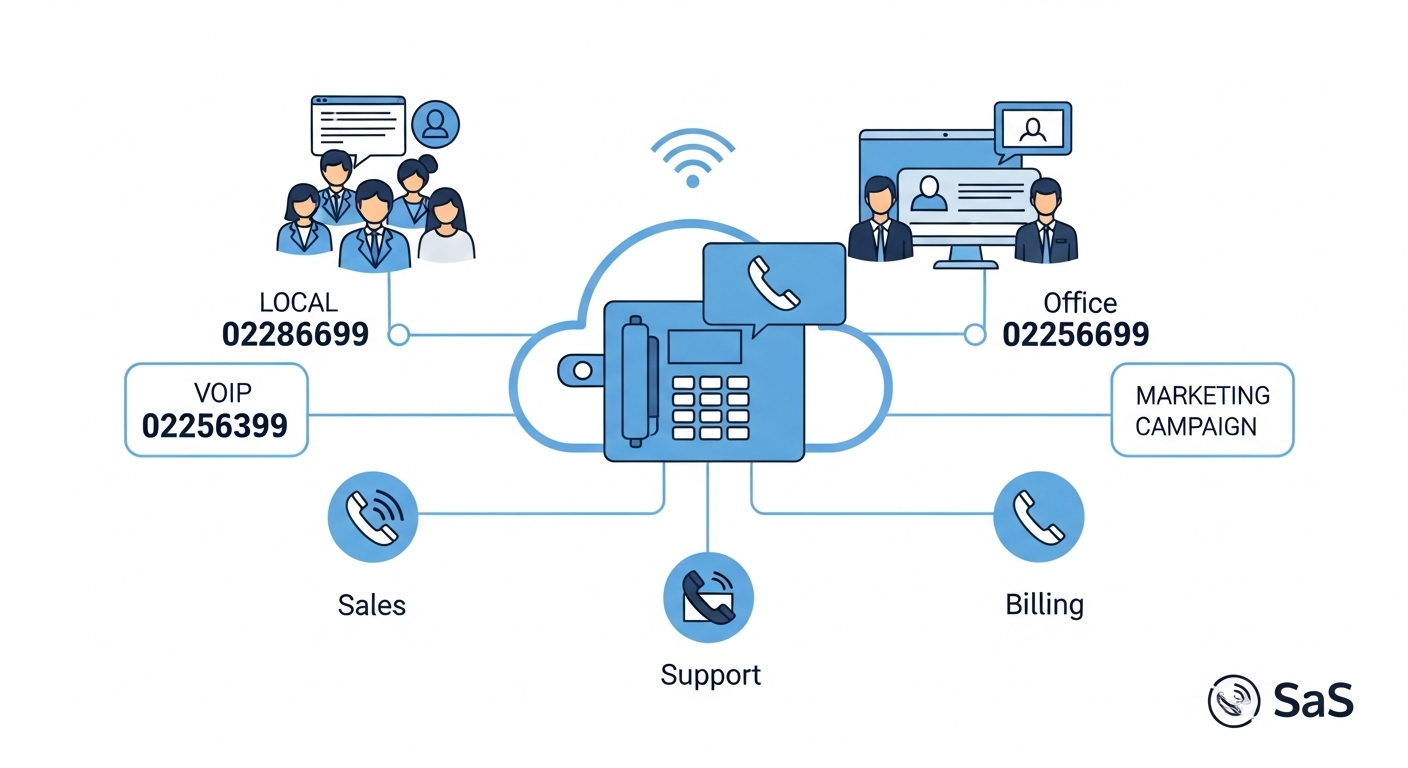
Professional greeting systems create 24/7 availability appearance. Auto-attendants answer calls with custom messages: “Press 1 for Sales, Press 2 for Support, Press 3 for Billing.”

Voicemail transcription converts messages to text and emails them. Review voicemails by reading instead of listening. Small businesses appear larger through these features—a three-person startup sounds like a twenty-person company with professional phone systems.

Vanity Number Options

Vanity numbers spell words on phone keypads (1-800-FLOWERS = 1-800-356-9377). They increase memorability by 400% according to telecommunications research from MIT (2021).

Contactivity.io provides vanity number search tools showing available options. Premium vanity numbers cost $30-$100 monthly extra. Marketing value justifies the cost. If vanity number costs $50 extra monthly but generates 3 additional customers monthly worth $300 each, the net gain reaches $850 monthly.

Real-World Examples: How Small Businesses Use Toll-Free Numbers

Example 1: Regional Consulting Firm (8 employees)

Challenge: Appeared local-only with a 404 Atlanta area code. National clients hesitated.

Solution: Added 1-800 toll-free number to website, email signatures, and proposals.

Results over six months: 31% increase in initial inquiry calls, new clients from 11 states outside the Southeast, and average deal size increased $4,200 (18% growth).

Contactivity.io provided call forwarding to partner mobile phones, after-hours voicemail, and call analytics showing which proposals generated follow-up calls.

Example 2: E-commerce Retailer (Home Goods)

Challenge: High cart abandonment rate. Customers wanted to ask product questions before purchasing.

Solution: Prominent “Questions? Call Free: 1-888-555-HOME” on every product page.

Results over four months: 22% reduction in cart abandonment rate, 156 monthly calls (up from 34), 15% increase in average order value, and 68% of callers completed purchases within 24 hours.

Example 3: B2B SaaS Startup (4 employees)

Challenge: Enterprise prospects questioned company size.

Solution: Toll-free number with professional auto-attendant despite small team.

Results over eight months: Closed first 3 enterprise deals ($120K, $85K, $95K annual contracts), sales cycle shortened 23%, and discovery calls mentioned “professional phone system” in 14 of 28 recorded calls.

The common pattern: small investment ($15-$25 monthly), significant perception improvement, and measurable business impact (23-34% call volume increase).

How to Get a Toll-Free Number for Your Small Business

Complete toll-free number setup takes under one hour with cloud-based providers.

Step 1: Choose a VoIP Provider (5 minutes)

Select a cloud-based VoIP provider focused on small businesses. Contactivity.io offers no contracts, $10 base monthly pricing, FCC and RMD registration, and 24/7 support.

Step 2: Select Your Number (10 minutes)

Choose from available toll-free prefixes (800, 888, 877, 866, 855, 844, 833). Search available numbers using the provider’s tool. Options include random numbers (free), numbers with repeating digits ($5-$15 extra monthly), and vanity numbers ($30-$100 extra monthly).

Step 3: Configure Call Routing (15 minutes)

Decide where incoming calls forward: mobile phone, office line, multiple team members, or voicemail. Set up time-based routing rules for business hours, after hours, and holidays.

Step 4: Record Greetings and Test (10 minutes)

Record professional voicemail greeting. Set up auto-attendant if desired. Test the system by calling your new toll-free number from your mobile phone.

Step 5: Update Marketing Materials (Ongoing)

Add toll-free number to website, email signatures, business cards, proposals, social media profiles, Google My Business listing, and marketing materials.

Contactivity.io provides step-by-step setup wizard guiding through each configuration. Phone numbers activate immediately—start receiving calls within minutes of completion.

Toll-Free vs. Local Numbers: Which Is Right for Your Small Business?

Both number types serve different strategic purposes.

Factor Toll-Free Number Local Number
Customer cost $0.00 for caller Standard rates apply
Geographic signal Nationwide availability Specific local area
Professional perception Established company Community-focused
Marketing effectiveness 23-41% higher response rates Lower response in ads
Monthly cost $10-$30 with per-minute charges $10-$20 flat monthly


Choose toll-free numbers when: Your business serves customers across multiple states, you want to project established credibility, you run marketing campaigns needing high response rates, you provide customer service requiring easy access, or you operate in B2B markets where professionalism is critical.

Choose local numbers when: You exclusively serve a single local market, your business model benefits from strong community connection, or you emphasize being a neighborhood business.

Best of Both Worlds: Many small businesses maintain both number types strategically. Use local numbers for community marketing. Use toll-free numbers for website, social media, national marketing, and customer service lines. Contactivity.io enables multiple numbers forwarding to the same destination.

Common Questions About Toll-Free Numbers for Small Businesses

Do people still call toll-free numbers in the age of email and chat?

Yes. Phone calls remain preferred for complex questions, urgent matters, and high-value purchases. Data from Salesforce Research (2024) shows 71% of customers prefer phone calls when making purchase decisions exceeding $500.

How much does a toll-free number cost for a small business?

Toll-free numbers cost $10-$30 monthly through cloud-based VoIP providers like Contactivity.io, plus per-minute charges of $0.01-$0.03 for incoming calls. Setup fees are typically $0.

Can I keep my toll-free number if I switch providers later?

Yes. Toll-free numbers are portable through a process called RespOrg transfer. You own the number—the provider merely routes calls. Number portability is federally mandated under FCC regulations.

Can I get a vanity toll-free number like 1-800-FLOWERS?

Yes, if your desired vanity number is available. Availability is limited—common words are already registered. Contactivity.io provides vanity number search tools. Premium vanity numbers cost $30-$100 extra monthly.

How quickly can I get my toll-free number active?

With cloud-based providers like Contactivity.io, toll-free numbers activate in under one hour. Traditional telecom providers require 7-14 business days for activation and technician installation.

What happens if I get too many calls to handle?

Modern toll-free systems include features managing high call volume: voicemail, auto-attendant directing calls to specific team members, call queuing, and overflow routing to backup numbers. Contactivity.io’s scalable plans add team members and advanced call distribution as business grows.

Getting Started with Toll-Free Numbers: Your Next Steps

Toll-free numbers provide small businesses with three critical advantages: enhanced credibility (businesses appear more established and trustworthy), expanded accessibility (customers call 23-41% more frequently), and improved marketing effectiveness (nationwide presence removes geographic barriers). The cost remains minimal ($10-$30 monthly) while the impact measures significantly (28-35% increase in inquiry calls from new markets).

Contactivity.io specializes in small business communication. The service offers affordable toll-free plans starting at $10 monthly, simple setup with no technical knowledge required, no contracts or cancellation fees, professional features including call forwarding, analytics, voicemail transcription, and auto-attendant, plus excellent customer support. As an FCC and RMD registered provider, Contactivity.io ensures reliability and regulatory compliance.

Ready to enhance your professional image and increase customer calls? Get your toll-free number from Contactivity.io today. View transparent pricing and plans or talk to the Contactivity.io team to discuss your specific needs.

Small businesses compete most effectively when they project professional capability. Toll-free numbers level the playing field—appearing as established as larger competitors while maintaining small business agility and customer focus.

Scaling Your Business Communications: How VoIP Adapts to Your Growth

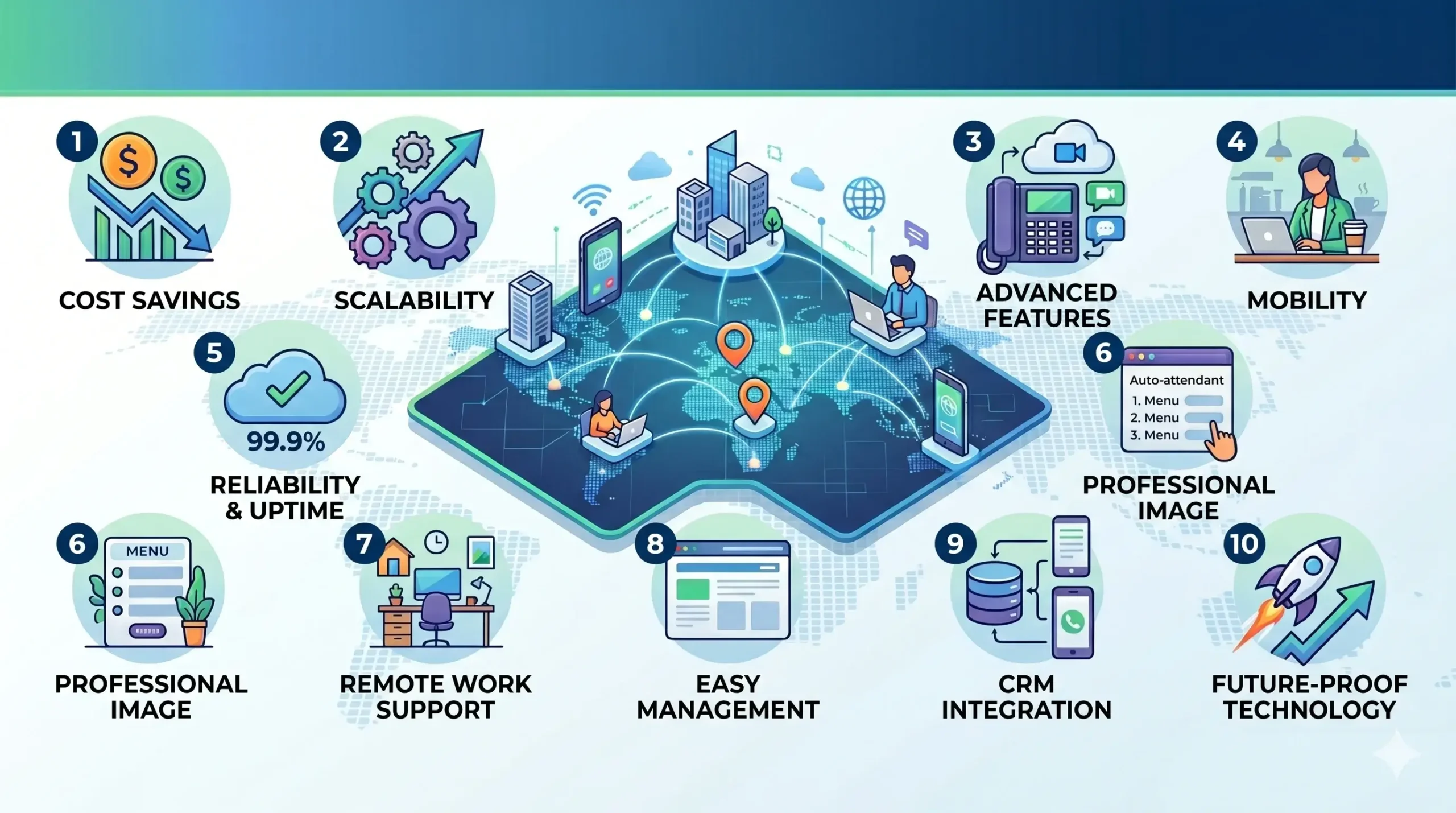
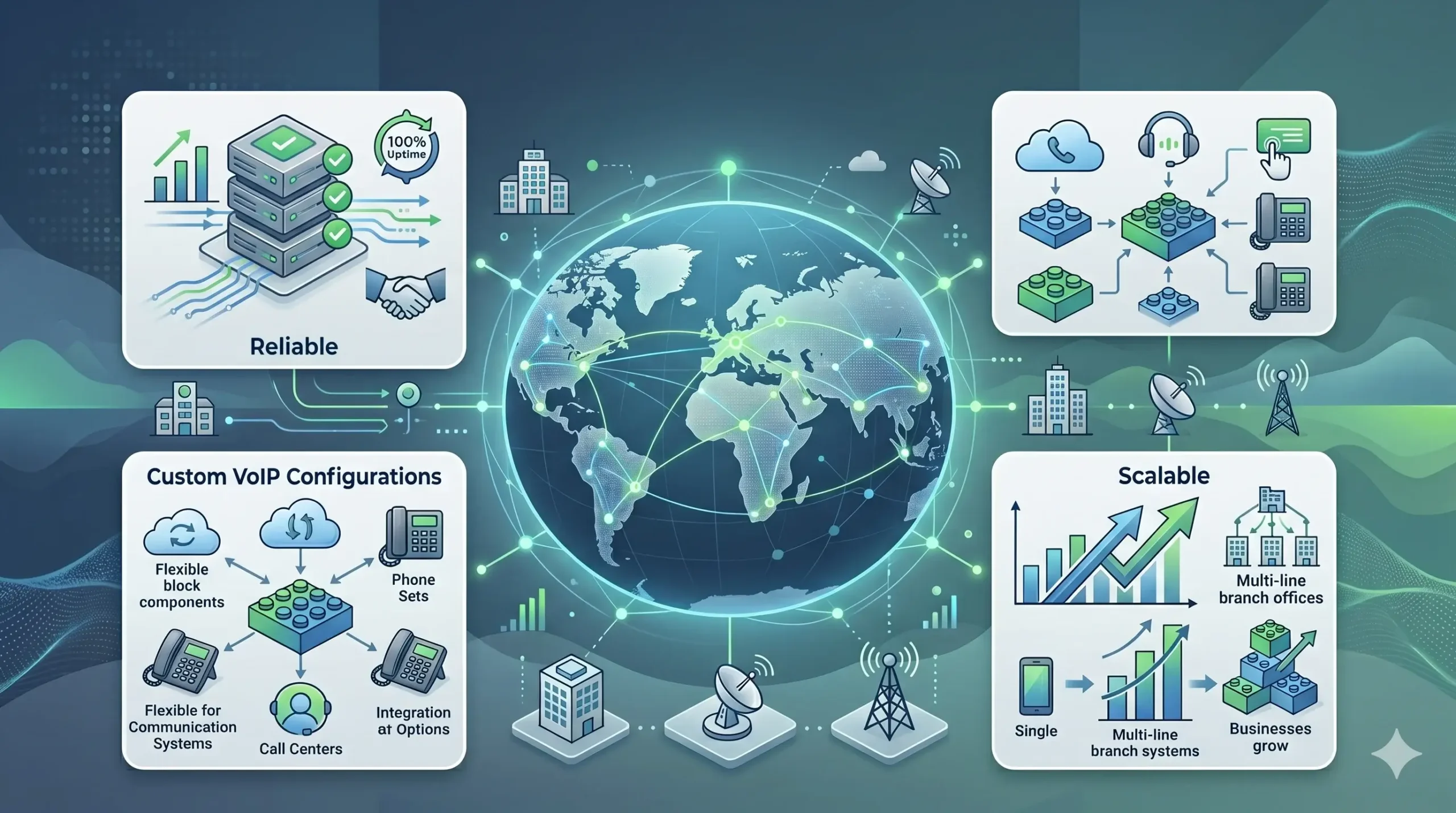
Scaling business communication is no longer about adding more phone lines—it is about adopting flexible, cloud-based systems that grow in sync with your company. Voice over Internet Protocol (VoIP) offers a scalable foundation by reducing infrastructure costs, enabling multi-device access, and supporting teams across multiple locations.

Unlike traditional telephony, VoIP integrates easily with CRM platforms, helpdesks, and collaboration tools. This adaptability means your communication network can expand seamlessly as your workforce grows or your customer service demands increase.

For small and mid-sized businesses, scalability is more than convenience—it is a competitive advantage. By adopting VoIP, you ensure that your system can adapt to new markets, seasonal call spikes, or hybrid workforce models without service disruptions.

In this guide, we will explore why scalability defines the future of business communication, the features that enable growth, and the best practices to implement VoIP solutions smoothly.

Why Scalability Defines the Future of Communication Systems

Scalability is the foundation of modern communication systems because it ensures that technology can expand in alignment with business growth, user demand, and workforce flexibility. In the past, companies relied on fixed telephony infrastructure that struggled to keep pace with expansion.

VoIP, supported by cloud architecture, changes this model by allowing organizations to add new users, integrate devices, and extend coverage without costly hardware investments. This adaptability makes VoIP ideal for businesses navigating global markets, seasonal call surges, or hybrid workforce models.

Scalable infrastructures also future-proof operations. By supporting seamless integration with CRMs, analytics dashboards, and compliance automation, VoIP ensures communication systems remain relevant as customer expectations evolve.

Ultimately, scalability defines the future of communication because it transforms phone systems from rigid tools into dynamic growth enablers. Businesses adopting scalable VoIP solutions are not only reducing costs but also building resilience, efficiency, and long-term competitive advantage.

Reduced Costs and Increased Flexibility for Growing Teams

Cost reduction is one of the most measurable benefits of adopting VoIP. Studies show that small businesses can lower startup expenses by up to 90% when compared with traditional phone systems. These savings come from reduced hardware purchases, lower international calling rates, and minimized maintenance requirements.

Flexibility is equally valuable for growing teams. With VoIP, employees can connect through desktops, tablets, or mobile devices, ensuring seamless collaboration whether they are in the office, working remotely, or traveling. This multi-device access allows businesses to adapt quickly to hybrid work models without additional infrastructure.

Together, reduced costs and flexibility create an efficiency loop. Teams save money on operations while gaining the agility to scale staff, expand into new markets, or handle seasonal spikes in demand.

By optimizing both cost and adaptability, VoIP provides not just a communication tool but a growth strategy—helping organizations re-invest savings into talent, customer service, and technology upgrades.

VoIP Features That Support Business Growth

Modern VoIP systems include features that directly enable scalability, cost savings, and operational efficiency. Four of the most critical are automation, multi-device support, real-time analytics, and seamless integration with business tools.

Auto Attendant and Smart Call Routing

An auto attendant reduces manual call handling by directing customers to the right department automatically. This feature improves customer experience, saves staff time, and ensures no lead is missed. Smart routing can also prioritize VIP clients or manage peak-hour call surges, keeping communication efficient at scale.

Multi-Device and Remote Work Integration

VoIP works across desktops, tablets, and smartphones. Employees can make and receive calls from anywhere, ensuring continuity whether working in-office, remotely, or while traveling. This flexibility supports hybrid teams and creates consistent communication across all channels.

Real-Time Analytics for Smarter Decisions

VoIP dashboards display call volume, missed calls, and agent performance in real time. Businesses can use these insights to identify bottlenecks, forecast staffing needs, and improve customer service quality. Analytics turn communication data into actionable strategies.

Integration With Business Tools

VoIP integrates with CRMs, calendars, and helpdesk software. By automatically logging calls into customer records or syncing with scheduling platforms, businesses eliminate repetitive tasks and maintain accurate data. Cloud-based architecture ensures these integrations scale with organizational growth.

Planning VoIP Scalability: Key Considerations

Effective VoIP scalability begins with assessing your current usage and forecasting future communication needs. Companies should evaluate the number of employees requiring access, projected hiring, and how call volumes are expected to increase over time.

Geographic expansion is another critical factor. Businesses planning to enter new regions or serve international clients need providers that offer local numbers, multilingual support, and reliable global coverage.

Remote work capabilities must also be considered. VoIP should support mobile apps, video conferencing, and secure call forwarding to ensure remote employees have the same access as those in the office.

Finally, scalability planning requires balancing technology with cost. Providers offering tiered features, easy add/remove user options, and quality-of-service guarantees make it simple to expand without unnecessary expenses or disruptions.

By addressing staffing, call volume, expansion, and remote work in advance, organizations create a communication system that is flexible today and prepared for tomorrow’s growth.

Best Practices to Scale Your Communications Smoothly

Scaling communication with VoIP requires more than adding new lines—it depends on proactive planning and operational discipline. To achieve smooth growth, businesses must focus on security, user training, and network optimization.

Security is the first layer of reliability. End-to-end encryption, two-factor authentication, and secure SIP trunking protect calls against interception while ensuring compliance with data regulations. A strong security framework future-proofs systems as usage expands.

Training is equally important. Employees who understand call routing features, mobile apps, and analytics dashboards are less likely to create bottlenecks. Regular workshops and self-service tutorials accelerate adoption and keep teams confident in using advanced tools.

Bandwidth optimization prevents disruptions. Prioritizing VoIP traffic with Quality of Service (QoS) settings, monitoring internet capacity, and preparing for peak demand reduces jitter, latency, and dropped calls. These technical measures ensure communication quality remains consistent at scale.

By combining secure infrastructure, trained users, and optimized bandwidth, businesses create a resilient communication system. This resilience is what allows organizations to grow smoothly while maintaining service quality and preparing for future expansion.

Supporting Modern Workforces: Remote & Hybrid

Modern businesses thrive on flexibility, and VoIP enables that by making communication seamless across remote and hybrid teams. Unlike legacy phone systems tied to physical offices, VoIP allows employees to stay connected through desktops, tablets, or mobile devices from anywhere.

Remote onboarding becomes faster when new hires can access call scripts, training modules, and support dashboards without waiting for on-site installation. This speeds up integration and empowers distributed teams to become productive quickly.

Mobile call management is equally critical. With softphone apps, call forwarding, and voicemail-to-email, employees can manage business calls while traveling or working from home. This ensures continuity of service for customers, regardless of where staff members are located.

Hybrid work also depends on collaboration culture. VoIP integrates with video conferencing, instant messaging, and file-sharing tools, creating a unified workspace. Teams can brainstorm, meet clients, and resolve customer issues with the same efficiency as if they were in one office.

Common Challenges and How to Overcome Them

While VoIP is powerful, businesses often face common challenges during adoption. The most frequent issues include latency, vendor lock-in, and feature overload. Each of these can be mitigated with the right strategy.

Latency and Connectivity Issues
VoIP relies on internet stability. High latency, jitter, or packet loss leads to poor call quality. To overcome this, businesses should use dedicated business-grade internet, configure Quality of Service (QoS) on routers, and maintain backup connections for redundancy.

Vendor Lock-In
Some providers restrict customers with long contracts or limited interoperability. The solution is to choose providers that offer modular pricing, open standards like SIP, and transparent exit policies. This ensures scalability without being tied to a single vendor ecosystem.

Feature Overload
VoIP platforms often provide more tools than teams need at once, leading to confusion and underuse. The best approach is phased adoption: start with core features such as call routing and analytics, then expand gradually as staff gain proficiency. This maximizes ROI without overwhelming users.

By addressing these challenges proactively, businesses create a smoother path for VoIP scalability. This naturally leads to the next focus—understanding where the market is heading and how future-proof systems prepare organizations for emerging trends.

The Market Outlook: Where Scalable VoIP is Heading

The future of scalable VoIP is defined by intelligent automation, deeper analytics, and cloud-driven adaptability. As businesses demand more flexible and reliable communication, providers are embedding artificial intelligence, compliance safeguards, and predictive tools into their platforms.

AI-powered voice assistants are leading this transformation. They automate call routing, transcribe meetings, and analyze sentiment in real time, turning everyday interactions into actionable business data. These tools not only improve customer experience but also reduce the workload on human agents.

Advanced analytics will shape the next decade of VoIP. Dashboards are evolving from simple call logs into predictive systems that forecast staffing needs, measure customer satisfaction, and identify performance gaps across hybrid teams. This shift makes VoIP a decision-making engine, not just a phone system.

Compliance automation is another driver of scalability. With regulations tightening across industries, VoIP solutions are integrating encrypted SIP trunking, data residency options, and automated reporting features. This ensures organizations can expand globally without risking legal or reputational damage.

Ultimately, the outlook for VoIP mirrors broader lifestyle scalability: just as individuals adopt digital tools that grow with their routines, businesses require communication systems that scale with their ambitions. By aligning technology with evolving workforce and regulatory needs, scalable VoIP is positioned as the backbone of modern business growth.

Upgrade Your Communication Systems Today

Scaling your communication systems is no longer optional—it is essential for growth, efficiency, and competitiveness. With VoIP, you gain a flexible, cloud-driven solution that reduces costs, supports hybrid work, and delivers real-time insights.

Choosing the right provider ensures your business can expand without disruption. By switching to VoIP today, you position your organization to handle new markets, seasonal spikes, and evolving customer expectations with confidence.

Don’t let outdated systems slow you down. Explore our VoIP service solutions to discover how scalable communication can future-proof your business.

What is Call Termination in VoIP?

Call termination in VoIP is the process of delivering a voice call from the originating provider’s network to the recipient’s telephone network, usually through an interconnection with a third-party carrier. It ensures that a call made via the internet reaches a traditional Public Switched Telephone Network (PSTN) or another VoIP endpoint without disruption.

In technical terms, termination happens when the digital voice packet leaves the originating VoIP system, is routed through interconnected carriers, and is finally converted or passed to the destination network. Attributes such as call quality, latency, and routing efficiency directly determine the reliability of this process.

For businesses, call termination is not only a core attribute of any Business VoIP phone system but also a deciding factor in service quality. If the termination routes are poor, customers experience dropped calls, delays, or distorted audio. This is why providers invest in Least Cost Routing (LCR) engines, multiple carrier interconnections, and redundancy measures to guarantee uptime and affordable international coverage.

Unlike call origination, which manages inbound traffic, termination specifically handles outbound calls. In practice, every business dialing a customer—whether local or international—is relying on a termination service in the background.

How Does the Call Termination Process Work?

The call termination process in VoIP begins when a user initiates a call, and it ends when that call successfully reaches the recipient through interconnected networks.

Step 1 – Signal Initiation: The originating VoIP platform converts the user’s voice into digital packets.

Step 2 – Routing: These packets are directed through the provider’s network, where routing decisions determine the most efficient path.

Step 3 – Carrier Interconnection: The call is passed to one or more third-party carriers, often using protocols like SIP (Session Initiation Protocol) for signaling and RTP (Real-Time Transport Protocol) for media transmission.

Step 4 – Completion: The packets are delivered to the destination, which could be another VoIP system or the Public Switched Telephone Network (PSTN), where they are converted back into an audible voice signal.

What is the Technology Behind Call Termination?

The technology behind call termination relies on protocols, routing engines, and codecs that enable digital voice packets to move seamlessly across networks. These technologies work together to ensure every call is clear, efficient, and cost-effective.

At the core of signaling, SIP (Session Initiation Protocol) establishes, manages, and ends VoIP calls. For the media stream itself, RTP (Real-Time Transport Protocol) carries the actual voice packets across the internet. Both are industry standards that allow interoperability between carriers and platforms.

To maintain high-quality audio, codecs such as G.711 and G.729 compress and decompress voice data. G.711 preserves near-PSTN quality, while G.729 optimizes bandwidth efficiency, making it ideal for international or high-volume routes.

Routing engines apply Least Cost Routing (LCR), selecting the cheapest available path without sacrificing quality. This process depends on real-time analytics, call statistics, and customer feedback to determine which carrier provides the best balance between cost and reliability.

What is the Technology Behind Call Termination?

The technology behind call termination relies on protocols, routing engines, and codecs that enable digital voice packets to move seamlessly across networks. These technologies work together to ensure every call is clear, efficient, and cost-effective.

At the core of signaling, SIP (Session Initiation Protocol) establishes, manages, and ends VoIP calls. For the media stream itself, RTP (Real-Time Transport Protocol) carries the actual voice packets across the internet. Both are industry standards that allow interoperability between carriers and platforms.

To maintain high-quality audio, codecs such as G.711 and G.729 compress and decompress voice data. G.711 preserves near-PSTN quality, while G.729 optimizes bandwidth efficiency, making it ideal for international or high-volume routes.

Routing engines apply Least Cost Routing (LCR), selecting the cheapest available path without sacrificing quality. This process depends on real-time analytics, call statistics, and customer feedback to determine which carrier provides the best balance between cost and reliability.

Types of Call Termination Services

Call termination services are offered in different formats—CLI, Non-CLI, Direct, and TDM routes—each serving unique business needs and quality expectations. Understanding these categories helps businesses choose the right balance between cost, reliability, and compliance.

  1. CLI Routes (Calling Line Identification): These routes deliver the caller’s number to the recipient, ensuring transparency and trust. CLI routes are essential for compliance and customer experience, especially in regions where regulators require correct caller ID.
  2. Non-CLI Routes: In this option, the caller’s number is hidden or replaced. Non-CLI is usually cheaper but may lead to lower answer rates and restrictions in certain markets. It is common for businesses that prioritize cost over caller identity.
  3. Direct Routes: These involve direct interconnections with specific carriers. Direct routes guarantee higher call quality and stability since traffic does not pass through multiple intermediaries. Providers like AVOXI and Speedflow use direct routes to deliver enterprise-grade reliability.
  4. TDM Routes (Time Division Multiplexing): These are traditional circuit-switched connections still used for premium destinations. TDM routes offer high stability but are more expensive, often reserved for financial institutions, healthcare, or government communications where uptime is critical.

Choosing the right route depends on whether a business values transparency (CLI), affordability (Non-CLI), stability (Direct), or traditional reliability (TDM). The next section explores the key factors that determine reliability and cost-effectiveness across these services, helping businesses compare their options more effectively.

Key Factors for Reliable & Cost-Effective Call Termination

Reliable call termination depends on three core factors: network quality, transparent pricing, and robust security. These elements ensure that every business call is clear, affordable, and protected.

  1. Network Quality & SLA (Service Level Agreements): A strong backbone with high uptime guarantees consistent call clarity. Providers should commit to SLAs that outline availability, call success rates, and resolution times.
  2. Performance Metrics – Jitter, Latency, and Packet Loss: Even milliseconds of delay affect voice quality. Low jitter and latency are critical, while minimal packet loss ensures conversations remain uninterrupted.
  3. Transparent & Cost-Effective Pricing: Cost efficiency comes from fair per-minute billing, competitive international rates, and the use of Least Cost Routing (LCR) to balance price with call stability.
  4. Security & Fraud Prevention: Reliable termination requires strong encryption, caller ID protection, and fraud monitoring. These measures safeguard sensitive business conversations from misuse.

For SMBs, the return on investment (ROI) is clear: high-quality termination reduces dropped calls, improves customer trust, and lowers overall communication expenses. This makes reliability not just a technical benchmark, but a business growth factor.

Benefits of Using a Call Termination Provider

Using a call termination provider delivers three primary benefits: cost savings, global connectivity, and professional caller ID. Businesses that leverage these services often reduce telecom expenses by up to 40%, while maintaining reliable, enterprise-grade communication.

  1. Cost Savings: Providers negotiate bulk minutes and optimize routes using Least Cost Routing (LCR). This reduces per-minute rates, making VoIP calls significantly cheaper compared to legacy PSTN services.
  2. Global Connectivity: Access to international carriers allows businesses to connect with customers in 170+ countries. This broad coverage ensures consistent quality whether calls are local, regional, or international.
  3. Professional Caller ID & Compliance: Delivering the correct CLI improves answer rates by 15–20% and builds trust with customers. Compliance with local telecom regulations further reduces the risk of blocked calls.
  4. Scalable ROI: Beyond call quality, businesses see measurable gains: fewer dropped calls, lower operating costs, and improved customer experience lead to higher lifetime value. For SMBs, these savings free up resources for marketing, hiring, or product development.

When combined with reliable VoIP numbers, these advantages make call termination providers a cornerstone of modern business communication. The next section explores the challenges and limitations businesses should consider before finalizing a provider.

Wholesale Call Termination vs Retail Termination

Wholesale and retail call termination differ mainly by audience, cost structure, and control over routing. Wholesale services are designed for carriers handling millions of minutes, while retail services target SMBs and enterprises needing reliable day-to-day communication.

  1. Wholesale Call Termination:
    • Audience: Carriers, VoIP resellers, and telecom operators.
    • Cost Structure: Lower per-minute rates due to bulk purchasing and international swaps.
    • Routing Control: Advanced features like Least Cost Routing (LCR) and direct interconnections with Tier-1 carriers.
    • Use Case: A global carrier managing traffic across 200+ destinations.
  2. Retail Call Termination:
    • Audience: SMBs, call centers, enterprises.
    • Cost Structure: Slightly higher rates, but bundled with features like customer support, fraud prevention, and CLI delivery.
    • Routing Control: Limited; businesses rely on the provider’s optimized routes.
    • Use Case: A call center with 500 agents that needs consistent call quality, local numbers, and compliance.

In short: wholesale focuses on scale and cost-efficiency, while retail emphasizes reliability, compliance, and support for end-users.

Choosing the Right Call Termination Provider

The best call termination provider can be identified by four key criteria: coverage, routing efficiency, support, and transparent pricing. Businesses should use a simple checklist to evaluate these factors before committing.

Checklist for Choosing a Provider

  1. Global Coverage: Ensure the provider offers access to local, national, and toll-free numbers in your target markets. Broad coverage prevents gaps when expanding into new regions.
  2. Least Cost Routing (LCR): Choose a provider that uses intelligent routing to balance cost and quality. LCR ensures your calls follow the most efficient and affordable paths.
  3. Reliable Support: Look for 24/7 technical support and a dedicated account manager. Strong support reduces downtime and resolves issues faster, which is crucial for SMBs with limited IT teams.
  4. Transparent Pricing: The best providers offer clear billing, per-second increments, and no hidden fees. Transparent pricing helps SMBs manage budgets confidently.

By applying this checklist, SMBs can identify the right partner without being overwhelmed by UCaaS complexity. The next section addresses common challenges businesses face with call termination, ensuring decision-makers are fully informed.

Call Termination FAQs

What is a call termination service?
A call termination service routes voice calls from one provider’s network to the recipient’s phone network. It ensures connectivity across carriers, using VoIP or PSTN systems to complete the call.

What is termination in VoIP?
Termination in VoIP means delivering outbound internet-based calls to the intended destination number. Providers use global routing agreements to make calls reliable, affordable, and scalable for businesses.

What is the technology for voice calls?
Voice calls rely on Session Initiation Protocol (SIP) for setup, Real-Time Transport Protocol (RTP) for media transfer, and codecs like G.711 or G.729 to compress and deliver high-quality audio efficiently.

What is the difference between SIP and VoIP termination?
SIP is the signaling protocol that sets up and manages VoIP calls, while VoIP termination is the service that completes those calls across networks using SIP, RTP, and routing systems.

What is an Auto Attendant?

An auto attendant is an automated phone system feature that answers incoming calls and directs them to the right department or extension without a live operator. It functions as a virtual receptionist, greeting callers with pre-recorded messages and providing menu options like “Press 1 for Sales, Press 2 for Support”.

In the context of a business VoIP phone system, the auto attendant is a core feature designed to improve efficiency, reduce costs, and present a professional image for small-to-medium businesses (SMBs). Unlike human receptionists, it operates 24/7, ensuring that every customer call is answered promptly and routed correctly.

Auto attendants are closely connected to other VoIP features such as call forwarding, voicemail-to-email, and call analytics. Together, these functions form part of a modern business communication system that ensures no opportunity is missed.

By definition, an auto attendant is not just a technical add-on; it is an entity with attributes:

  • Entity: Auto Attendant
  • Attributes: Virtual receptionist, menu-driven navigation, call routing
  • Value: Efficient call handling, cost savings, enhanced brand image

For SMBs, the value of an auto attendant lies in its ability to provide the functionality of an enterprise-level communication system, while keeping operations simple, scalable, and cost-effective.

How Does an Auto Attendant Work in Business VoIP Systems?

To understand how an auto attendant works, imagine the process in three simple steps: a caller dials the business number, the system plays a menu greeting, and the caller chooses an option that routes them to the right department.

When a customer calls, the auto attendant immediately answers with a recorded greeting. This message introduces the business and provides clear menu choices such as “Press 1 for Sales, Press 2 for Support.” Based on the caller’s input, the system uses predefined rules to forward the call to the correct extension or queue.

In a VoIP phone system, the auto attendant is tightly integrated with other features such as call forwarding, voicemail-to-email, and call analytics. This integration ensures that if no one answers, the call is sent to voicemail, or routed to another available line.

The process works consistently because the auto attendant is part of the larger VoIP communication infrastructure. It shares the same network, number management, and cloud-based routing functions. For SMBs, this means that even without a dedicated receptionist, customers experience professional and seamless communication.

Auto Attendant vs. Virtual Receptionist: What’s the Difference?

The main difference is that an auto attendant is a software-based call routing system in a VoIP phone service, while a virtual receptionist is a human who personally answers and manages calls for a business.

An auto attendant greets callers with a pre-recorded menu (“Press 1 for Sales, Press 2 for Support”) and directs them based on keypad or voice inputs. It is part of the VoIP phone system infrastructure, working automatically without human intervention.

A virtual receptionist, on the other hand, is a trained human assistant who answers incoming calls, provides personalized responses, takes messages, and can even schedule appointments. Unlike the auto attendant, which follows pre-set rules, a virtual receptionist can adapt to unique questions or unexpected caller needs.

From a business perspective, the choice depends on goals and resources:

  • Auto attendant = cost-effective, available 24/7, ensures no call goes unanswered.
  • Virtual receptionist = personalized customer experience, better for service-based industries that rely on human touch.

Why Businesses Need an Auto Attendant: 7 Key Advantages

An auto attendant gives small and medium businesses (SMBs) a professional, efficient, and cost-effective way to manage calls. Here are seven advantages that explain why it has become a core feature of modern VoIP phone systems:

  1. Professional Image – Every caller is greeted with a polished recorded message. For SMBs, this creates the same credibility as enterprise call centers without the overhead.
  2. Efficient Call Handling – Calls are routed instantly to the right department. Employees spend less time transferring calls and more time serving customers.
  3. 24/7 Availability – Auto attendants answer after hours, on weekends, and across time zones. No customer call is ever left unanswered.
  4. Scalability – As the business grows, new lines and departments can be added to the menu without hiring extra staff.
  5. Cost Savings – On average, SMBs save up to 50–70% compared to employing a full-time receptionist
  6. Customization – Menus, greetings, and routing rules can be tailored for sales, support, or seasonal campaigns, ensuring relevance to customer needs.
  7. Call Analytics – Auto attendants provide data on call volumes, menu selections, and missed calls. This insight helps business owners optimize staffing and workflows.

Setting Up Auto Attendant in Google Voice & Other Systems

To set up an auto attendant in Google Voice, you log into the Google Admin console, open the service settings, create a new auto attendant, and configure menu prompts that route calls to users, groups, or voicemail.

While the Google Voice process is straightforward, the exact steps typically look like this:

  1. Sign in to Google Admin Console – Go to admin.google.com with your business account.
  2. Navigate to Voice Settings – Under “Apps” > “Google Workspace” > “Google Voice.”
  3. Select Auto Attendant – Click Auto Attendants and choose “Add.”
  4. Create a New Menu – Enter a name, greeting message, and the dial pad options (e.g., “Press 1 for Sales”).
  5. Route Calls – Assign each option to a user, department group, or voicemail.
  6. Save and Test – Call your number to confirm the routing works correctly.

Other VoIP Systems

  • Zoom Phone: Setup is done through the Zoom admin portal. Add an auto receptionist, upload a greeting, and define call routing rules.
  • Nextiva: Create an “Auto Attendant” under Phone System Settings. You can chain multiple attendants for complex routing.
  • contactivity.io: Designed for SMBs, setup is simplified. The dashboard allows users to record greetings, assign numbers, and adjust routing with minimal technical skills

The principles are consistent across systems: you define a greeting, create a menu, and connect each option to a destination. For SMBs, this means they can project a professional image and reduce missed calls without hiring additional staff.

Can a Virtual Receptionist Handle Customer Support?

Yes — a virtual receptionist can handle customer support, but the way it works is very different from an auto attendant.

A virtual receptionist is a trained human professional who answers calls, provides personalized responses, and manages customer inquiries in real time. Unlike an auto attendant, which follows fixed rules and menus, a virtual receptionist adapts to unexpected questions, emotional tone, and complex service needs.

For small and medium-sized businesses (SMBs), this creates both opportunities and challenges:

  • Problem: Hiring a full-time receptionist is expensive and limited to business hours.
  • Solution: A virtual receptionist service offers 24/7 coverage, multilingual support, and personal interaction at a fraction of the cost of in-house staff.

Key features of a virtual receptionist for customer support include:

  • Personalized Call Handling – Every customer is greeted by name and supported with tailored responses.
  • Issue Resolution – Receptionists can answer FAQs, transfer calls, or escalate to the right person.
  • Customer Care Extension – They schedule appointments, process simple requests, and ensure no lead is lost.
  • Brand Representation – The human element builds trust and reassures customers that they are valued.

In comparison, an auto attendant ensures speed, efficiency, and cost savings, but lacks the nuance of empathy and adaptability. That’s why many SMBs use a hybrid approach: an auto attendant for initial routing, supported by a virtual receptionist for high-value customer interactions

Auto Attendant as Part of a Business VoIP Phone System

In a business VoIP phone system, the auto attendant is not a standalone feature — it is an essential part of the infrastructure that ensures no customer call is missed.

A VoIP phone system combines multiple components: phone numbers, call routing, voicemail, and analytics. The auto attendant functions as the front door, greeting callers, presenting options, and routing them to the right destination. Without it, SMBs risk lost opportunities and an unprofessional image.

For small and medium-sized businesses (SMBs), this connection matters:

  • The VoIP system is the whole, and the auto attendant is a part (meronym–holonym relation).
  • Together, they provide seamless call management, replacing outdated landlines with a scalable digital solution

The synergy is clear:

  • VoIP provides the network → delivering cloud-based reliability.
  • Auto attendant provides the experience → ensuring every call is answered with professionalism.

This integration transforms a VoIP system from a technical tool into a business enabler, aligning with the core SMB need for affordability, efficiency, and credibility.

Auto Attendant & Virtual Receptionist

What is another name for an auto attendant?
An auto attendant is often called a virtual receptionist because it greets callers and routes calls without needing a live operator.

Do auto attendants support multiple languages?
Yes, most modern auto attendants allow multilingual prompts so callers can interact in their preferred language.

Can an auto attendant adjust for time zones or business hours?
Yes, you can set rules by time zone or office hours so callers are routed to voicemail, another branch, or on-call staff after hours.

How is an auto attendant different from an IVR system?
An auto attendant provides basic routing (press 1 for sales, press 2 for support), while an IVR (Interactive Voice Response) includes advanced options like speech recognition, data lookup, and account verification.

Is a virtual receptionist only for large businesses?
No, small and medium-sized businesses use virtual receptionists to ensure no calls are missed and to project a professional image without hiring extra staff.

Secure Business VoIP: Protecting Your Communications

Voice over Internet Protocol (VoIP) has become the backbone of modern business communication, offering cost savings, flexibility, and advanced features compared to traditional phone systems. Yet, without proper safeguards, VoIP services expose sensitive conversations, customer data, and company networks to cyber risks.

Secure business VoIP ensures that every call, message, and collaboration remains confidential and compliant with industry standards. By combining strong encryption, multi-factor authentication, and real-time monitoring, businesses can defend against threats such as call interception, phishing, and toll fraud.

Today, organizations across industries — from healthcare to finance — prioritize VoIP security not only to prevent costly breaches but also to maintain customer trust and regulatory compliance. According to industry research, the average cost of a U.S. data breach exceeds $9.4 million, underscoring the urgent need for proactive communication security.

This guide explores how to protect your communications with secure business VoIP, explains key threats, and shares best practices that position your company for resilience.

Why VoIP Security Matters for Modern Businesses

Voice over Internet Protocol (VoIP) transmits voice calls as digital packets over the internet instead of using the Public Switched Telephone Network (PSTN). This makes communication faster and more flexible, but it also introduces cybersecurity risks that traditional phone lines rarely faced.

VoIP security matters because unprotected systems can lead to data breaches, call interception, phishing, and toll fraud. Each of these threats can compromise sensitive information, disrupt daily operations, and create significant financial losses.

For businesses in regulated industries such as healthcare or finance, VoIP security is also a compliance requirement. Regulations like HIPAA and PCI demand that organizations encrypt communications, monitor traffic, and safeguard customer records. Non-compliance not only increases legal risks but also damages customer trust.

Modern businesses rely on secure VoIP not just for protection, but to ensure resilience, continuity, and a strong reputation in the digital economy.

Common Threats to VoIP Systems

Businesses that rely on Voice over Internet Protocol (VoIP) must recognize the security risks that accompany internet-based communication. Below are the most common VoIP security threats:

  • Denial of Service (DoS) Attacks: Hackers flood the network with traffic, disrupting calls and lowering call quality.
  • Toll Fraud: Unauthorized users exploit systems to make expensive international calls, leading to high financial losses.
  • Caller ID Spoofing: Attackers falsify caller identities to trick recipients into sharing sensitive information.
  • Call Interception: Unencrypted calls can be intercepted, exposing private conversations and business data.
  • Phishing over VoIP (Vishing): Fraudulent calls deceive employees into giving up passwords or financial details.
  • VoIP Malware: Malicious software targets VoIP devices, stealing data or opening backdoors into company networks.

These vulnerabilities demonstrate why businesses must treat VoIP security as a priority. Understanding threats is the first step toward applying protocols and safeguards that ensure reliable, encrypted communication.

What Is the Secure Protocol for VoIP?

The most secure protocols for VoIP are Secure Real-time Transport Protocol (SRTP) for encrypting voice traffic and Transport Layer Security (TLS) for protecting call signaling. Together, they prevent eavesdropping and ensure the confidentiality of business conversations.

SRTP encrypts the actual audio stream so that intercepted data packets cannot be reconstructed into a usable conversation. TLS secures the signaling layer, which carries information such as call setup, user identity, and session details.

For remote or hybrid teams, a Virtual Private Network (VPN) adds another layer of protection by creating an encrypted tunnel for all VoIP traffic, especially when using public Wi-Fi.

By combining SRTP, TLS, and VPN technology, organizations can meet compliance requirements, protect sensitive information, and maintain trust in digital communications.

Key Benefits of Strong VoIP Security

Strong VoIP security delivers more than protection against hackers — it strengthens every aspect of business communication. Below are the main benefits:

  • Data Integrity: Encrypted traffic prevents tampering, ensuring that calls and messages remain accurate and authentic.
  • Regulatory Compliance: Secure protocols such as SRTP and TLS help businesses meet HIPAA, PCI, and GDPR requirements.
  • Fraud Prevention: Security controls block toll fraud, spoofing, and unauthorized access, reducing financial losses.
  • High Uptime and Reliability: Protected VoIP systems are less vulnerable to attacks, keeping communication channels stable and always available.
  • Customer Trust: Demonstrating commitment to communication security reassures clients and strengthens long-term relationships.

By focusing on these benefits, businesses not only reduce risk but also position themselves as trustworthy and resilient in competitive markets.

Best Practices to Secure Business VoIP

Securing business VoIP requires a combination of technical safeguards and employee awareness. Below are the most effective best practices:

  • Enforce Multi-Factor Authentication (MFA): Add a second layer of verification to block unauthorized logins.
  • Use Encryption Protocols (SRTP + TLS): Protect both voice streams and signaling data from interception.
  • Configure Firewalls and Intrusion Detection Systems (IDS/IPS): Monitor VoIP traffic and block malicious activity in real time.
  • Segment VoIP Traffic with VLANs: Isolate voice data from general network traffic to reduce exposure.
  • Apply Regular Updates and Security Patches: Keep VoIP devices and applications protected against known vulnerabilities.
  • Train Employees on VoIP Security Basics: Teach staff to identify phishing calls, spoofing attempts, and unusual call patterns.

By consistently applying these practices, businesses can significantly reduce VoIP-related risks, maintain compliance, and ensure uninterrupted communication.

Choosing a Secure VoIP Provider

Selecting the right VoIP provider is about more than price and features — it’s about ensuring security, compliance, and long-term trust. A secure VoIP provider protects communication data, maintains system reliability, and meets industry standards.

When evaluating providers, ask these key questions:

  • Do they support SRTP and TLS encryption? These protocols protect both the call audio and the signaling data.
  • What certifications do they hold? Look for HIPAA, PCI, ISO/IEC 27001, or SOC 2 compliance depending on your industry.
  • How do they handle incident response? Providers should have clear procedures for breaches, outages, and disaster recovery.
  • Do they offer real-time monitoring and reporting? Visibility into traffic patterns helps detect unusual activity early.
  • What is their uptime guarantee? A provider should offer at least 99.99% uptime with transparent service-level agreements (SLAs).

Beyond technical requirements, also assess customer communication. Reliable providers maintain status pages, publish timely updates, and make security policies transparent.

By choosing a secure VoIP provider with strong encryption, recognized certifications, and clear accountability, businesses reduce risks and build a foundation for safe, scalable communication.

Are VoIP Services Secure Today?

Yes, VoIP services are generally secure today, provided they are configured correctly and paired with industry best practices. Modern providers use encryption protocols such as SRTP and TLS to protect both call audio and signaling data.

However, vulnerabilities can still arise when systems are poorly implemented, outdated, or left unmonitored. Misconfigured firewalls, weak passwords, and unpatched software create opportunities for attackers.

Most reputable providers now undergo regular security audits, maintain compliance certifications like HIPAA or SOC 2, and offer 99.99% uptime backed by service-level agreements. These measures make VoIP services reliable for businesses of all sizes.

Still, ultimate security depends on both the provider and the business. Providers deliver secure infrastructure, but companies must enforce strong authentication, regular updates, and employee awareness training.

By understanding both the strengths and potential gaps, businesses can confidently adopt VoIP while staying prepared for evolving security threats.

Future of VoIP Security & Compliance

The future of VoIP security will be shaped by advanced technologies, evolving cyber threats, and stricter compliance standards. Businesses must prepare for a landscape where artificial intelligence, automation, and next-generation networks drive communication safety.

AI-Driven Threat Detection: Artificial intelligence will enhance call filtering, analyzing patterns in real time to block spam, fraud, and suspicious traffic before it reaches users.

Session Border Controllers (SBCs): Providers are expanding SBC firewalls, which act as secure gateways that protect signaling and media streams from external attacks.

5G and Cloud Integration: With 5G networks and cloud telephony, VoIP will support faster, more reliable connections — but providers will need to implement stronger end-to-end encryption to counter increased attack surfaces.

Automated Compliance: New tools will streamline regulatory reporting by automatically auditing call records, verifying encryption, and ensuring ongoing alignment with HIPAA, PCI, and GDPR.

Together, these trends signal that VoIP security is moving from reactive defenses to proactive, compliance-driven systems. Companies that embrace these innovations will be better positioned to protect customer trust and maintain regulatory confidence.

Safeguard Your Business with Secure VoIP

Securing your business communications is no longer optional — it is essential for protecting data, ensuring compliance, and maintaining customer trust.

A secure VoIP solution provides encryption, fraud prevention, and guaranteed uptime, making it the foundation of a modern, resilient communication system.

Whether you operate in healthcare, finance, or e-commerce, adopting the best secure VoIP service means aligning with industry regulations while reducing cyber risks.

Now is the time to act. Switch to secure VoIP today and safeguard your operations with a trusted provider that delivers both protection and performance.

Best US Local Number Providers 2025: Compare & Choose

Choosing the right US local number provider is no longer just about saving costs—it is about building trust, improving customer reach, and ensuring seamless connectivity. In 2025, businesses need virtual phone numbers with area-specific codes to appear local, even when operating remotely.

This guide compares the best local number providers in the USA, outlining their pricing, features, and reliability factors. Whether you are a small business seeking affordability or an enterprise looking for scalability, this page acts as the evergreen hub for your decision-making.

Our analysis includes contactivity.io, recognized for compliance-first VoIP services, alongside leading competitors. Each provider is evaluated based on call quality, number availability, customer support, and integration features.

By the end, you’ll know how to select the most reliable area-specific phone line solution for your business in 2025 and beyond.

Why Businesses Choose Local Numbers in 2025

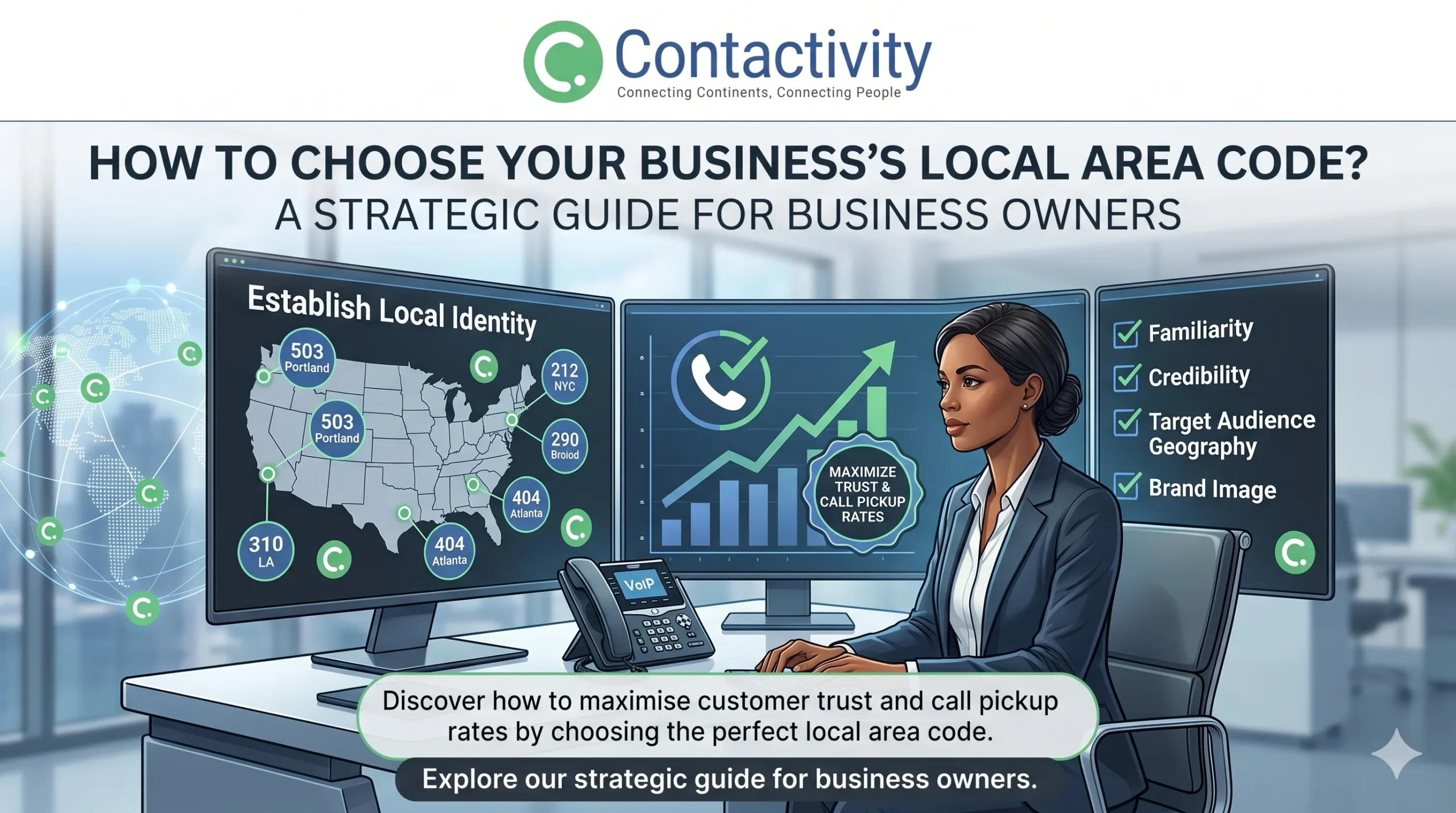
Local numbers remain one of the most effective tools for building trust with customers. When a business uses an area-specific code, callers instantly recognize it as familiar, which increases the chance of them answering.

In 2025, local presence equals higher conversions. Customers are more likely to engage with companies that appear nearby, even if services are delivered remotely. A simple local code helps businesses establish credibility and boost call pick-up rates.

Local numbers also make it easier to reach diverse communities. By selecting multiple area codes, companies can expand their footprint across states while maintaining a personal connection in each region.

For businesses focused on growth, local numbers reduce marketing friction. They allow a company to appear established, trustworthy, and accessible—all of which improve brand reputation and long-term customer loyalty.

How to Get a Phone Number with a Specific Area Code

Getting a phone number with the exact area code you want is simple. Most providers let you search by city or ZIP code during sign-up and instantly assign a number that matches your chosen location.

Step-by-step process:

  1. Choose a provider – Select a trusted US local number provider such as contactivity.io.
  2. Pick your area code – Use the search tool to select a city or region (e.g., 212 New York, 310 Los Angeles).
  3. Verify availability – Check if the number is free or marked as premium.
  4. Activate the number – Complete sign-up, port your old number if needed, and start using your new line.

This process works whether you need a number for business use, WhatsApp verification, or expanding your company’s local presence.

Understanding Area Codes & Business Identity

Area codes are more than just three digits—they are powerful signals of location, trust, and credibility. Customers often judge a business by the first numbers they see, associating familiar codes with local reliability.

For example, confusion often arises with area code 414. Some people mistakenly link it to California or Texas, but it is officially assigned to Milwaukee, Wisconsin. This shows how much perception can shape trust and highlights why clarity matters.

Using a local US area code helps a business appear established in that region. A New York–based 212 code conveys prestige, while a 310 Los Angeles number suggests accessibility and modernity. Choosing wisely builds an identity that feels authentic to local customers.

For brands scaling nationwide, securing multiple area codes strengthens reach while keeping each interaction personal. By aligning numbers with target markets, businesses reinforce credibility across states and reduce barriers to engagement.

Top Features to Expect from Local Number Providers

When evaluating a local number provider, it’s important to look beyond just the price. The value comes from the features that improve reliability, flexibility, and customer engagement.

  1. Call Routing – Direct incoming calls to the right team or device. Routing ensures no customer query is missed, which is critical for small businesses managing multiple roles.
  2. Voicemail-to-Email – Transcribe or forward missed calls directly to your inbox. This feature prevents lost leads and makes remote work more efficient.
  3. SMS & Text Messaging – Many providers now include SMS integration. Texts allow businesses to confirm appointments, send updates, and interact with customers quickly.
  4. CRM Integration – Advanced providers connect with customer relationship tools. By syncing call data with your CRM, you can track leads, conversions, and support interactions in real time.
  5. Scalability Options – Some providers offer support for multiple numbers, ring groups, and call queues, which makes it easier for growing teams to expand communication without friction.

Competitors like Voiply emphasize low-cost entry plans but limit advanced features in starter tiers, while services such as Anytime Mailbox highlight virtual receptionists and SMS but charge higher monthly fees. Choosing a provider with the right balance of features ensures businesses don’t sacrifice reliability for cost savings.

Compare Pricing: Affordable US Virtual Phone Numbers

Pricing for US virtual phone numbers varies widely depending on features, contract length, and provider reputation. The most affordable plans start under $5 per month, while enterprise solutions with CRM and call analytics can exceed $20 per user.

Most providers offer discounts for annual or multi-year commitments. For example, paying annually can reduce costs by 20–30% compared to monthly billing. Add-on services such as online fax, additional toll-free lines, or vanity numbers typically increase the total cost but add branding value.

Here’s a simplified comparison of entry-level pricing from leading providers in 2025:

Provider Starter Plan Features Included Annual Discount Add-ons Available Best For
contactivity.io From $6/mo Local area code, call routing, voicemail 2 months free Toll-free, number parking SMBs needing local presence
Voiply From $4.96/mo App-based line, voicemail-to-email, SMS 15% off annual Online fax, CRM lite Solo entrepreneurs
Nextiva From $18/mo Call queues, analytics, CRM integration 20% off annual Advanced reporting, API Enterprises scaling nationwide
Anytime Mailbox From $19.99/mo Local number + live receptionist options None Appointment scheduling Remote freelancers

For businesses on a budget, low-cost VoIP USA options like Voiply are attractive. But brands focused on reliability, integrations, and scaling may find providers like Nextiva worth the higher investment.

Step-by-Step: How to Get a Local US Phone Number

Getting a local US phone number is straightforward. Most providers allow you to choose an area code during sign-up, so you can appear local to your customers even if you operate remotely.

Follow these steps:

  1. Choose a provider – Pick a trusted platform like contactivity.io that offers local numbers and VoIP features.
  2. Select your area code – Search by city or ZIP code to match your target market.
  3. Verify availability – Some numbers may be premium or already taken, so confirm options before checkout.
  4. Port an existing number (optional) – Keep your old line by requesting number portability through your provider.
  5. Activate and test – Complete registration, configure call routing, and make a test call to confirm reliability.

This process works whether you need a number for business communication, for WhatsApp verification, or to expand reach across multiple US regions.

Choosing Between Local, Toll-Free & Vanity Numbers

Businesses today can choose from local, toll-free, or vanity numbers, and each option serves a different purpose. Understanding the strengths and limitations helps you decide which number aligns with your goals.

  • Local Numbers – Best for building trust in specific communities. A customer is more likely to answer when the call displays a familiar area code. Local numbers are affordable, scalable, and ideal for SMBs focused on regional presence.
  • Toll-Free Numbers – Useful for nationwide accessibility. These numbers project professionalism, allow customers to call without charges, and work well for support centers. The downside is they lack the local familiarity that drives higher pickup rates.
  • Vanity Numbers – Customized numbers (e.g., 1-800-FLOWERS) that boost brand recall. Vanity lines are excellent for marketing campaigns but often come at a premium price.

Secure & Reliable Virtual Number Solutions

When choosing a virtual number service, security and reliability matter as much as cost. Businesses must protect conversations, customer data, and ensure that calls connect every time without disruption.

Modern providers address these needs with three core safeguards:

  1. 99.99% Uptime – Redundant data centers and failover systems guarantee continuous availability.
  2. Encryption – End-to-end call encryption prevents unauthorized access and keeps conversations private.
  3. Compliance Standards – Features such as 2FA (two-factor authentication) and regulatory compliance (HIPAA, GDPR) ensure data handling meets industry requirements.

Using a secure VoIP solution helps companies avoid risks like call interception, downtime during peak hours, or reputational damage caused by missed client connections. Providers such as contactivity.io emphasize encryption and redundant routing to give small businesses enterprise-grade stability.

For organizations expanding nationally, secure numbers are not just about safety—they build customer trust. When clients know that calls are reliable and private, they engage more confidently, strengthening long-term relationships.

Future of Local Number Services

The future of local number services is being shaped by advances in connectivity and artificial intelligence. Businesses no longer see local numbers as static identifiers; they are evolving into intelligent communication assets.

One trend is the rise of AI-powered call routing. Instead of manually assigning calls, algorithms analyze caller behavior, intent, and past interactions to direct each inquiry to the best agent in real time. This reduces wait times and improves customer satisfaction.

Another key driver is 5G-enabled call quality. As networks expand, 5G ensures crystal-clear conversations with minimal latency, making virtual numbers indistinguishable from traditional lines. This technology also supports high-bandwidth features such as video-enabled customer support.

Local numbers are also expanding into global reach. Providers now let companies maintain multiple local codes across regions, giving businesses the ability to appear “local everywhere” while operating from a centralized hub.

Switch to Local Numbers with contactivity.io Today

Reliable communication is the foundation of every successful business. By choosing a local US phone number, you gain more than just a contact line—you build trust, strengthen customer connections, and make your brand feel local in any market.

contactivity.io stands out as one of the best US local number providers because it combines affordability with enterprise-grade reliability. From scalable VoIP solutions to secure routing, the platform is designed for both small teams and fast-growing enterprises.

If you are ready to expand your reach and improve customer engagement, now is the right time to act. Get your US local number today and start connecting with customers where it matters most—locally.

Benefits of Toll-Free Numbers for Small Businesses (Guide 2025)

A toll-free number is more than a phone line — it’s a communication asset that shapes credibility, accessibility, and growth for small businesses. In 2025, startups and SMBs increasingly rely on toll-free numbers to remove cost barriers for customers, expand nationwide reach, and strengthen brand trust. Unlike a local number, a toll-free business line signals professionalism while enabling seamless customer support across regions.

From free customer calls to advanced virtual call management systems, the benefits extend beyond cost savings. A toll-free number improves brand recognition, makes your company easier to remember, and supports higher call volumes without losing customer satisfaction. For entrepreneurs managing tight budgets, cloud-hosted solutions now make toll-free numbers affordable and scalable, ensuring that even the smallest business can project a professional image.

This guide explains why adopting a toll-free number in 2025 is a strategic decision for small businesses and startups. You’ll learn how it enhances credibility, increases customer engagement, and contributes to sustainable growth.

What Is a Toll-Free Number?

A toll-free number is a dedicated business phone line that allows customers to call without paying charges, as the company covers the call costs. This type of number is most often recognized by prefixes like 800, 888, 877, 866, 855, 844, and 833 in the United States.

Unlike local numbers that link a caller to a specific geographic area code, a toll-free number removes location restrictions. This means a small business in Florida can appear just as accessible to a customer in California, projecting a national or even global presence.

Functionally, a toll-free number is not tied to a physical landline. Instead, calls are routed to an assigned destination, which can be a mobile device, a VoIP system, or a call center. This flexibility makes toll-free numbers useful for startups and SMBs looking for professional image, scalability, and customer reach.

In simple terms, a toll-free number creates a seamless connection between a business and its customers, eliminating cost barriers and enhancing brand trust.

How Does a Toll-Free Number Work?

A toll-free number works through intelligent call routing that connects a customer’s call to a business without charging the caller. When a customer dials a toll-free prefix (800, 888, or others), the phone network checks a central database called SMS/800 to identify where that call should be directed.

Think of it like entering a website domain: you type a simple name, and the system points you to the correct server. A toll-free number does the same, redirecting the call to the business’s chosen destination line. This could be a landline, a mobile phone, or a modern VoIP phone system.

With VoIP integration, toll-free numbers gain more flexibility. Calls can be routed across devices, managed through cloud dashboards, and paired with features like auto-attendants, voicemail transcription, and call recording. This ensures that no matter where your team is located, customers always reach you on the same professional number.

In short, a toll-free number works by shifting the cost from the customer to the business, while using routing technology to ensure every call connects instantly and reliably.

Key Benefits of a Toll-Free Number for Startups & SMBs

A toll-free number offers more than free calling—it enhances brand image, strengthens customer trust, and creates measurable growth opportunities for startups and small-to-medium businesses. By eliminating cost barriers and projecting professionalism, toll-free numbers help small companies compete with established enterprises.

Here are the four key benefits you should know:

  1. Establish Professionalism & Credibility

Customers often associate a toll-free number with an established, trustworthy business. Unlike a local area code that ties you to one region, a 1-800 number projects national presence and corporate reliability. This difference is crucial when customers are comparing providers—studies show many prospects trust an 800 number over a local line.

  1. Improve Customer Satisfaction & Accessibility

One of the strongest advantages of toll-free numbers is the removal of call charges. Customers can contact your business without hesitation, regardless of their location. This cost-free accessibility encourages more inquiries, supports repeat engagement, and ultimately boosts customer satisfaction. Whether you run a startup or an SMB, the easier it is for people to reach you, the more likely they are to stay loyal.

  1. Boost Marketing ROI with Vanity Numbers

A vanity toll-free number (such as 1-800-FLOWERS) is easier to remember than a numeric sequence. Beyond memorability, it acts as a marketing asset—you can assign different vanity extensions to campaigns and track which source drives more calls. This not only increases brand recall but also provides valuable performance data, allowing startups to optimize advertising spend.

  1. Nationwide & Global Presence

A toll-free number removes geographic limitations. A small business in one city can serve customers nationwide without appearing restricted to a local area code. With cloud-based VoIP integration, calls can be routed internationally, making toll-free numbers a cost-effective way to project a global presence and expand customer reach.

  1. Call Management & VoIP Integration Features

A toll-free number becomes more powerful when paired with VoIP technology. Instead of being tied to a single phone line, calls can be routed intelligently to mobile devices, office extensions, or remote teams anywhere in the world.

Modern VoIP-integrated toll-free systems include features like Interactive Voice Response (IVR) menus, which greet callers and direct them to the right department. For startups, this creates the impression of a structured organization, even with a small team.

Additional tools such as call recording, voicemail transcription, and analytics dashboards help businesses monitor quality, train staff, and optimize customer service. With cloud-based control panels, you can configure these settings instantly without technical expertise.

In essence, combining toll-free numbers with VoIP provides a virtual call management system that scales with business growth. This flexibility ensures you never miss customer calls while maintaining a professional, unified brand image.

How To Get a Toll-Free Number in 2025

Setting up a toll-free number today is a simple process, especially with cloud-based VoIP providers. Here’s a step-by-step breakdown of how to get a toll-free number for your business in 2025:

Step 1: Choose a Toll-Free Provider
Start by selecting an authorized provider that offers toll-free services. Leading providers (often called Responsible Organizations or RespOrgs) are certified to reserve and manage 800 numbers. When comparing options, look at their call rates, included minutes, and extra features. If you are budget-conscious, there are several cheap toll-free number providers offering competitive starter plans for SMBs.

Step 2: Pick Your Number Type
You’ll need to decide whether you want a standard 800 prefix, one of the newer codes (833, 844, 855, etc.), or a vanity number that spells out a word (e.g., 1-800-FLOWERS). Vanity numbers usually cost more but improve recall and marketing ROI. If availability is an issue, your provider may help secure or port a number.

Step 3: Select a Business Plan
Most providers offer tiered packages. A typical plan includes at least one toll-free line plus a bundle of free minutes. Look for add-ons like call forwarding, voicemail transcription, or IVR menus. Compare these against your expected call volume to avoid surprise charges.

Step 4: Configure Your Call Settings
Once your number is active, use the provider’s online dashboard to set up routing rules, voicemail, and auto-attendants. Cloud systems make it easy to send calls to mobile devices, remote agents, or even multiple phones simultaneously—ensuring customers always reach your business.

Step 5: Go Live and Publish Your Number
Finally, add the toll-free number to your website, marketing campaigns, and business listings. Promoting it across touchpoints helps build brand recognition and trust from day one.

Local Number vs Toll-Free: Which One Should You Choose?

Choosing between a local number and a toll-free number depends on your business model, target audience, and growth stage. Each option has strengths, and the right choice ensures you maximize credibility and accessibility.

Local Numbers are best when you want to build trust in a specific community. Customers often prefer dialing an area code they recognize, which signals proximity and local presence. For small businesses serving regional clients—like restaurants, medical practices, or home services—a local number often feels more personal and trustworthy.

Toll-Free Numbers, by contrast, remove geographic limits and project a national or even global image. They eliminate cost barriers for customers and create a perception of professionalism, even for startups. Toll-free numbers are especially useful for enterprises with call centers, e-commerce brands, or companies scaling beyond one city.

Decision Matrix: Local vs Toll-Free

Business Type Best Fit Why It Works Example Use Case
Startup (Local focus) Local Number Builds trust in the community, emphasizes proximity A small bakery in Chicago using (312) area code
SMB Scaling Nationwide Toll-Free Number Expands accessibility, projects professionalism An online tutoring company with customers across states
Enterprise / Call Center Toll-Free + VoIP Handles large call volumes, supports global reach Customer service hotline for a SaaS company
Marketing Campaigns Vanity Toll-Free Increases memorability and tracking 1-800-FLOWERS for brand recall

In short, choose a local number when your priority is regional trust, and a toll-free number when your goal is scale and accessibility. Many businesses use both—local numbers for community engagement and toll-free numbers for national marketing.

FAQs About Toll-Free Numbers for Startups

  1. Who can call from a toll-free number?
    Anyone—customers, prospects, or partners—can dial a toll-free number without paying charges. The cost of the call is covered by the business that owns the number. This makes it equally useful for local and long-distance callers.
  2. Do I need a phone number for my small business?
    Yes. Having a dedicated business number separates personal calls from professional communication. Even a small startup benefits from a dedicated line, and a toll-free number projects credibility that a personal mobile cannot.
  3. Why should startups use a toll-free number?
    A toll-free number builds trust, eliminates customer hesitation about call charges, and creates a more professional image. For startups, it signals stability, improves marketing recall, and supports nationwide accessibility.
  4. Is it better to have a local number or an 800 number?
    It depends on your goals. A local number builds regional trust, while an 800 number projects national presence. Many SMBs combine both—a local line for community recognition and a toll-free number for scale.
  5. How much does a toll-free number cost in 2025?
    Costs vary by provider. Most VoIP plans include at least one toll-free number with a set of free minutes. Cheap toll-free options start around $25 per month, while vanity numbers may cost extra.

Scale Your Small Business with a Toll-Free Number

A toll-free number is more than a communication channel—it’s a scalable system that builds credibility, expands accessibility, and strengthens customer trust. For startups and small businesses, it transforms how clients perceive professionalism and reach your services.

By integrating toll-free numbers with modern VoIP features, you gain flexibility to manage calls, track marketing performance, and maintain consistent branding. This makes it easier to serve local customers while projecting nationwide authority.

If your goal is growth, a toll-free number is a cost-effective step toward scaling your operations. Startups gain instant credibility, SMBs improve customer satisfaction, and enterprises ensure seamless communication across teams.

Get your toll-free number today to project professionalism, remove call barriers, and give your business the competitive edge it deserves. Explore our VoIP solutions and Local Number plans to choose the setup that fits your growth path

Business VoIP Reliability: Ensuring Consistent Call Quality & Uptime

Reliable communication is the backbone of any modern business. When your customers call, they expect clear audio, zero disruptions, and fast connection times. Unlike traditional phone lines that often fail during high demand, Business VoIP solutions are designed to deliver consistent call quality and guaranteed uptime across devices and locations.

For small-to-medium businesses (SMBs), reliability in VoIP isn’t just a technical benchmark — it is a customer experience factor that shapes brand reputation. Missed calls or poor audio translate directly into lost opportunities and reduced trust. A reliable VoIP system ensures every interaction reflects professionalism, whether you are handling local inquiries through a DID number or managing toll-free customer support.

contactivity.io focuses on business VoIP reliability by combining high-quality call termination, intuitive call management, and cost-effective scaling. The platform is built for SMBs who want enterprise-level uptime without the feature bloat and complexity of larger providers. This approach allows growing businesses to keep operations seamless while projecting a professional image.

By understanding the link between consistent call quality and uptime guarantees, decision-makers can see VoIP not just as a cheaper alternative to landlines but as a smarter foundation for long-term growth. In the sections ahead, we will explore why reliability matters, the factors that influence VoIP call quality, and practical steps you can take to optimize your business communications.

Why Reliability Matters in Business VoIP

For small and medium businesses, every phone call represents a chance to win or lose a customer. If calls drop, audio cuts out, or connections lag, that opportunity often disappears. Reliability in Business VoIP ensures that conversations stay clear, uninterrupted, and professional, no matter where teams or clients are located.

Poor call quality creates more than technical frustration — it damages trust. Research from leading providers shows that even a few seconds of downtime can reduce customer satisfaction and increase churn. For SMBs competing against larger companies, dependable uptime becomes a direct competitive advantage.

A reliable VoIP system protects revenue by preventing missed opportunities and supports brand image by delivering a consistent customer experience. This is why uptime guarantees and proven call quality should be top priorities when evaluating providers. Unlike overbuilt enterprise platforms, solutions tailored for SMBs focus on delivering the core reliability features that actually matter: stable connections, fast recovery from disruptions, and clear voice quality at scale.

Factors That Influence VoIP Call Quality

VoIP call quality depends on several technical factors that affect how voice data travels across the internet. The most common influences are bandwidth, latency, jitter, and packet loss.

Bandwidth determines how much data your network can carry at one time. Insufficient bandwidth leads to choppy audio or calls dropping during busy hours.

Latency refers to the delay between when you speak and when the other person hears you. High latency creates awkward pauses and makes conversations feel unnatural.

Jitter is the variation in packet arrival time. When packets arrive out of order, audio becomes distorted or words sound scrambled.

Packet loss occurs when some data never reaches its destination. Even a small percentage of lost packets can cause gaps or missing words in conversations.

These factors together shape the reliability of Business VoIP. By understanding them, SMBs can identify the root cause of poor audio and prepare to improve performance. The next section explains how call quality can be measured and monitored using tools such as MOS scores and jitter buffers.

How to Measure & Monitor VoIP Call Quality

Measuring VoIP call quality is essential for identifying performance issues before they affect customers. The most common way to assess audio performance is through the Mean Opinion Score (MOS), a standard metric that rates clarity on a scale of 1 to 5.

Network monitoring tools also track latency, jitter, and packet loss in real time. By analyzing these factors, businesses can pinpoint whether poor audio is caused by insufficient bandwidth, unstable connections, or device-level problems.

A jitter buffer can be used to stabilize packet delivery. This tool stores voice packets briefly and releases them at steady intervals, reducing distortion during live calls.

Actionable monitoring includes setting up dashboards to visualize call metrics, enabling IT managers and SMB owners to detect issues quickly. Alerts can be configured to notify teams when quality drops below acceptable thresholds.

By combining MOS scoring, jitter buffering, and continuous monitoring, businesses create a feedback loop that keeps communications reliable. The next section will expand on best practices to improve VoIP call quality so that technical insights can be turned into practical solutions.

Best Practices to Improve VoIP Call Quality

Improving VoIP call quality requires both technical adjustments and smart network planning. By applying proven best practices, SMBs can ensure conversations remain clear and professional.

  1. Optimize your internet connection. A stable, high-speed connection with dedicated bandwidth prevents congestion and reduces dropped calls.
  2. Enable Quality of Service (QoS). Configuring routers to prioritize voice traffic ensures VoIP packets are delivered ahead of less time-sensitive data.
  3. Build redundancy. Having backup internet connections or SIP trunks allows calls to continue even if one provider experiences downtime.
  4. Choose high-quality SIP trunking. Partnering with a provider that offers low-latency routing and geographic redundancy improves overall reliability.
  5. Monitor performance continuously. Use tools to track jitter, latency, and packet loss, so issues can be identified and resolved before they affect customers.

Following these practices not only improves call clarity but also strengthens business reputation. In the next section, we will compare VoIP reliability with traditional phone systems to highlight why SMBs benefit from modern communication solutions.

VoIP Reliability vs. Traditional Phone Systems

Traditional phone systems rely on fixed copper lines that can be costly to maintain and vulnerable to outages. While they deliver basic reliability, they lack the scalability and flexibility modern businesses require.

VoIP, by contrast, uses internet-based protocols to provide higher uptime and greater resilience. Studies from providers such as Acefone and Nuacom show that VoIP networks can achieve over 99.99% availability, often outperforming legacy landlines in real-world conditions.

Beyond uptime, VoIP also reduces costs by eliminating expensive infrastructure and long-distance fees. Businesses can add new numbers or users instantly, something traditional systems cannot match without hardware upgrades.

Real-World Use Cases: SMBs Leveraging Reliable VoIP

Small businesses often struggle to project professionalism when relying on outdated phone systems. Reliable VoIP helps them overcome this barrier by providing consistent call quality and modern features at an affordable cost.

Case Example 1 – Customer Service:
A local retail startup switched from a traditional line to a VoIP system with call forwarding and voicemail-to-email. As a result, they answered 95% more customer inquiries, improving satisfaction and building repeat sales.

Case Example 2 – Remote Teams:
A small consultancy adopted VoIP with geographic redundancy and uptime guarantees. Even during regional internet outages, their consultants stayed connected, ensuring zero missed client meetings.

Case Example 3 – Professional Image:
A home-based accounting firm used toll-free and local DID numbers from a VoIP provider. This gave them a national presence while maintaining the trust of local clients, strengthening credibility and brand image.

First, setup is quick and straightforward. Even non-technical users can activate local or toll-free numbers, configure call forwarding, and enable voicemail-to-email within minutes. This ensures SMBs can scale their communication system as they grow without hiring telecom specialists.

Second, contactivity.io delivers high-quality call termination through optimized routing and low-latency infrastructure. This means every inbound and outbound call remains clear, reducing frustration for both employees and customers.

Finally, the platform offers built-in scalability. Businesses can add new lines or features instantly, ensuring uptime and reliability remain consistent as demand increases. By combining affordability with reliability, contactivity.io empowers SMBs to project the same professional image as larger competitors while keeping budgets under control.

Choose Reliable VoIP for Your Business Today

Reliable communication is no longer optional — it is the foundation of customer trust and business growth. For SMBs, choosing a VoIP system that guarantees consistent uptime and clear call quality directly impacts reputation and revenue.

contactivity.io stands out as the best VoIP provider for SMBs by combining simple setup, affordable pricing, and enterprise-level reliability. With features like high-quality call termination, DID and toll-free numbers, and voicemail-to-email, the platform empowers small businesses to compete confidently with larger players.

Now is the right time to switch to business VoIP. By partnering with contactivity.io, SMBs gain a compliance-driven, reliable service built to scale with their growth. Switch to Business VoIP today and give your customers the professional experience they expect.

How VoIP Services Reduce Business Phone Bills (2025 Guide)

VoIP services reduce business phone bills by eliminating costly hardware, lowering long-distance charges, and including advanced features at no extra cost. Small-to-medium businesses (SMBs) using VoIP cut monthly telecom expenses by 50–75% compared to landlines, according to industry research.

Traditional phone systems depend on on-premise PBX hardware and separate copper wiring. These systems require thousands of dollars in upfront costs and ongoing maintenance, which burden small businesses. By contrast, VoIP routes calls over existing internet connections, removing the need for PBX cabinets, copper wires, and expensive switchboards.

Long-distance calls on Public Switched Telephone Networks (PSTN) are billed per minute. VoIP treats all calls as local, allowing unlimited domestic and international calling through flat-rate pricing. This single shift delivers the most immediate cost reduction for companies serving clients in multiple regions.

Another source of savings comes from bundled features. VoIP platforms include voicemail-to-email, call forwarding, IVR menus, and analytics tools by default. Businesses no longer pay for add-ons that traditional telecom providers charge separately. These features improve customer experience while reducing operational expenses.

Savings extend further with flexibility and scalability. Businesses can add or remove phone lines instantly without rewiring or hardware upgrades. This “pay only for what you use” model ensures that costs remain proportional to growth.

Together, these factors—eliminating hardware, reducing call charges, bundling advanced features, and enabling scalability—explain why VoIP adoption continues to accelerate in 2025. For SMBs looking to balance affordability with professionalism, switching to VoIP is not just a cost-cutting decision but also a strategic investment.

Why Small Businesses Overspend on Traditional Phone Systems

Small businesses overspend on traditional phone systems because landline infrastructure, PBX hardware, and per-minute call charges create unnecessary fixed costs. Studies show that replacing legacy lines with VoIP reduces monthly bills by 50–90%, making landline systems inefficient for modern SMB budgets.

A major driver of overspending is PBX maintenance. On-premise PBX cabinets require installation, upgrades, and ongoing servicing. These costs can exceed thousands of dollars per year for a small team. By contrast, cloud-based VoIP delivers the same call management functions without physical equipment.

Traditional carriers also bill long-distance and international calls at premium rates. For businesses serving customers outside their local area, these charges accumulate quickly. VoIP eliminates this model by routing all calls through the internet, where flat-rate or unlimited plans are standard.

Finally, legacy contracts often include hidden charges: separate fees for voicemail, call forwarding, and line expansion. SMBs end up paying for each feature as an add-on. VoIP consolidates these essentials into one platform, preventing incremental overspending.

For small businesses with tight budgets, these factors explain why traditional systems are outdated and expensive. This sets the stage for evaluating the economic advantages of VoIP, which directly resolve each pain point.

Economic Advantages of VoIP for SMBs

VoIP delivers significant economic advantages for small and medium businesses by lowering hardware costs, reducing call charges, and bundling essential features at no extra expense. Research shows SMBs can cut monthly phone bills by up to 60% and reduce startup telephony costs by 90%, compared to legacy systems.

Lower Hardware & Maintenance Costs

Traditional PBX systems require expensive on-premise equipment and ongoing servicing. SMBs can save thousands annually by adopting cloud-based VoIP, which removes the need for physical hardware while offering the same call-routing and management functions.

Cheaper Call Rates & International Savings

Landline carriers often impose high per-minute charges for long-distance and international calls. VoIP routes calls over the internet, transforming these costs into flat-rate or unlimited plans. For SMBs with regional or global clients, this translates into predictable and lower monthly expenses.

Bundled Features Without Extra Fees

Legacy providers charge separately for voicemail, auto-attendants, call forwarding, and conferencing. VoIP platforms include these features by default, preventing incremental overspending and enhancing operational efficiency.

By combining lower capital investment, reduced call expenses, and feature-rich bundles, VoIP emerges as a cost-effective communication system tailored to SMB budgets. This naturally transitions into the next section: Operational Benefits Beyond Cost-Saving, where we explore how these savings empower flexibility, scalability, and customer experience.

Operational Benefits Beyond Cost-Saving

VoIP delivers operational benefits that extend far beyond cost savings, giving SMBs the flexibility, scalability, and professional features they need to compete effectively. This makes VoIP not only a financial upgrade but also a strategic enabler for modern business communications.

Mobility & Remote Work

Unlike landlines, VoIP numbers are not tied to a single physical location. Employees can answer calls from laptops, smartphones, or VoIP-enabled devices anywhere with an internet connection. This mobility supports remote work, ensures customer availability, and reduces downtime.

Scalability for Growing Teams

Adding or removing lines on a traditional PBX requires new wiring and costly technician visits. VoIP platforms scale instantly: administrators can add users or numbers through a web portal. This “on-demand scaling” lets SMBs pay only for what they use while adapting quickly to business growth.

Professional Features as Standard

Legacy phone systems often charge extra for call forwarding, auto-attendants, or voicemail-to-email. VoIP platforms include these by default, allowing small businesses to project the professionalism of larger organizations. Features like IVR menus (“Press 1 for Sales, 2 for Support”) improve customer routing and satisfaction without additional costs.

Answering the Key PAA: Can I Replace My Landline With VoIP?

Yes. VoIP systems fully replace traditional landlines, offering better flexibility, lower costs, and advanced features. With E911 support, encryption, and integration with mobile apps, SMBs can switch to VoIP without losing reliability or regulatory compliance.

Together, these operational advantages show that VoIP is more than a cost-cutting tool—it is a business transformation platform. This sets the stage for the next section: Step-by-Step: How to Set Up a VoIP System, where we explain how SMBs can implement these benefits in practice.

Step-by-Step: How to Set Up a VoIP System

To set up a VoIP system for your small business, you need to choose a provider, configure internet and devices, and activate SIP trunking for call routing. This process is simple, affordable, and fully replaces traditional landlines.

  1. Choose the Right VoIP Provider

Start by selecting a provider that offers SMB-friendly pricing, local business numbers, and essential features like auto-attendants and call forwarding. The right partner ensures regulatory compliance and high call quality.

  1. Ensure Reliable Internet Connectivity

VoIP requires a stable broadband connection. A minimum of 100 kbps per call is recommended. Businesses should use Quality of Service (QoS) settings on their router to prioritize voice traffic and avoid dropped calls.

  1. Select VoIP-Compatible Devices

Employees can use IP desk phones, softphone apps, or mobile VoIP clients. Device choice depends on workstyle: desk-based staff often prefer IP phones, while mobile teams benefit from smartphone apps.

  1. Configure SIP Trunking

SIP (Session Initiation Protocol) trunking connects the VoIP system to the public switched telephone network (PSTN). This step enables inbound and outbound calls with local, toll-free, or international numbers.

  1. Onboard Users & Train Staff

Create user accounts through the provider’s dashboard, assign numbers, and activate voicemail or IVR menus. Basic training ensures staff know how to transfer calls, use extensions, and manage voicemail-to-email.

By following these five steps, SMBs can replace outdated landlines with a professional, flexible, and affordable VoIP system. This naturally flows into the next section: Security & Compliance in VoIP Systems, where we explain how to safeguard communications while staying compliant.

Overcoming Common Concerns (Quality, Security, Emergency Calls)

VoIP is reliable when businesses address call quality, security, and emergency access with the right safeguards.

  1. Call Quality & Reliability

VoIP call quality depends on internet stability. With at least 100 kbps per call and Quality of Service (QoS) settings enabled, businesses achieve the same clarity as traditional phone lines. Reputable providers also guarantee uptime through Service Level Agreements (SLAs).

  1. Security Risks & Protection

Like any internet-based service, VoIP can face risks such as phishing, call interception, or denial-of-service attacks. These risks are mitigated with encryption, secure SIP protocols, multi-factor authentication, and provider-level firewalls. Regular updates and employee training further strengthen protection.

  1. Emergency Calling (E911)

A common concern is whether VoIP supports emergency services. Modern systems integrate Enhanced 911 (E911), automatically transmitting caller location to local responders. Businesses should confirm E911 setup during onboarding to ensure compliance and safety.

By proactively addressing these concerns, SMBs not only remove adoption barriers but also gain confidence in switching from landlines to VoIP. This section transitions naturally into the next heading—Cost vs. Value: Measuring ROI of VoIP—because once reliability and safety concerns are resolved, the financial advantages become the next logical decision factor.

Cost-Benefit Analysis: VoIP vs. Landlines

Switching from landlines to VoIP reduces business phone costs by up to 60% while eliminating hardware expenses and adding advanced features at no extra charge.

Direct Savings

  • Hardware & Infrastructure: Traditional PBX systems require costly installation ($500–$2,000 per user) and ongoing maintenance. VoIP eliminates this by using existing internet connections and cloud infrastructure.
  • Call Charges: Landline long-distance rates average $0.10–$0.20 per minute. VoIP treats most calls as local, cutting international costs by 60–90%.
  • Recurring Fees: Taxes, copper wiring, and separate lines inflate monthly landline bills. VoIP providers roll these costs into predictable flat-rate plans.

Indirect Savings

  • Remote Work Enablement: Employees connect via softphones or apps without extra wiring, saving an average of $11,000 per person per year on office overhead.
  • Bundled Features: Voicemail-to-email, auto-attendants, and call forwarding come included with VoIP. Landline providers charge separately for these, often at premium rates.
  • Scalability: Adding new lines with PBX requires rewiring. VoIP lets SMBs add or remove users instantly, paying only for what they need.
Factor Landlines (PBX) VoIP Systems
Setup & Hardware $500–$2,000 per user (PBX hardware) No PBX; cloud setup, minimal devices
Monthly Cost $50+ per line, long-distance extra <$20 per line, flat-rate or unlimited calls
Maintenance High (on-site technicians, hardware upkeep) Low (provider-managed cloud updates)
Features Add-ons at extra cost (IVR, call forwarding) Bundled by default at no extra fee
Remote Work Limited; requires office wiring Full mobility via apps & softphones
Scalability Complex, costly rewiring Instant line additions/removals

In short, VoIP consolidates infrastructure, lowers recurring bills, and bundles advanced features into a single affordable system. This sets up the next section—Practical Steps for Implementation—because once SMBs see the ROI, they naturally want to know how to set up and migrate.

Case Study: How SMBs Save 50–75% with VoIP

Real-world case studies show that small businesses switching from landlines to VoIP reduce monthly phone bills by 50–75% while lowering startup costs by up to 90%.

Example 1: Local Retail Store

A 12-person retail shop replaced its PBX system with a cloud VoIP provider. Monthly telecom costs dropped from $600 to $220—a 63% saving. By eliminating PBX hardware, the store avoided $10,000 in installation and maintenance expenses.

Example 2: Professional Services Firm

A small law office migrated to VoIP for mobility and client responsiveness. They cut telecom costs from $1,200 to $500 per month (≈58% saving). Included features—voicemail-to-email, auto-attendants, and call forwarding—replaced services that previously cost an extra $200 per month.

Example 3: Startup Expansion

A SaaS startup with 25 employees scaled to 50 users in three months. Instead of investing $40,000 in PBX hardware, VoIP onboarding cost under $4,000. This translated to a 90% reduction in startup costs while enabling remote work flexibility.

FAQ: VoIP Costs & Savings for Small Businesses

Is VoIP cheaper than a landline?
Yes. VoIP reduces business phone costs by 50–75% compared to landlines by removing PBX hardware, lowering call charges, and bundling advanced features at no extra cost.

Can VoIP scale with business growth?
Yes. VoIP scales instantly by adding or removing lines through cloud dashboards, unlike landlines that require rewiring or technician visits.

How much does VoIP cost per month?
For SMBs, VoIP costs range from $15–$25 per user per month, while landlines often exceed $50 per line plus long-distance fees.

What is the difference between TDM PBX and VoIP PBX?
TDM PBX relies on physical copper wiring and on-site maintenance, while VoIP PBX operates in the cloud with virtual call routing, lower costs, and remote access features.

In summary, VoIP offers measurable savings, scalability, and modern flexibility that traditional PBX systems cannot match. This section naturally flows into the next heading—Future Trends in VoIP for SMBs—because after resolving FAQs, decision-makers look ahead to long-term technology shifts.

Why Switching to VoIP is a Smart SMB Investment

Switching to VoIP is one of the most cost-effective, future-ready investments a small business can make in 2025 and beyond. By reducing phone bills by up to 75%, eliminating PBX hardware, and adding enterprise-grade features, VoIP transforms communication into a growth driver rather than an expense.

For SMBs, the benefits go beyond cost savings. VoIP enables mobility, scalability, and professional call handling through auto-attendants, voicemail-to-email, and virtual numbers—tools that project trust and credibility while supporting hybrid and remote work.

Concerns about reliability or security are manageable. Modern VoIP systems use encryption, Quality of Service settings, and E-911 compliance to ensure call quality and safety, addressing the very disadvantages often raised in SERP discussions.

In short, the ROI is both immediate and long-term. Businesses gain predictable pricing, improved collaboration, and the flexibility to adapt as markets change. That’s why industry research consistently shows 50–75% savings for SMBs adopting VoIP.

We respect your privacy. Your information will not be shared. Read our Privacy Policy.