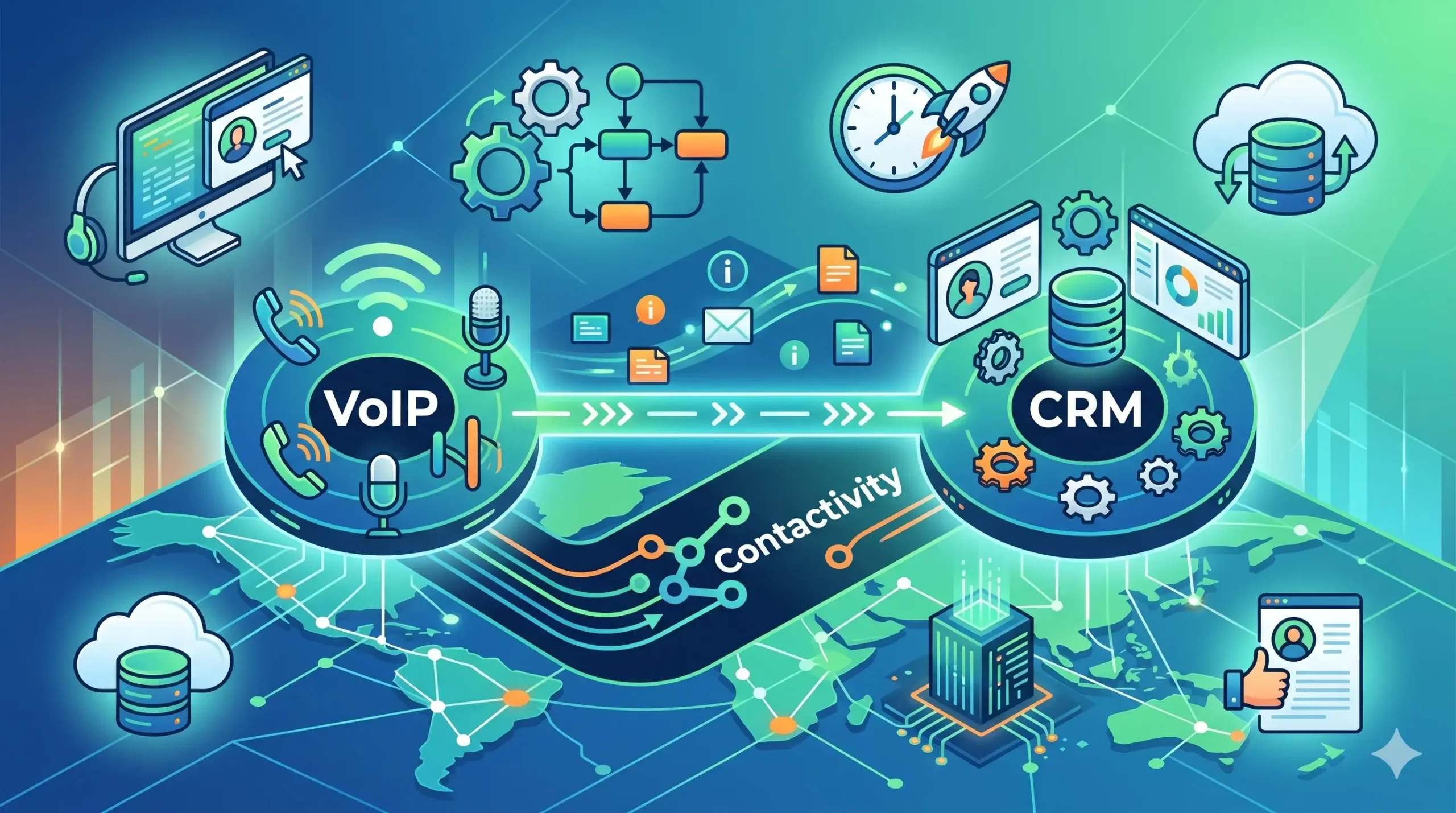
Your local phone number is more than just a string of digits. It’s the foundation of your brand identity in a specific market, a trust signal for local customers, and in many cases, a number that has been printed on business cards, listed in directories, and memorised by loyal clients for years.
The thought of losing it when switching communication providers is a real concern for business owners and IT managers alike.
That is where Local Number Portability (LNP) comes in. This guide provides a complete walkthrough of the LNP process, what the FCC mandates, and exactly how Contactivity supports you in transitioning your geographic numbers without missing a beat.
Key Points at a Glance
• LNP is a federally protected right under FCC regulations, allowing any business to keep its local number portability when changing providers.
• The porting process for geographic (local DID) numbers typically takes 3 to 5 business days with Contactivity.
• You need your account number, service address, PIN/passcode, and a signed Letter of Authorisation (LOA) to initiate a port.
• Proper preparation eliminates the most common causes of delays and service disruption.
• Contactivity provides dedicated LNP support throughout every stage of the porting process.
What Is Local Number Portability (LNP)?
Local Number Portability is the federally mandated process that allows businesses and consumers to retain their existing telephone numbers when switching from one service provider to another.
Established by the FCC under the Telecommunications Act of 1996, LNP applies to local geographic numbers, which are also referred to as Direct Inward Dialling (DID) numbers, and covers transitions between wireline carriers, wireless carriers, and VoIP providers.
In practical terms, if your business currently operates with a 212, 312, or 415 area code number through a legacy carrier, you can transfer that exact number to Contactivity Local Number Services without any change to the digits your customers dial. The underlying network infrastructure changes, but your public-facing number remains identical.
Why Your Local Geographic Number Is a Business Asset
For both SMB owners like Sarah and IT managers like Ian, a local number portability represents years of built-up brand equity. It appears in Google Business Profiles, on invoices, across website footers, and in customer contacts. Changing it means updating every single touchpoint and, more critically, risking that longtime customers reach a disconnected line.
Beyond familiarity, research consistently shows that local area codes generate higher call answer rates. Customers are more likely to pick up a call from a local number portability and more likely to trust a business that appears rooted in their community.
This makes your geographic number a direct revenue asset. You can explore more on how businesses leverage local number portability strategically in our Local Number Services overview.
FCC Regulations Governing LNP
The FCC enforces strict rules to protect your right to port numbers. Under these regulations, your current provider (the losing carrier) is prohibited from blocking, delaying, or creating unnecessary barriers to a valid port request. Key FCC protections include:
• The losing carrier must process a valid port request within one business day for wireless numbers and within a reasonable timeframe for wireline and VoIP numbers.
• Providers cannot charge unreasonable porting fees or impose contract lock-in clauses that prevent number transfers.
• Any denial of a port request must be accompanied by a specific, documented reason.
As an FCC and RMD registered provider, Contactivity.io operates within full compliance of these regulations, meaning your port request is processed according to federal standards from day one.
The LNP Process: Step-by-Step with Contactivity
Step 1: Verify Number Portability
Before initiating anything, confirm that your number is eligible for porting. Most geographic local numbers are fully portable. Contact the Contactivity support team and provide your current number. The team will verify eligibility within hours.
Step 2: Gather Required Information
This is the step where most delays originate. To submit a port request, you must provide the following details exactly as they appear on your current carrier account:
• The telephone number(s) to be ported
• Your current account number with the losing carrier
• The account PIN or passcode (if applicable)
• The exact service address registered to the account
• The authorised account holder’s name
Step 3: Sign the Letter of Authorisation (LOA)
The LOA is a legally binding document that authorizes Contactivity to initiate the port on your behalf. Contactivity provides a authorises, pre-formatted LOA template to reduce errors and processing delays.
Step 4: Contactivity Submits the Port Order
Once all documentation is verified, Contactivity submits the port order to the losing carrier through the established inter-carrier systems. You will receive a Firm Order Commitment (FOC) date, which is the confirmed date your number will migrate to Contactivity.
Step 5: Number Cutover and Testing
On the FOC date, your number is transferred to the Contactivity network. The cutover is typically completed within minutes. The support team will confirm activation and assist with any call routing configuration needed on your account.
LNP Timeline and Provider Comparison
Understanding how Contactivity compares to other options helps businesses make an informed decision before initiating a port.
| Feature / Factor | Contactivity | Typical Carrier | Generic VoIP Provider |
| Dedicated LNP Support | Yes, dedicated porting team | Limited, general support | Often self-service only |
| Average Porting Timeline | 3 to 5 business days | 7 to 10+ business days | 5 to 10 business days |
| Service Disruption Risk | Minimal, coordinated cutover | Moderate without guidance | Varies by provider |
| FCC Compliance | Fully FCC and RMD registered | Varies by carrier | Varies widely |
| LOA Assistance | Provided and guided | Customer responsibility | Basic templates only |
| Number Inventory (DIDs) | Thousands of area codes | Limited by region | Moderate inventory |
| Real-Time Status Updates | Yes, proactive updates | Often limited | Limited or none |
Information Checklist Before You Begin Porting
Having the right documentation ready before contacting Contactivity saves days of back-and-forth. Use this checklist:
• Current carrier account number (found on your phone bill)
• Exact billing name and service address on the account
• Account PIN or security code
• The specific local DID numbers you want to port
• A copy of a recent invoice from the current carrier
Avoiding Service Disruption During the LNP Process
The most common cause of service disruption during porting is inaccurate account information on the LOA. Mismatches between the submitted details and the losing carrier’s records result in reject notices and reset the porting timeline.
Contactivity recommends maintaining your existing service active with the losing carrier until you receive confirmation that the FOC date cutover is complete. This ensures zero downtime.
If you also operate with toll-free numbers or require call termination services, those can be configured in parallel during the porting window to complete your full communication transition in a single coordinated move.
How Contactivity Supports Your LNP Journey
Contactivity is not just a number provider; it is a porting partner. The dedicated LNP support team handles the technical coordination with the losing carrier, monitors the port order status, and proactively communicates any issues or updates directly to you.
Whether you are an IT manager porting numbers for an entire organization or an SMB owner porting a single storefront number, the process is guided at every stage.
Once the port is complete, your local geographic numbers integrate seamlessly with the full suite of Contactivity VoIP features, including auto-attendant, call forwarding, voicemail-to-email, and HD voice. There is no rebuild required; your numbers simply arrive on a more powerful, FCC-registered platform.
Ready to Port Your Local Numbers?
Keeping your local business number while upgrading to a modern VoIP infrastructure is entirely achievable. With the right information, proper documentation, and a provider that handles the process with care, LNP is straightforward and low-risk. Contact Contactivity today to begin your number portability assessment and get a personalized porting timeline for your geographic numbers.