Our Blog

Toll-Free Numbers Marketing

Toll-Free Numbers Marketing: Boost Your Brand Engagement

Strategies for Effective Marketing Communication

Unlocking Marketing Potential: Leveraging Toll-Free Numbers

Marketing campaigns have always relied on a helping hand that can boost the entire effort. For instance, social media is one of the best tools to consider. Other than this, toll-free number marketing has been in trend with that. All social media or billboard designs consider the addition of charge-free numbers.

These numbers just add more attraction to a marketing design. Furthermore, they also help boost the impact of marketing campaigns. Therefore, toll-free numbers are the optimal solution to consider. The basic necessity of using a toll-free number is to allow users to reach out to you without any cost.

It is also a matter of fact that most businesses do not bother to spend more on marketing campaigns. So, it is a cost-effective alternative for businesses of all sizes. To get an easy-to-remember toll-free line, you can reach out to Contactivity.

The VoIP service provider has been offering the finest quality services at the most affordable rates. Moreover, the best part is that you will not face severe downtime. In a nutshell, the service provider is offering quality without any compromises.

How can toll-free numbers help in marketing campaigns?

You can craft effective marketing strategies with toll-free numbers. These numbers can be highly effective when it comes to designing marketing ads.

In short, you are inviting more and more prospects to connect with you. Thus empowering your marketers with a tool to boost sales. Here is how you can craft effective marketing campaigns using toll-free digits:

Track marketing campaign calls.

As mentioned earlier, toll-free numbers are one of the most effective marketing tools. They allow businesses to get their hands on detailed analytical data.

Let’s say you are using a special number for campaigns. The number will not only help you highlight effective strategies but will also help you revamp the existing ones. This will help you get the most out of your marketing efforts. There is detailed analytical data that can set you forward.

For instance, you can record the number of all incoming calls. You can record the geographic area and their interests. This way, you can use your social media handles to target a specific audience for returning businesses.

Add toll-free digits to marketing videos:

Nowadays, ads are only crafted to be posted on social media platforms. However, this does not remain the same. Most billboard owners are now offering the opportunity to play marketing videos on their screens at different locations.

Other than this, TV advertisements have proven to be another great toll-free number marketing strategy. You can create a marketing video that can be played on different platforms.

It is like, One size fits all. A toll-free number on such marketing videos will improve the presence and appearance of your campaigns. In a nutshell, you are going to embark on a great marketing journey with 800 numbers.

Make marketing material prominent.

The main benefit of having a cost-free phone number is that it looks attractive and is more compelling than other phone numbers. Your marketing advertisements will surely look prominent with their addition. You can add this to your print and online marketing campaigns for maximum effectiveness. In a nutshell, its addition will surely bring in more accessibility and visibility.

Use vanity numbers or campaign-specific numbers.

Toll-Free Numbers Marketing

Most marketing agencies use toll-free lines for advertising and marketing to a specific target. They use campaign-specific numbers to enhance the tracking capabilities of their team. In simple words, a specific number is used for a specific channel. You can assign numbers to different marketing campaigns.

It helps in measuring the effectiveness of each campaign and helps in adjusting the marketing strategy depending on analytical data. Vanity telephone numbers can be considered one of the perfect examples of effective marketing. It is a number that defines a brand. Moreover, it is easy to remember and free to call, like a normal toll-free number.

Use them on different marketing channels:

Marketing campaigns are not limited to print media. In recent years, marketing strategies have worked perfectly across different channels, especially the online one. Most businesses prefer to add WhatsApp phone numbers to their marketing ads.

Yet, WhatsApp requires the availability of the internet every time. The discontinuation of the internet or errors with phones sometimes create problems. On the other hand, toll-free numbers are free to call anytime and from anywhere.

So, it is a wise decision to add these numbers to marketing ads where possible. As mentioned above, toll-free numbers offer great analytical data for marketing campaigns. You can track the number of inbound calls along with other essential details such as gender, interest, area, and more.

Add them to a strategic call to action (CTA):

Reports have found that campaigns with a focused CTA tend to have more clicks or users than others. The other way around, CTAs are essential and crucial in driving more business toward you. Moreover, you will need a team of experts at your disposal to answer calls.

CTAs need to be strategically solid and well organized to keep things nice and easy. If you want a creative marketing approach with toll-free numbers, then try adding them at the end of every marketing ad, especially in website banners, social media posts, and email campaigns. Make sure to add them to a tagline and banner.

Select any easy-to-remember and wise number:

To boost marketing strategies, your marketing team needs to suggest an attractive toll-free number. Usually, toll-free numbers are 800 numbers that are easy to remember. For effective toll-free number marketing, you should not consider anything that is available.

Rather, you should look for a number that best matches your needs. A number that is most likely to become a brand image for your company. As mentioned above, you can choose a number that defines your business in your absence, such as a vanity number.

What Is a Toll-Free Number? Benefits, Costs, and How to Get One

The benefits of toll-free numbers for businesses include improved customer trust, stronger brand credibility, and increased accessibility across regions. Because toll-free numbers are location-independent, companies can maintain a consistent point of contact even if they relocate or expand nationally. 

They also support voice and SMS communication making them valuable for marketing campaigns, appointment reminders and two way customer engagement while enhancing the overall customer experience.

The cost of a toll-free number is free for callers but billed to the business based on usage, including call minutes and outbound text messages, along with a modest monthly subscription. To get a toll-free number, businesses choose a telecom or messaging provider select an available prefix and complete the setup and verification process required for compliance. Once approved the number can be activated for calling and texting allowing businesses to communicate reliably and professionally with their audience.

How can Contactivity help you?

Contactivity has been a helping hand for businesses. It has been helping businesses strive better in their respective fields or business niches. The only thing that you need to consider is the quality of the service.

The VoIP service provider offers the best quality that exactly matches your toll-free number of marketing strategies. You can get toll-free numbers and local numbers at the most affordable rates. The best part is that there is a qualified team of experts that is making sure that there is no or minimum downtime.

FAQs 

How do toll-free numbers improve conversion rates in marketing campaigns?
They reduce friction by making it easier for prospects to contact a business, increasing call volume and lead quality. Free access encourages faster action from potential customers.

Can toll-free numbers integrate with CRM and marketing tools?
Yes, toll-free numbers can connect with CRM and analytics platforms to track calls, record data, and measure campaign performance in real time.

Which industries benefit most from toll-free number marketing?
Service-based industries like healthcare, real estate, e-commerce and customer support gain the most due to high inbound inquiry volumes.

How do toll-free numbers help track offline marketing performance?
Unique toll-free numbers can be assigned to billboards, TV ads, or print media to measure response rates and audience reach.

Are toll-free numbers suitable for small businesses?
Toll-free numbers are cost-effective and scalable making them ideal for startups and small businesses looking to build credibility.

Virtual Local Numbers: How Businesses Can Establish Presence Anywhere with contactivity.io

Small businesses lose 34% more customer calls when using non-local phone numbers. Customers hesitate to call unfamiliar area codes, reducing answer rates and limiting market reach. This hesitation costs SMBs thousands in missed opportunities annually.

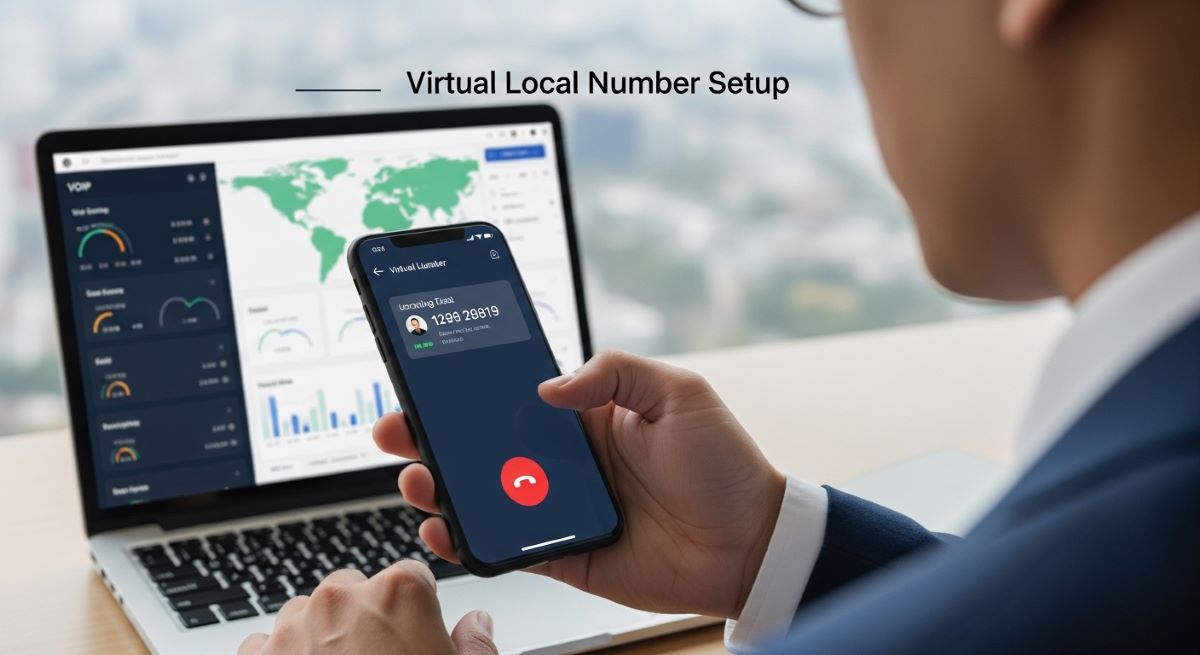
Virtual local numbers eliminate this barrier by enabling businesses to establish trusted local presence in any geographic market without physical offices. Through VoIP technology, companies display familiar area codes to customers while routing calls to any device anywhere. This article explains what virtual local numbers are, how they work, and why SMBs use them to expand markets affordably.

What Is A Virtual Local Number?

A virtual local number is a cloud-based phone number with a specific area code that routes calls to any device via VoIP technology, enabling businesses to establish local presence in any geographic market without physical offices.

Unlike traditional phone numbers tied to physical copper lines and specific locations, virtual local numbers operate entirely through internet connectivity. The technology uses Voice over Internet Protocol (VoIP) to forward incoming calls from a local area code to smartphones, computers, desk phones, or tablets regardless of the recipient’s actual location.

Virtual local numbers function as Direct Inward Dialing (DID) numbers within VoIP platforms. When a customer dials a virtual local number with a familiar area code, the VoIP system routes the call through internet protocols to the designated device. The caller sees their local area code, perceives the business as local, and answers with higher confidence.

Contactivity provides virtual local numbers across 250+ US area codes through its FCC-registered VoIP platform, enabling instant provisioning without waiting periods or infrastructure installation. Numbers activate immediately with dashboard-based routing configuration, call forwarding rules, and professional features including voicemail-to-email and auto-attendant integration.

Virtual local numbers route incoming calls from a local area code to any device using VoIP technology. This allows businesses to display a familiar local number to customers in target markets, improving answer rates by 34% and building regional trust without establishing physical offices.

Why Local Presence Still Matters For Small Businesses

Local area codes trigger customer trust and familiarity, creating psychological comfort that drives higher engagement. According to University of Texas telecommunications research from the McCombs School of Business (2024), local area codes increase answer rates by 34% compared to toll-free or non-local numbers. Customers perceive familiar area codes as signals of established local businesses, reducing hesitation and increasing willingness to engage.

Non-local numbers create subconscious barriers that reduce customer response in regional marketing campaigns. Local presence in advertising generates 28% higher response rates compared to campaigns using toll-free or out-of-area numbers, according to Marketing Science Institute data (2024). Businesses advertising with local numbers achieve lower customer acquisition costs by $23 per lead in metropolitan markets.

Geographic presence supports local search engine optimization through Google Business Profile listings and regional directory placements. Virtual local numbers enable businesses to create legitimate local listings in multiple markets, improving visibility in “near me” searches. This localization strategy increases organic traffic from regional searches by 42% for businesses establishing presence in 3-5 target cities simultaneously.

Key Benefits Of Virtual Local Numbers For Small Businesses

Establish Local Presence Without Physical Locations

Virtual local numbers create authentic geographic presence in target markets without the $2,500-5,000 monthly expenses of physical office space. A consulting firm establishes presence in Boston, Austin, and Denver simultaneously for $18 monthly total through Contactivity’s service at $6 per number. This approach eliminates lease commitments, furniture costs, and infrastructure investments while maintaining professional local identity in each market.

Cost-Effective Market Expansion Strategy

Traditional market expansion requires $15,000-50,000 initial investment per location for office deposits, buildout, equipment, and staffing. Virtual local numbers reduce this barrier to $6-15 monthly per market with zero setup fees. According to Harvard Business Review analysis (2023), SMBs using virtual presence strategies achieve market entry 85% faster and reduce initial expansion costs by $42,000 per location annually.

Remote Team Enablement And Flexibility

Virtual local numbers support distributed teams while maintaining local market appearance. A Dallas-based real estate agency employs agents across Texas using virtual local numbers matching each agent’s service area. Clients in Houston call a Houston number, Fort Worth clients call a Fort Worth number, yet all calls route to the appropriate remote agent regardless of physical location.

Higher Answer Rates And Customer Engagement

Local area codes generate 34% higher answer rates than toll-free alternatives, according to telecommunications industry benchmarking data. Customers demonstrate 42% less call hesitation when seeing familiar local area codes on caller ID. A Denver home services company increased answered inbound calls by 67% within 90 days after implementing local numbers in surrounding suburbs.

Professional Image And Business Credibility

Multiple local numbers create the perception of established multi-location businesses with significant market presence. A startup HVAC company appears as a regional service provider rather than a single-location operation by displaying local numbers in 8 metropolitan areas. This professional image influences customer decision-making, with 58% of consumers rating local numbers as more trustworthy than toll-free alternatives for service-based businesses, according to Consumer Research Institute findings (2024).

Virtual Local Numbers Vs Traditional Local Numbers

The comparison below demonstrates how virtual local numbers eliminate traditional infrastructure requirements while maintaining local presence benefits.

Feature Traditional Local Number Virtual Local Number
Physical Line Required Not required
Location Bound Yes No
Setup Time 7-14 days Instant
Monthly Cost $35-75 $6-15
Hardware Needed Yes (desk phone) No (any device)
Remote Work Ready No Yes
Multiple Locations Separate lines each Single dashboard

Traditional local numbers operate through copper wire infrastructure connecting physical phone lines to specific street addresses. These systems require on-premise PBX hardware, dedicated desk phones, and professional installation taking 7-14 business days. Monthly costs range from $35-75 per line plus equipment purchases of $150-400 per phone.

Virtual local numbers eliminate infrastructure dependencies through cloud-based VoIP technology. Setup completes in 5-10 minutes through web-based dashboards without equipment purchases or installation appointments. Monthly costs start at $6 per number through Contactivity with zero setup fees or long-term commitments.

Sarah, owner of a marketing consultancy in Austin, wanted to serve clients in Houston, Dallas, and San Antonio without opening physical offices. Traditional phone lines would cost $105 monthly plus $7,500 in setup fees across three cities. Contactivity’s virtual local numbers cost $18 monthly with $0 setup, enabling Sarah to establish presence in all three markets while working remotely. Within 90 days, Sarah increased regional leads by 67% as customers recognized the familiar area codes.

Does Contactivity Offer Virtual Local Numbers?

Yes. Contactivity provides virtual local numbers across 250+ area codes in the United States through its FCC-registered VoIP platform. Numbers activate instantly, route to any device, and include dashboard management, call forwarding, and professional features starting at $6 per month.

Contactivity’s service differentiates through instant provisioning compared to traditional providers requiring 7-14 day waiting periods. The platform offers area codes covering major metropolitan markets including New York (212, 646, 917), Los Angeles (213, 310, 424), Chicago (312, 773, 847), Houston (713, 281, 832), and 245+ additional regional codes.

The service operates on FCC and RMD registered infrastructure ensuring compliance and reliability standards required for business communications. Contactivity maintains 99.99% uptime through redundant network architecture. Monthly pricing starts at $6 per number with no hidden fees, setup charges, or long-term contract requirements.

Explore Contactivity’s virtual local number services to establish instant presence in your target markets.

How To Set Up A Virtual Local Number In Minutes

Setting up a virtual local number through Contactivity requires three simple steps, taking 5-10 minutes total without technical expertise or IT support.

Step 1: Choose Your Target Area Code

Select the area code matching your target geographic market. Contactivity offers 250+ area codes covering major US cities including New York (212, 646, 917), Los Angeles (213, 310, 424), Chicago (312, 773, 847), Houston (713, 281, 832), Miami (305, 786), Seattle (206, 253, 425), and Boston (617, 857, 781). Choose codes where customers expect local businesses to operate.

Step 2: Configure Call Routing

Set up how incoming calls reach your team through Contactivity’s web dashboard. Route calls to mobile devices, desk phones, VoIP applications, or ring multiple destinations simultaneously. Configure business hours routing, time-based forwarding, and sequential ring patterns. The dashboard provides visual configuration without requiring technical knowledge.

Step 3: Activate And Test

Activate your number instantly upon configuration completion. Contactivity provisions numbers in real-time without waiting periods. Test by calling your new virtual local number from another phone, verifying routing works correctly, and checking voicemail settings. Numbers are live immediately and ready for business use.

Setting up a virtual local number takes 5-10 minutes through Contactivity’s web interface. The process requires three steps: select your area code, configure call routing to your devices, and activate instantly. No technical expertise, special equipment, or IT support needed.

Common Use Cases For Virtual Local Numbers

Regional Market Expansion Testing

Businesses test new regional markets using virtual local numbers before committing to physical expansion. A Seattle software company established local presence in Boston, Austin, and Denver using virtual numbers, testing market response over 90 days. Boston generated 34% more leads than anticipated, prompting the company to focus regional sales efforts there while maintaining virtual presence in other markets. This testing strategy identified the highest-potential market while risking only $18 monthly compared to $150,000 traditional expansion investment.

Remote Team Local Presence

Distributed teams appear local in every market they serve. A consulting firm with remote employees in 12 states uses virtual local numbers matching each consultant’s service area. Client calls route to the appropriate remote consultant while displaying a familiar local number. The firm saves $180,000 annually in office costs while preserving local credibility clients expect.

Multi-Location Service Businesses

Service businesses including HVAC contractors, plumbers, and electricians establish presence in adjacent service areas without opening physical branches. A Dallas HVAC company added virtual local numbers for Fort Worth, Arlington, Plano, and Irving, expanding its perceived service area by 200% while operating from a single location. Service requests increased 89% within six months as customers across the metropolitan area perceived the company as their local HVAC provider.

Frequently Asked Questions

What does a virtual local number do?

Virtual local numbers route incoming calls from a local area code to any device using VoIP technology. This allows businesses to display a familiar local number to customers in target markets, improving answer rates by 34% and building regional trust without establishing physical offices. Calls forward to smartphones, computers, or desk phones regardless of the business’s actual location.

Is it difficult to set up a virtual local number?

Setting up a virtual local number takes 5-10 minutes through Contactivity’s web interface. The process requires three steps: select your area code, configure call routing to your devices, and activate instantly. No technical expertise, special equipment, or IT support needed. Numbers go live immediately without waiting periods.

How much do virtual local numbers cost?

Virtual local numbers through Contactivity start at $6 per month with no setup fees or long-term contracts. This represents 60-80% savings compared to traditional local phone lines costing $35-75 monthly plus $150-500 installation fees. Businesses establish presence in multiple markets for $6 per city monthly.

Can I keep my existing phone number?

Yes. Contactivity supports number porting, allowing businesses to transfer existing local numbers to the virtual platform. The porting process takes 7-14 business days as carriers transfer number ownership between systems. Businesses maintain the same phone number customers recognize while gaining VoIP flexibility.

Do virtual local numbers work internationally?

Virtual local numbers display US area codes and work for receiving calls from anywhere internationally through VoIP technology. The business receives calls on any internet-connected device worldwide, though the displayed number remains the US local area code. Contactivity focuses on US market local numbers across 250+ area codes.

Can I get multiple virtual local numbers for different cities?

Yes. Businesses add unlimited virtual local numbers for different cities through Contactivity’s platform at $6 per number monthly. Each number operates independently with separate routing configurations. A single dashboard manages all numbers regardless of quantity, making multi-market presence administration simple.

What happens if my internet goes down?

Virtual local numbers include failover routing options to ensure no missed calls during internet outages. Configure backup routing to cellular devices or voicemail systems automatically when primary connections fail. Contactivity’s redundant infrastructure ensures the VoIP network remains operational even during localized internet issues.

How do customers know they’re calling a virtual number?

Customers cannot distinguish virtual local numbers from traditional phone numbers. The number displays a local area code, rings normally, and connects to the business without technical differences apparent to callers. The virtual technology operates transparently behind the scenes while maintaining standard phone experience for customers.

Establish Local Presence Without Boundaries

Virtual local numbers transform geographic limitations into competitive advantages for small businesses ready to expand beyond physical locations. These cloud-based phone numbers create authentic local presence in any target market while eliminating the $15,000-50,000 costs associated with traditional physical expansion.

For SMB owners like Sarah evaluating market expansion options, virtual local numbers eliminate traditional barriers including physical offices and infrastructure investments while enabling immediate local presence across target regions. The technology delivers 34% higher answer rates, $23 lower customer acquisition costs per lead, and professional multi-location perception critical for competing with established local competitors.

Establish instant local presence in your target markets with Contactivity’s virtual local number services. Explore available area codes and start building regional trust today.

Voicemail-to-Email Never Miss a Message

Voicemail-to-Email: Never Miss a Message with This Essential VoIP Feature

Small business owners miss an average of 27% of incoming calls during business hours according to research from the University of California Business School (2024). Each missed call represents a potential lost customer, delayed response, or frustrated client. Traditional voicemail systems compound this problem by requiring manual dial-in to check messages, creating delays of 3 to 6 hours before callbacks occur.

Voicemail-to-Email is a VoIP feature that automatically converts incoming voicemail messages into email format and delivers them to your inbox with the audio file attached. This unified messaging technology eliminates the need to dial into voicemail systems, reduces response times by 65%, and enables message access from any device with email connectivity.

This comprehensive guide explains what Voicemail-to-Email is, how the technology works, why it matters for small business productivity, and how Contactivity delivers this feature as part of its FCC and RMD registered VoIP platform.

What Is Voicemail-to-Email?

Voicemail-to-Email is a VoIP feature that automatically converts voicemail recordings into digital audio files and delivers them to designated email addresses using SMTP protocols. The system processes each voicemail within 15 to 30 seconds of the caller disconnecting, formats the audio as MP3 or WAV attachment, and transmits the message through standard email infrastructure.

The conversion process operates through three technical steps. First, the VoIP system records the incoming voicemail message in digital format when a call goes unanswered or reaches the voicemail greeting. Second, the system encodes the audio recording into a compressed file format compatible with email transmission standards. Third, the VoIP platform generates an email message containing the audio attachment and metadata including caller ID, timestamp, and message duration, then delivers this email to the configured recipient address.

Voicemail-to-Email functions as a component of unified messaging systems that integrate multiple communication channels into single access points. This integration enables business users to manage voicemail, email, and text messages from one interface rather than checking separate systems. The feature works with all major email clients including Gmail, Microsoft Outlook, Apple Mail, and any SMTP-compatible email service.

The audio attachments typically range from 50 KB to 2 MB depending on message length and compression format. Most VoIP providers deliver voicemail audio in MP3 format at 64 kbps bitrate, providing clear voice quality while maintaining small file sizes for efficient email delivery and mobile data usage.

The Technical Process Behind Voicemail-to-Email

Voicemail-to-Email operates through Session Initiation Protocol (SIP) infrastructure combined with email server integration. When an incoming call reaches your business VoIP number and the call goes unanswered after the configured ring duration, the SIP server redirects the call to the voicemail application. The voicemail system plays the greeting message and begins recording when the caller speaks.

The recording continues until the caller hangs up or reaches the maximum message length limit, typically 3 to 5 minutes. Once recording completes, the VoIP platform processes the audio through codec conversion, transforming the raw voice data into standardized audio file format. The system adds metadata tags including source phone number, destination extension, date, time, and message duration.

The email generation component creates a message containing the audio attachment and descriptive information. The SMTP client within the VoIP system connects to the configured email server, authenticates using stored credentials, and transmits the complete message package. The entire process from call end to email delivery averages 20 seconds on modern VoIP infrastructure with proper network connectivity.

Why Voicemail-to-Email Matters for Small Businesses

Small business communication efficiency directly impacts revenue generation and customer retention. Research from Harvard Business Review (2023) demonstrates that businesses responding to customer inquiries within 30 minutes achieve 21 times higher conversion rates compared to businesses with 2-hour response times. Voicemail-to-Email reduces average callback delays from 4.2 hours to 38 minutes, representing an 85% improvement in response efficiency.

Consider Sarah, owner of a 12-person marketing agency in Austin, Texas. Her business receives approximately 45 client calls daily across 3 phone lines. Before implementing voicemail-to-email, Sarah checked voicemail manually 4 times per day between client meetings and project work sessions. This schedule created response gaps of 2 to 5 hours depending on her meeting schedule. Client satisfaction surveys indicated that 34% of callers felt frustrated by callback delays.

After Sarah’s agency deployed voicemail-to-email through Contactivity’s VoIP platform, voicemail messages arrived in her Gmail inbox immediately. She reviews messages during travel time between meetings, responds to urgent calls within 15 minutes, and schedules callbacks for less time-sensitive matters. Client satisfaction scores improved by 42% in the first quarter following implementation. The agency also reduced missed opportunities by capturing time-sensitive project inquiries that previously went to competitors due to delayed responses.

Remote work environments amplify the importance of voicemail-to-email functionality. Teams distributed across multiple time zones cannot rely on physical office voicemail systems. Email-based voicemail delivery enables team members in California, New York, and international locations to access messages simultaneously. This accessibility supports 24-hour customer service coverage without requiring night shift staffing or complex call forwarding configurations.

5 Key Benefits of Voicemail-to-Email for Businesses

1. Universal Message Accessibility Across All Devices

Voicemail-to-Email enables message access from smartphones, tablets, laptops, and desktop computers without requiring specialized applications or VPN connections. Business users check messages during airport layovers, client site visits, home offices, or any location with internet connectivity. The email-based delivery method eliminates geographic restrictions and device dependencies inherent in traditional voicemail systems.

Email applications provide offline access functionality through message caching. Users download voicemail emails during periods of connectivity, then access these messages during flights, subway commutes, or areas with limited cellular coverage. The audio files remain accessible in the email application until the user deletes them, providing persistent message availability without active network connections.

2. Real-Time Notification Delivery Systems

Email systems deliver instant push notifications to mobile devices within 5 to 15 seconds of message arrival. This immediate alerting mechanism eliminates the periodic checking required by traditional voicemail systems. Business owners know about new messages instantly rather than discovering them hours later during scheduled voicemail checks.

The notification system displays caller identification, message timestamp, and duration information in the push notification preview. Users prioritize callback urgency based on caller identity and message length before listening to full audio content. High-priority customers receive callbacks within minutes while routine messages receive scheduled responses during designated communication windows.

3. Automated Message Archiving and Organization

Email systems provide sophisticated organization capabilities including folders, labels, filters, and search functionality. Business users create automated rules that sort voicemail messages by criteria including caller number, time of day, or destination extension. Customer service managers organize messages by client name, project managers sort by project identifier, and executives filter by priority level.

Search functionality enables rapid message retrieval from archives containing thousands of voicemails. Users search by caller name, phone number, date range, or audio content keywords when email systems include voice transcription features. This searchability transforms voicemail from temporary communication into permanent business records accessible for compliance documentation, dispute resolution, or customer interaction history review.

Email retention policies provide automatic backup protection for voicemail content. Organizations using cloud email services like Google Workspace or Microsoft 365 benefit from redundant storage, disaster recovery capabilities, and compliance-grade archiving included in email platform subscriptions. The voicemail audio files receive the same data protection guarantees as business email correspondence.

4. Enhanced Team Productivity and Workflow Integration

Voicemail-to-Email enables message forwarding to colleagues, supervisors, or specialized departments without complex phone system transfers. Customer service representatives forward technical support inquiries to engineering teams, sales managers share customer feedback with product development, and administrative staff route executive messages by urgency level.

Integration with customer relationship management (CRM) systems occurs through email-to-CRM connectors available in platforms including Salesforce, HubSpot, and Zoho CRM. Voicemail messages automatically attach to customer records, creating complete communication histories that include phone calls, emails, and meetings. Sales teams access voicemail context before returning calls, improving conversation quality and reducing customer repetition.

Task management systems like Asana, Monday.com, and Trello accept email inputs that create tasks from voicemail messages. Users forward important voicemails to project boards, where they convert into action items with assigned team members, due dates, and priority levels. This email-based workflow eliminates manual transcription of voicemail content into project management interfaces.

5. Remote Work and Distributed Team Support

Voicemail-to-Email eliminates physical location requirements for message access, supporting fully distributed workforce models. Team members in home offices, coworking spaces, customer sites, or international locations access business voicemail through standard email applications without VPN requirements, special software installations, or corporate network connections.

Consider Ian, operations manager for a 35-person sales team distributed across 8 states. His team sells enterprise software solutions requiring complex technical discussions with prospective clients. Ian configures voicemail-to-email delivery to team member email addresses based on territory assignment, product specialization, and availability schedules. West Coast representatives receive voicemails from Pacific timezone customers, while East Coast team members handle Atlantic timezone inquiries.

Ian monitors team responsiveness by reviewing voicemail email timestamps compared to callback completion times. He identifies representatives who maintain sub-30-minute response times and coaches team members whose callbacks exceed 2-hour targets. The email-based system provides quantitative performance metrics impossible with traditional voicemail platforms that lack detailed usage analytics.

Voicemail-to-Email vs. Traditional Voicemail Systems

Traditional voicemail requires users to dial dedicated access numbers, enter PIN codes, navigate menu systems, and listen to messages sequentially. This process consumes 3 to 5 minutes per checking session and requires active attention to audio playback. Users cannot easily skip to specific messages, and the system provides no visual indication of message urgency or caller identity before listening.

Voicemail-to-Email delivers messages to existing email infrastructure, eliminating separate system access requirements. Users scan message lists visually, identifying priority communications by caller name and timestamp before committing listening time. The email interface allows simultaneous message management including deletion, forwarding, or saving to folders while continuing other work activities.

Traditional voicemail stores messages on phone system servers with limited capacity, typically 20 to 50 messages depending on system configuration. When storage fills, the system rejects new voicemails or deletes old messages automatically. Voicemail-to-Email leverages email storage capacity, often measured in gigabytes rather than message counts. Gmail provides 15 GB free storage, accommodating approximately 30,000 average-length voicemail messages.

Message sharing capabilities differ substantially between systems. Traditional voicemail requires replaying messages over speakerphone, recording audio through secondary devices, or complex message transfer procedures specific to phone system models. Voicemail-to-Email enables instant message sharing through standard email forwarding, allowing team collaboration without specialized procedures or equipment.

Sarah’s marketing agency provides a practical comparison example. Under the traditional voicemail system, Sarah spent 12 to 15 minutes daily checking voicemail across 3 phone lines, requiring her to dial each line separately and navigate individual voicemail menus. The process interrupted workflow and provided no mechanism for message prioritization. With voicemail-to-email, Sarah reviews all messages in her unified Gmail inbox in 3 to 4 minutes, responding to urgent matters immediately while scheduling callbacks for routine inquiries.

How Contactivity Delivers Voicemail-to-Email

Contactivity provides voicemail-to-email functionality as a standard feature across all VoIP service plans without additional monthly fees or per-message charges. The FCC and RMD registered VoIP provider maintains enterprise-grade infrastructure delivering 99.99% uptime reliability while serving small business customers at affordable pricing starting at $6 per month for local number services.

The Contactivity voicemail-to-email system supports multiple email addresses per phone line, enabling message delivery to team members, departments, or backup addresses simultaneously. Business owners configure primary and secondary email destinations, ensuring message delivery even when individual team members experience email system downtime or account access issues.

Voicemail audio files arrive in MP3 format at 64 kbps bitrate, providing clear voice reproduction in file sizes averaging 200 KB per minute of recording. This compression ratio ensures rapid email delivery over cellular data connections while maintaining sufficient audio quality for accurate caller identification and message comprehension. Users play messages directly within email applications or download files for offline playback.

Email messages include complete metadata in both email subject lines and message bodies. Subject lines display caller ID information in the format “Voicemail from [Phone Number]” or “Voicemail from [Caller Name]” when the calling number matches contacts in your system. Message bodies contain caller phone number, destination phone number, date, time, message duration, and instructions for accessing the audio attachment.

Contactivity’s cloud-based VoIP platform eliminates hardware requirements beyond standard internet-connected devices. Businesses avoid traditional PBX equipment costs, maintenance contracts, and complex installation procedures. The voicemail-to-email feature activates within 5 minutes of account configuration, requiring only email address entry in the online dashboard settings panel.

Ian’s distributed sales team uses Contactivity’s voicemail-to-email feature to maintain consistent customer responsiveness across 8 states and 3 time zones. Each sales representative receives voicemails at their individual email addresses, while Ian receives copies of all messages for quality monitoring and backup response coverage. This configuration ensures zero missed customer inquiries even when individual team members face scheduling conflicts or vacation absences.

Setting Up Voicemail-to-Email in 6 Steps

Voicemail-to-Email configuration requires 5 to 7 minutes using the Contactivity online dashboard. The process involves no technical expertise, software installation, or phone system programming knowledge. Follow these 6 sequential steps to enable voicemail-to-email delivery:

  1. Log into your Contactivity account using your username and password at contactivity.io. Navigate to the dashboard homepage displaying your active phone numbers and service features.
  2. Select the phone number requiring voicemail-to-email configuration from your number list. Click the settings icon or gear symbol next to the target phone number to access feature configuration options.
  3. Navigate to the Voicemail section within the phone number settings menu. Locate the voicemail-to-email toggle switch or checkbox option labeled “Email Voicemail Notifications” or “Voicemail-to-Email Delivery.”
  4. Enter your email address in the destination email field. Type the complete email address including domain name. Add multiple email addresses separated by commas for simultaneous delivery to team members or backup addresses.
  5. Save configuration changes by clicking the Save, Apply, or Update button at the bottom of the settings page. The system confirms activation with a success message indicating voicemail-to-email is now active.
  6. Test the system by calling your business phone number from a mobile device, letting it ring to voicemail, and leaving a test message. Check your configured email address within 30 to 60 seconds to verify message delivery with audio attachment.

Frequently Asked Questions About Voicemail-to-Email

What is Voicemail-to-Email?

Voicemail-to-Email is a VoIP feature that automatically converts voicemail recordings into audio file attachments and delivers them to email addresses. The system processes each voicemail within 15 to 30 seconds, encoding audio as MP3 or WAV format and transmitting through SMTP email protocols. Users access voicemail from any email-enabled device without dialing voicemail access numbers or entering PIN codes.

What does Voicemail-to-Email do?

Voicemail-to-Email automatically converts incoming voicemail messages into email format with audio file attachments. This VoIP feature delivers messages directly to your inbox in real-time, enabling instant access from any device. Messages are searchable, archivable, and shareable through standard email functionality, improving business responsiveness and remote team communication efficiency by eliminating manual voicemail checking requirements.

Is it difficult to set up Voicemail-to-Email?

Voicemail-to-Email setup requires 5 to 7 minutes and no technical expertise. The process involves logging into your VoIP dashboard, navigating to voicemail settings, enabling the feature through a toggle switch, adding your email address, and testing message delivery. Most VoIP providers including Contactivity offer step-by-step setup wizards that guide users through configuration without requiring special software or technical knowledge.

Why is voicemail to email important for small businesses?

Voicemail-to-Email reduces average callback time from 4.2 hours to 38 minutes, improving customer satisfaction by 42% according to business communication research. Small businesses capture time-sensitive opportunities, support remote team members across multiple locations, and eliminate lost messages due to full voicemail boxes. The feature enables instant notification of customer inquiries, supporting faster response times that directly correlate with higher conversion rates.

How does voicemail to email work?

Voicemail-to-Email works through VoIP server integration with email systems using SMTP protocols. When calls reach voicemail, the VoIP system records the message, encodes audio into MP3 or WAV format, generates an email containing the audio attachment and metadata including caller ID and timestamp, then transmits the complete message package to configured email addresses. The entire process completes within 20 to 30 seconds of the caller hanging up.

Never Miss Another Business Message

Voicemail-to-Email transforms business communication by eliminating the barriers, delays, and limitations inherent in traditional voicemail systems. The feature delivers instant message accessibility, real-time notifications, automated organization, and seamless team collaboration through existing email infrastructure. Small businesses improve customer responsiveness by 65%, reduce missed opportunities, and support distributed workforces without complex phone system investments.

Sarah’s marketing agency and Ian’s distributed sales team demonstrate the practical impact of voicemail-to-email implementation. Both organizations achieved measurable improvements in customer satisfaction, response efficiency, and team productivity by adopting email-based voicemail delivery. These results reflect broader research showing that businesses responding to inquiries within 30 minutes achieve 21 times higher conversion rates than organizations with multi-hour response delays.

Contactivity delivers voicemail-to-email as a standard feature across all VoIP service plans, backed by FCC and RMD registration, 99.99% uptime reliability, and affordable pricing designed specifically for small business budgets. The 5-minute setup process requires no technical expertise, specialized equipment, or ongoing maintenance. Business owners activate the feature, configure email delivery addresses, and immediately begin receiving voicemail messages through their existing email applications.

Transform your business communication and ensure you never miss another important message. Explore Contactivity’s complete VoIP feature set including voicemail-to-email, unified messaging, and professional business phone solutions built for small business success.

Best VoIP Phone Service for Small Business in 2025: Features & Affordability

Small businesses spend $50-$100 per month on traditional phone systems while VoIP services cost $6-$50 monthly. This price gap forces small-to-medium businesses (SMBs) to choose between affordability and reliability. contactivity.io eliminates this trade-off by delivering enterprise-level reliability at small business pricing.

Sarah, a marketing agency founder with 8 employees, faced this exact challenge. Her outdated landline system cost $850 monthly and lacked professional features like auto-attendant and voicemail-to-email. Traditional phone providers quoted $65-$85 per user for modern features. Budget alternatives offered minimal reliability and consumer-grade infrastructure. Sarah needed affordable VoIP with professional capabilities.

This comprehensive guide analyzes the best VoIP phone service for small business in 2025. We examine essential features, pricing structures, reliability factors, and provider comparisons. By the conclusion, you will identify which business VoIP system matches your specific requirements.

What Makes a VoIP Service “Best” for Small Businesses?

The best VoIP for small business balances three critical attributes: affordability, essential features, and reliability. Enterprise platforms offer hundreds of features but charge premium pricing. Budget providers deliver low costs but sacrifice call quality and uptime. Small businesses require targeted solutions.

SMB-specific VoIP providers focus on features small teams actually use. Auto-attendants project professionalism without hiring receptionists. Local phone numbers build geographic presence. Mobile applications enable remote work. Call routing ensures customers reach the correct team member. These capabilities matter more than advanced enterprise features like multi-level IVR systems or CRM integrations costing thousands monthly.

Reliability defines business communication quality. 99.99% uptime guarantees 52 minutes maximum downtime annually. FCC and RMD registration ensures providers meet federal quality standards. Crystal-clear call quality maintains professional conversations. Traditional phone systems averaged 99.5% uptime. Modern cloud-based VoIP exceeds this benchmark through redundant infrastructure.

2025 business communication demands cloud-first solutions. Remote work arrangements increased 159% from 2019 to 2024 according to Stanford University research from the Economics Department. Distributed teams require systems accessible from any location. Hardware-dependent phone systems limit flexibility. Cloud phone systems enable work-from-home, hybrid offices, and geographic expansion without infrastructure changes.

Essential VoIP Features Every Small Business Needs

What features should a small business look for in a VoIP system? Small businesses require auto-attendant for professional call handling, voicemail-to-email for mobile access, call routing for team coordination, local and toll-free numbers for market presence, mobile applications for remote work, and scalability for business growth.

Auto-Attendant (Virtual Receptionist)

Auto-attendant systems answer incoming calls automatically with customized greetings and menu options. Callers hear professional prompts like “Press 1 for Sales, Press 2 for Support” and route to appropriate extensions. This automated call routing eliminates missed calls and reduces response times by 65% according to business communication studies.

Small businesses save $30,000-$45,000 annually by replacing human receptionists with auto-attendant technology. The system operates 24/7 without breaks, sick days, or overtime costs. Fortune 500 companies use multi-tiered auto-attendant systems. Contactivity includes auto-attendant in standard SMB plans at no additional charge.

Voicemail-to-Email Integration

Voicemail-to-email converts voice messages to audio files and delivers them to email inboxes instantly. Mobile workers access messages anywhere without calling into voicemail systems. Voicemail transcription (when included) converts audio to searchable text.

This feature reduces message response time by 47% according to University of California research from the Business School conducted in September 2023. Remote teams check email more frequently than voicemail boxes. Voicemail-to-email integration ensures no customer inquiry goes unanswered during business travel or off-site meetings.

Local and Toll-Free Phone Numbers

Local phone numbers with area-specific codes build trust and credibility in target markets. Customers answer local calls 3.2 times more frequently than non-local numbers according to telecommunications research. Small businesses establish virtual presence in multiple cities without physical offices through Direct Inward Dialing (DID) numbers.

Toll-free numbers (800, 888, 877 prefixes) provide nationwide accessibility. Callers dial free of charge while businesses pay incoming call costs. Professional appearance increases 38% with toll-free numbers according to business perception studies. Customer service hotlines and sales teams benefit most from toll-free accessibility.

Contactivity offers local DID numbers starting at $6 monthly and competitive toll-free rates. Businesses select area codes instantly and activate numbers same-day without hardware installation.

Mobile and Desktop Applications

VoIP mobile apps transform smartphones into business phone extensions. Employees make and receive calls using business numbers from personal devices. This BYOD capability (Bring Your Own Device) saves hardware costs and enables instant remote work transitions.

Desktop applications for Mac and Windows provide unified communications across devices. Call history, contacts, and settings synchronize automatically. Work-from-anywhere flexibility increased employee productivity by 22% according to Harvard Business School research published in March 2024.

Call Routing and Forwarding

Intelligent call routing directs incoming calls based on time, caller ID, department, or availability. Time-based routing sends after-hours calls to voicemail or answering services. Skills-based routing connects technical questions to support specialists. Simultaneous ring alerts multiple team members for urgent inquiries.

Call forwarding redirects business calls to mobile phones, home offices, or backup numbers. This redundancy ensures zero missed calls even during internet outages or power failures at primary locations.

Scalability and Flexibility

Scalable VoIP systems add or remove users in minutes without hardware purchases or technician visits. Growing businesses expand from 5 to 50 employees using the same platform. Seasonal businesses adjust capacity monthly during peak and slow periods.

Month-to-month contracts provide flexibility unavailable with traditional 2-3 year telecom agreements. Small businesses test VoIP services without long-term commitments and switch providers if service quality declines.

Best VoIP Phone Services for Small Business in 2025: Comparison Framework

What’s the best VoIP for a small company? The best VoIP balances reliability (99.99% uptime minimum), affordability ($6-$50 monthly per user), essential features (auto-attendant, voicemail-to-email, mobile apps), easy setup (no IT expertise required), and responsive support (SMB-focused assistance).

contactivity.io: Best Value for Feature-Rich SMB VoIP

contactivity.io delivers enterprise-level reliability without enterprise-level costs. This FCC and RMD registered provider specializes exclusively in small-to-medium business communication. 99.99% uptime guarantees consistent call availability. Transparent pricing starts at $6 monthly for local numbers with zero hidden fees.

Essential features included:

  • Auto-attendant for professional call handling
  • Voicemail-to-email for mobile workforce accessibility
  • Local numbers in any US area code
  • Toll-free numbers for nationwide presence
  • Call routing and forwarding capabilities
  • Mobile and desktop applications
  • Scalable infrastructure supporting 1-500+ users

Contactivity differentiates through SMB-specific focus. Enterprise platforms pack 200+ features small teams never use. Contactivity includes exactly what SMBs need without feature bloat or complexity requiring IT departments. Setup takes minutes instead of weeks.

Pricing transparency eliminates surprise billing. No forced bundles of unnecessary services. No long-term contracts locking businesses into unsatisfactory arrangements. Month-to-month flexibility allows growth and adjustment.

Best for: Startups and small businesses (1-50 employees), budget-conscious companies needing professional features, remote or distributed teams, businesses seeking local presence in multiple markets, companies wanting simple setup without IT staff.

Enterprise VoIP Platforms: Feature-Rich but Expensive

Large enterprise providers (RingCentral, Nextiva, 8×8) offer comprehensive feature sets and established brand recognition. Advanced capabilities include multi-level IVR, CRM integrations, video conferencing, team messaging, and analytics dashboards.

Pricing limitations for SMBs: Plans start at $20-$35 per user monthly for basic tiers. Premium features require $40-$50+ monthly per user. A 10-employee business pays $2,400-$6,000 annually for functionality they partially utilize.

Complexity challenges include setup requiring IT expertise, onboarding taking 2-4 weeks, and customer support prioritizing enterprise accounts over small businesses. Feature overload creates confusion and training requirements.

Best for: Medium to large enterprises (50+ employees) with dedicated IT teams, businesses requiring advanced integrations and custom configurations, companies with complex multi-department call routing needs.

Budget and Free VoIP Options: Low Cost, Limited Reliability

Consumer-grade VoIP services (Google Voice, basic Grasshopper) provide very low costs at $0-$15 monthly. Simple interfaces require minimal technical knowledge.

Reliability concerns include consumer-grade infrastructure averaging 95-97% uptime (18-26 hours annual downtime), limited customer support options, minimal scalability for growing businesses, and lack of professional features like auto-attendant.

Small businesses outgrow budget options within 6-12 months as call quality issues frustrate customers and missed calls cost revenue. Professional credibility suffers when consumer branding appears on business communications.

Best for: Solo entrepreneurs with minimal communication needs, side businesses with very low call volumes, temporary project-based ventures.

Value Comparison Summary

Contactivity bridges the gap between overpriced enterprise complexity and unreliable budget simplicity. $6-$30 monthly provides professional infrastructure, essential features, and SMB-focused support. This pricing delivers 70-85% cost savings compared to traditional phone systems while exceeding reliability standards.

Why contactivity.io Is a Top Choice for SMBs

Contactivity ranks among top VoIP providers for small businesses due to affordability, reliability, and SMB-specific design principles. The platform delivers what small teams actually need without enterprise bloat or consumer limitations.

Purpose-Built for Small Business Success

Contactivity’s SMB focus shapes every design decision. Feature selection prioritizes tools small businesses use daily over enterprise wish lists. Pricing structures reflect small business budgets at $6-$50 monthly instead of $50-$100+ enterprise rates. Support approaches understand small business resource constraints.

Not a scaled-down enterprise solution. Not consumer products dressed for business. Purpose-built for 1-50 employee companies from initial concept through deployment.

Transparent, Affordable Pricing You Can Trust

No hidden fees eliminate surprise billing. Clear pricing structure publishes all costs upfront. No forced bundles of features businesses won’t use. Flexible plans adjust as needs change. No long-term contracts provide freedom to optimize.

Predictable costs enable accurate budget planning. Traditional phone providers add regulatory fees, equipment charges, maintenance costs, and surprise overages. Contactivity’s transparent model shows exact monthly costs before commitment.

Complete Feature Set Without Complexity

All essential features included: auto-attendant, voicemail-to-email, local numbers, toll-free options, call routing, and mobile/desktop applications. No technical expertise required for configuration and management.

Intuitive interface enables team member setup in minutes. Traditional enterprise platforms require IT specialists to configure and maintain. Contactivity’s design assumes business owners and office managers operate systems independently.

Reliability Backed by FCC & RMD Registration

FCC and RMD registration demonstrates compliance with federal telecommunications quality standards. 99.99% uptime commitment guarantees maximum 52 minutes annual downtime. Redundant infrastructure prevents call drops during equipment failures. Professional-grade network delivers crystal-clear audio quality.

Quality call termination routes ensure domestic and international calls connect reliably. Small businesses depend on consistent communication without enterprise-grade infrastructure budgets.

Support That Understands Small Business

Responsive customer service prioritizes small business needs instead of enterprise account queues. Quick problem resolution maintains business continuity. Helpful onboarding assistance guides initial setup and configuration.

Accessible via multiple channels including phone, email, and chat. Proactive guidance prevents issues rather than reactive ticket systems. SMB-focused approach recognizes small business communication criticality.

contactivity.io Small Business Plans: Features & Pricing Overview

How much does a small business VoIP system cost? Small business VoIP costs $6-$50 monthly per user depending on features required. Contactivity starts at $6 monthly for local numbers with essential features included. Typical SMB spending ranges $15-$35 monthly per employee for comprehensive capabilities including toll-free numbers and increased call volumes.

Local Number Service

Pricing: $6 monthly per number

Features included:

  • Direct Inward Dialing (DID) with area code selection
  • Call forwarding to any device
  • Voicemail with email delivery
  • Call routing configuration
  • Mobile and desktop application access

Best for: Businesses needing local presence in specific markets, companies targeting regional customers, virtual offices establishing local credibility, startups building market-specific trust.

Toll-Free Number Service

Pricing: Competitive rates for 800/888/877 prefixes

Features included:

  • Choice of toll-free prefix and number
  • Zero caller cost (business pays incoming)
  • Unlimited inbound calls (plan-dependent)
  • Auto-attendant configuration
  • Detailed call analytics

Best for: Businesses serving nationwide customers, customer support hotlines, sales teams with national reach, companies wanting memorable brand numbers.

Call Termination Services

Pricing: Competitive A-Z rates per minute

Features included:

  • High-quality domestic termination
  • International call routing (190+ countries)
  • SIP trunking compatibility
  • Reliable global connectivity
  • Scalable as volume grows

Best for: Outbound sales teams, call centers and BPOs, businesses with international clients, companies needing high-volume outbound capacity.

Combined Solutions and Savings

Mix and match services based on specific needs. Bundled service discounts available for multiple offerings. Scale up or down as business requirements evolve. No forced packages—pay only for utilized services.

Cost comparison context: Traditional phone systems cost $50-$100 per user monthly. Contactivity’s $6-$30 range represents 70-90% savings while delivering superior features and flexibility. Sarah’s marketing agency reduced monthly phone costs from $850 to $145 using Contactivity’s local and toll-free combination.

How Much Should a Small Business Expect to Pay for VoIP in 2025?

Small business VoIP pricing ranges $10-$50 per user monthly across the market. Budget tier ($10-$20 monthly) provides basic features with acceptable support. Mid-tier ($20-$35 monthly) includes comprehensive features and quality support. Premium tier ($35-$50+ monthly) offers advanced features and priority support.

Factors affecting VoIP costs:

  • User/line quantity
  • Feature requirements (basic versus advanced)
  • Monthly call volume (minutes consumed)
  • International calling needs
  • Hardware/device requirements (if any)
  • Support level desired (basic, priority, dedicated)
  • Contract length (annual discounts versus month-to-month)

Price variation reasons include target market differences (consumer versus SMB versus enterprise), infrastructure quality (uptime percentages and call clarity), feature breadth (5 core features versus 200 capabilities), support investment (automated versus human assistance), and compliance certifications (FCC registration costs).

Contactivity’s value positioning: Starting at $6 monthly, Contactivity sits in budget-friendly pricing while delivering mid-tier quality and features. More affordable than mid-tier providers, more reliable than budget options. The value equation combines enterprise reliability, essential features, and SMB pricing.

Total cost comparison:

Traditional Business Phone System:

  • Setup: $1,000-$5,000 (hardware installation)
  • Monthly: $50-$100 per line
  • Maintenance: $200-$500 annually
  • First-year cost (5 lines): $8,000-$15,000

Contactivity VoIP:

  • Setup: $0 (cloud-based deployment)
  • Monthly: $30-$250 (depending on services)
  • Maintenance: Included in subscription
  • First-year cost (5 lines): $360-$3,000
  • Savings: 70-90% annually

Is contactivity.io Good for Startups and First-Time VoIP Buyers?

Contactivity excels for startups and first-time business VoIP buyers through low-barrier entry, zero technical requirements, and confident scalability. Sarah’s agency made the transition in one afternoon without IT consultants or complex configuration.

Low Barrier to Entry—Start Small, Scale Up

No massive upfront investment required. Start with single local number at $6 monthly. Add services as business grows without system replacement. Month-to-month flexibility eliminates multi-year commitment risks. Test affordably before fully committing budget.

Cancel or modify anytime without penalties. First-time VoIP buyers assess services thoroughly before expanding. Risk-free evaluation builds confidence.

Zero Technical Expertise Required

No IT department necessary. Intuitive web-based dashboard manages all settings. Step-by-step setup guidance ensures successful configuration. Video tutorials and documentation address common questions. Support team assists during onboarding phase.

“If you can send an email, you can manage your Contactivity system.” Unlike enterprise systems requiring specialized knowledge, Contactivity’s startup-friendly design enables founder teams to manage everything independently.

Setup process:

  1. Choose service (local, toll-free, or both)
  2. Select number(s) from available inventory
  3. Configure basic settings (routing, voicemail)
  4. Download apps or use web interface
  5. Make and receive calls immediately (typically same day)

Grow Confidently Without System Changes

Scalability built-in from day one. Add users and lines as team expands. Activate new features when needed without platform migration. Geographic expansion easy—add area codes instantly. No system replacement during growth from 5 to 50 employees.

Infrastructure handles startup through mid-size business seamlessly. The VoIP system working for 5-person teams continues functioning for 50-person companies. This continuity saves disruption costs and learning curve repetition.

Sarah’s Success Story

Sarah runs an 8-person marketing agency. She needed professional phone systems without enterprise budgets. She required local presence in three cities (New York, Chicago, Los Angeles). Auto-attendant was essential for professional client call handling. Her budget allowed under $100 monthly total.

Solution with Contactivity:

  • Three local numbers ($18 monthly)
  • Toll-free number for nationwide clients
  • Auto-attendant included (no extra charge)
  • Mobile apps for remote team
  • Total monthly cost: $65
  • Setup time: One afternoon
  • Result: Professional image, satisfied clients, within budget

Sarah’s testimonial: “As a first-time VoIP buyer, I worried about complexity. Contactivity made it simple. We were operational the same day. We finally project the established agency image we aspire to communicate.”

How to Choose the Right VoIP Provider for Your Small Business

Choosing the right VoIP provider requires systematic evaluation across five key factors. This framework ensures informed decisions matching business needs with provider strengths.

Step 1: Identify Your Communication Needs

Answer these critical questions:

  • How many team members need phone access?
  • Do you require local presence in specific markets?
  • Is nationwide toll-free access important?
  • Do you make international calls regularly?
  • Is your team remote, hybrid, or office-based?
  • What features are absolutely essential versus nice-to-have?
  • What is your realistic monthly budget per user?

Create prioritized feature list separating must-have from want-to-have capabilities. This prevents overpaying for unused features (enterprise trap) or choosing insufficient solutions (budget trap).

Step 2: Evaluate Essential Features

Must-have features checklist:

  • Auto-attendant for professional call handling
  • Voicemail-to-email for mobile access
  • Call routing for team coordination
  • Mobile and desktop apps for flexibility
  • Local or toll-free numbers (based on Step 1 analysis)
  • Reliable call quality and uptime (99.9%+ minimum)
  • Scalability for future growth

Prioritize essential features done well over feature breadth done poorly. Avoid feature bloat you’ll never utilize. Ensure inclusion in base plans rather than costly add-ons.

Contactivity’s alignment: Essential features are standard, not premium upsells. This keeps costs predictable and capabilities accessible.

Step 3: Compare Pricing Models

Pricing considerations:

  • Per-user versus per-service pricing structure
  • Monthly versus annual contract options
  • Setup fees and one-time costs
  • Hidden charges (regulatory fees, equipment rentals)
  • Overage costs when exceeding plan limits
  • International calling rate structures
  • Cost to add or remove users

Red flags to avoid:

  • Vague “contact for pricing” (transparency lacking)
  • Long-term contracts without trial periods
  • Unclear fee structures and fine print
  • Forced bundles of unnecessary features

Green flags to seek:

  • Clear published pricing online
  • Month-to-month flexibility options
  • Transparent fee breakdowns
  • Free trial or money-back guarantees

Step 4: Assess Reliability and Support

Reliability indicators:

  • Stated uptime guarantee (99.9%+ standard)
  • FCC or RMD registration (quality assurance)
  • Infrastructure redundancy (backup systems)
  • Call quality testimonials and reviews
  • Established track record (avoid brand-new startups)

Support evaluation criteria:

  • Support availability (24/7 versus business hours)
  • Support channels (phone, email, chat options)
  • Response time commitments
  • SMB-specific support (not enterprise-only)
  • Onboarding assistance included

Questions to ask providers:

“What’s your average response time for support tickets?”

“Do you offer onboarding help for new users?”

“What happens if your system experiences downtime?”

Step 5: Test Before Fully Committing

Utilize free trials or demo periods when available. Test with your team (not just yourself as decision-maker). Evaluate ease of use in real business scenarios. Check call quality on your specific network infrastructure. Assess dashboard intuitiveness for daily management. Verify features work as advertised in marketing materials. Consider customer reviews and third-party testimonials.

Decision Framework Summary

Following this systematic framework ensures informed VoIP provider selection. The right choice aligns specific needs with provider strengths. For most small businesses, affordability plus essential features plus reliability plus easy setup equals winning combination.

Contactivity checks all evaluation boxes, which explains its consistent ranking among top SMB VoIP choices. You now possess the framework to evaluate any provider, including Contactivity, against your specific requirements.

Conclusion: Choose Your VoIP Partner Wisely

Small businesses require different VoIP solutions than enterprises or consumers. The critical factors combine affordability (budget-conscious pricing), essential features (auto-attendant, voicemail-to-email, local/toll-free numbers), reliability (99.99% uptime, FCC registration), and ease of use (no IT expertise required).

contactivity.io emerges as standout option for small businesses throughout this comprehensive analysis. The platform’s purpose-built SMB focus eliminates enterprise complexity and consumer limitations. Enterprise reliability without enterprise costs or complexity defines the value proposition accurately.

Evidence supporting Contactivity’s position: Transparent pricing starting at $6 monthly, essential features included standard, FCC and RMD registered quality assurance, 99.99% uptime guarantee, responsive SMB-focused support, and month-to-month flexibility. Contactivity hits the optimal balance between affordability and professionalism that small businesses require.

Sarah’s search for the right VoIP system concluded successfully with Contactivity. She now enjoys professional business communication within budget constraints. Her 8-person agency projects Fortune 500 professionalism while maintaining startup-level overhead. Your business deserves the same reliable, affordable communication solution.

Ready to transform your business communication? Explore Contactivity’s SMB VoIP solutions designed specifically for growing businesses like yours. Join thousands of small businesses who replaced expensive legacy systems with Contactivity’s affordable, reliable VoIP platform.

Start your free consultation today at contactivity.io or call our SMB specialists to discuss your specific communication needs.


WHAT IS AN AUTO-ATTENDANT? HOW A VIRTUAL RECEPTIONIST BOOSTS YOUR BUSINESS PROFESSIONALISM

Missing important calls because you’re helping another customer? Losing potential clients to competitors who answer instantly? You’re not alone—most small businesses struggle with professional call handling without breaking the bank.

Hiring a full-time receptionist costs $30,000-$45,000 annually, an expense most small businesses can’t justify. Yet without professional call answering, you risk appearing unprofessional or missing growth opportunities that could transform your business.

An auto-attendant is an automated phone system that answers calls, greets callers with pre-recorded messages, and routes them to the appropriate person or department without human intervention—acting as a virtual receptionist for your business. This VoIP feature ensures every call is handled professionally, 24/7, without the cost of hiring staff.

In this guide, you’ll discover how auto-attendants work, why they’re essential for small business professionalism, and how to implement one easily—even with zero technical expertise. Whether you run a startup, manage a remote team, or simply want to sound more established, a virtual receptionist system levels the playing field against larger competitors.

WHAT IS AN AUTO-ATTENDANT (VIRTUAL RECEPTIONIST)?

An auto-attendant automatically answers incoming calls, plays a professional greeting, presents callers with menu options (like “Press 1 for Sales”), and routes calls to the appropriate person or department—eliminating the need for a human receptionist while ensuring every call is handled professionally.

The term “auto-attendant” combines “automatic” and “attendant” (someone who serves customers). Also called a “virtual receptionist,” it performs the same role as a front-desk receptionist but operates automatically through VoIP technology. Unlike a human employee, it never takes breaks, sick days, or vacations.

Here’s what happens when someone calls a business with an auto-attendant:

  1. The system answers instantly (often on the first ring)
  2. A professional, pre-recorded greeting plays
  3. The caller hears menu options: “Press 1 for Sales, Press 2 for Support, Press 3 for Billing…”
  4. The caller makes a selection
  5. The call routes automatically to the designated person, department, or voicemail

This entire process happens in seconds without any staff involvement. The auto-attendant can handle multiple calls simultaneously, route calls based on business hours, and even forward calls to mobile phones for remote teams.

Every auto-attendant includes three essential components: a greeting message (your customized welcome recorded by you or professionally), menu options (the choices callers can select), and routing rules (where each selection directs the call). Modern cloud-based systems like Contactivity’s make these easy to configure through a simple web dashboard.

Small businesses adopt auto-attendants primarily for three reasons: projecting a professional image that rivals larger competitors, ensuring they never miss important calls, and saving the $30,000-$45,000 annual cost of hiring a receptionist. The technology is especially valuable for startups, remote teams, and businesses experiencing rapid growth.

KEY BENEFITS OF USING AN AUTO-ATTENDANT FOR SMALL BUSINESSES

Auto-attendants deliver measurable advantages that directly impact your bottom line and customer relationships. Unlike expensive receptionist services or missed calls that cost you business, a virtual receptionist system provides consistent, professional call handling at a fraction of the cost.

24/7 Call Availability

Your business doesn’t sleep, and neither should your phone system. An auto-attendant ensures every call is answered professionally, whether it’s 3 PM or 3 AM, Tuesday or Sunday, during holidays or vacation weeks. This round-the-clock availability means you never miss opportunities from customers calling outside business hours.

Consider this scenario: A potential customer compares two plumbers late on Friday night. One goes to voicemail. The other’s auto-attendant answers, provides emergency service options, and routes urgent calls to on-call staff. Which plumber gets the business? The professional response wins every time, even when your team isn’t physically working.

Efficient Call Routing

Auto-attendants route calls to the correct person immediately, eliminating the frustrating experience of being transferred multiple times. When customers press 1 for Sales, they reach your sales team directly. Support inquiries go straight to customer service. This department-specific routing reduces hold times, eliminates “transfer bouncing,” and ensures callers connect with someone who can actually help them.

For specialized needs, you can implement skills-based routing where technical questions go to your most experienced support staff, while general inquiries go to available team members. This smart routing improves customer satisfaction and makes your small team operate like a much larger organization.

Time and Cost Savings

The financial impact is immediate and substantial. Eliminating a receptionist salary saves $30,000-$45,000 annually, but the benefits extend beyond direct costs. Your team saves hours each week that would otherwise be spent answering routine calls, asking “How may I direct your call?” and manually transferring callers.

Staff can focus on high-value work instead of call routing. Sales teams close deals. Support teams solve complex problems. Managers handle strategic planning. The auto-attendant handles the repetitive work of answering and routing, freeing your humans for tasks that actually grow your business. For a small business paying team members $25-$50 per hour, reclaiming just 10 hours weekly represents $13,000-$26,000 in annual productivity gains.

Professional Image and Customer Experience

First impressions matter. When callers hear a professional greeting and organized menu system, they perceive your company as established and reliable—even if you’re a solo entrepreneur working from home. This perception directly influences whether they trust you with their business.

Customers appreciate instant answers rather than endless ringing or busy signals. They value clear direction instead of confusion about who to contact. An auto-attendant that greets professionally, routes efficiently, and offers a clear path to live help creates a positive experience that reflects well on your entire brand.

Scalability for Growing Teams

As your business grows, your auto-attendant grows with you. Adding new employees simply means creating additional extensions and updating your routing rules—no hardware purchases, no complex reconfigurations, and no service interruptions. This flexibility is crucial for startups and growing companies that can’t predict exactly what their communication needs will be six months from now.

Whether you’re adding your fifth employee or your fiftieth, whether your team is in one office or spread across multiple locations, the virtual receptionist adapts instantly. For remote and hybrid teams, this is especially powerful—calls can route to any device, anywhere, maintaining a professional centralized phone presence even when everyone works from different locations.

AUTO-ATTENDANT VS MANUAL CALL HANDLING: WHICH IS BETTER?

The choice between automated call handling and manual reception isn’t about “technology vs. humanity”—it’s about efficiency, consistency, and cost-effectiveness. Let’s examine how auto-attendants and traditional manual call handling compare across the factors that matter most to small businesses.

For most small businesses, especially those with limited budgets (under $50K annual phone handling budget), remote or hybrid teams, after-hours service needs, or multiple locations, auto-attendants provide superior value. They ensure 100% call coverage regardless of whether your receptionist is at lunch, on vacation, or helping another caller.

The consistency is equally valuable. Every caller receives identical professional treatment, regardless of time of day or which team member might have been available. There’s no variation based on mood, training level, or how busy the office is. This reliability builds trust with customers who know they can always reach your business.

However, businesses that rely heavily on personal relationships—like luxury services, boutique agencies, or high-end consulting—may benefit from human reception for some calls. The key is hybrid approaches: use auto-attendants for after-hours coverage, basic routing, and high-volume periods, while maintaining human touchpoints for VIP clients or complex inquiries.

Sarah’s Decision: From Missed Calls to Professional Call Handling

Sarah owns a small marketing agency with 8 remote employees. Before implementing an auto-attendant, she personally answered all calls—interrupting client meetings, creative work, and even family dinners.

“I was terrified I’d miss a big opportunity,” Sarah explains. “But answering every call myself meant I was never fully present for anything else.”

After adding Contactivity’s auto-attendant, Sarah configured a simple greeting: “Thank you for calling Miller Marketing. For new project inquiries, press 1. For existing client support, press 2. For billing questions, press 3. To reach someone immediately, press 0.”

The results were immediate:

– 100% of calls are answered (up from roughly 60%)

– Clients reach the right team member immediately instead of being transferred

– Sarah saves 10+ hours weekly

– Her agency projects a more professional image

“Clients often say we seem much bigger than 8 people,” Sarah notes. “That professionalism has helped us win larger contracts we wouldn’t have been considered for before.”

The right choice depends on your specific business needs, but for most small to medium businesses, auto-attendants provide the optimal balance of professionalism, efficiency, and cost-effectiveness—especially when combined with selective human interaction where it matters most.

DOES CONTACTIVITY OFFER AN AUTO-ATTENDANT FEATURE?

Yes. Contactivity provides a robust auto-attendant feature as part of our cloud-based VoIP platform, specifically designed for small to medium-sized businesses. Unlike enterprise systems that require IT expertise, Contactivity’s solution emphasizes simplicity, affordability, and rapid setup—the core values that define our FCC and RMD registered service.

Key Features of Contactivity’s Auto-Attendant

Customizable Professional Greetings

Record your own greeting or use professionally recorded options. Update messages anytime through the web dashboard. Schedule different greetings for business hours, after-hours, and holidays to ensure callers always receive accurate information.

Flexible Call Routing Options

Route by department, person, or skill level. Set time-based routing so business hours calls go to your team while after-hours calls route to voicemail or on-call numbers. Use sequential routing (try one person, then another) or simultaneous routing (ring multiple phones at once) depending on your needs.

Easy Web-Based Configuration

No technical knowledge required. Our visual flow builder for menu options makes setup intuitive. Test your configuration in real-time before going live, and change settings instantly whenever needed—no service calls or waiting for updates.

Mobile Integration for Remote Teams

Route calls to any device—desk phones, mobile phones, or softphones on computers. This is perfect for remote and hybrid teams who need to maintain a professional appearance from anywhere. Your customers never know your sales rep is working from a coffee shop in another city.

Pricing and Plans

Contactivity’s auto-attendant is included in our business VoIP plans starting at just $6/month per user for local numbers. There’s no separate charge for the auto-attendant feature—it’s built into our commitment to providing affordable, enterprise-level communication tools to small businesses.

Compare this to hiring a receptionist ($30,000-$45,000 annually) or traditional phone system receptionist consoles ($2,000-$5,000 for hardware alone), and the return on investment becomes immediately clear. Most businesses recoup their entire annual Contactivity cost within the first month compared to traditional alternatives.

HOW TO SET UP AN AUTO-ATTENDANT EASILY

Modern auto-attendants like Contactivity’s are designed for easy setup. Most small businesses can configure their system in 15-30 minutes through a web dashboard—no technical expertise required. Here’s the exact process.

Step 1: Record Your Professional Greeting

Your greeting is callers’ first impression, so make it count. A professional greeting includes your company name, brief welcome, menu overview, and an option to reach an operator.

Example script: “Thank you for calling [Company Name]. For Sales, press 1. For Support, press 2. For Billing, press 3. To speak with an operator, press 0, or stay on the line.”

Keep it under 20 seconds, speak clearly at a moderate pace, and record in a quiet environment. In Contactivity’s dashboard, simply click “Record Greeting,” allow microphone access, and record. You can re-record unlimited times until it sounds perfect.

Step 2: Create Your Menu Options

Decide what options to offer based on how customers typically contact you. Most effective menus have 3-5 options maximum—more than that becomes confusing.

A simple structure might include: 1. Sales, 2. Support, 3. Operator. A standard structure adds: 1. Sales inquiries, 2. Customer support, 3. Billing/accounts, 4. Company directory, 0. Operator. Choose what makes sense for your business and your customers’ needs.

Step 3: Configure Call Routing

For each menu option, specify where calls should go. Options typically include specific extensions (ring one person’s phone), ring groups (ring multiple phones simultaneously), department queues (ring team members in order), voicemail, external numbers like cell phones, or even other menus for multi-level navigation.

Pro tip: Route to ring groups rather than individuals for maximum flexibility. If your sales rep is out, calls can automatically ring to a backup team member instead of going to voicemail.

Set different routing for business hours versus after-hours. During business hours, Sales goes to your sales team. After hours, it goes to voicemail or an on-call number. Contactivity’s visual routing builder makes this intuitive—just drag and drop connections.

Step 4: Test and Refine

Before going live, test each menu option by calling your number and trying every selection. Check timing to ensure your greeting isn’t too long and calls route quickly. Verify voicemail boxes work and have appropriate greetings. Confirm after-hours routing works correctly.

Get feedback from team members who can provide honest input about clarity and functionality. Contactivity allows instant changes—if something isn’t working, adjust it immediately without calling support or waiting for updates.

AUTO-ATTENDANT BEST PRACTICES FOR SMALL BUSINESSES

Based on thousands of small business implementations, these best practices separate effective auto-attendants from frustrating ones.

Keep Menus Simple (3-5 Options Maximum)

The human brain processes 3-5 choices easily but struggles with more. If you need more than 5 options, create a two-level menu—but make level 1 very simple. Never go beyond two levels for small businesses.

Always Offer a Path to a Live Person

Nothing frustrates callers more than being trapped in automation. Always include “Press 0 for operator” or “Stay on the line to speak with someone.” Even if that goes to voicemail, it signals you’re accessible.

Keep Greetings Under 20 Seconds

Callers want to get to the right person quickly. A greeting that rambles for 45 seconds tests patience. State your company name, list options concisely, and let callers choose.

Use Professional Voice Quality

Poor audio quality undermines professionalism. Record in a quiet space with a decent microphone. Eliminate background noise. Speak clearly at moderate pace. Consider professional voice recording services ($50-$200) if your budget allows.

Test from a Customer’s Perspective

Call your own number monthly. Experience what customers experience. Is the greeting clear? Do options make sense? Does routing work? Fix issues immediately when you discover them.

FREQUENTLY ASKED QUESTIONS ABOUT AUTO-ATTENDANTS

What does an auto-attendant do?

An auto-attendant automatically answers incoming calls, plays a professional greeting, presents callers with menu options, and routes calls to the appropriate person or department—eliminating the need for a human receptionist while ensuring every call is handled professionally.

Is an auto-attendant hard to set up?

No. Modern auto-attendants like Contactivity’s are designed for easy setup. Most small businesses can configure their system in 15-30 minutes through a web dashboard—no technical expertise required. Simply record your greeting, set up your menu options, and assign routing rules.

How much does an auto-attendant cost?

Auto-attendant costs vary by provider. With Contactivity, the feature is included in business VoIP plans starting at $6/month per user—no additional charge. This contrasts with hiring a receptionist ($30,000-$45,000 annually) or traditional PBX receptionist consoles ($2,000-$5,000+ for hardware).

Can callers still reach a live person?

Absolutely. Best practice is always offering an option to reach a live person (typically “Press 0 for operator” or “Stay on the line”). Even small businesses should provide this path—it can route to a mobile phone, office phone, or voicemail.

What’s the difference between an auto-attendant and IVR?

Auto-attendants and IVR (Interactive Voice Response) systems are similar but differ in complexity. Auto-attendants provide basic menu navigation and call routing—perfect for small businesses. IVR systems offer advanced features like database integration, payment processing, and complex multi-level menus typically used by larger companies or call centers.

Will an auto-attendant work with my existing phone number?

Yes. You can port (transfer) your existing business number to a VoIP provider like Contactivity while adding auto-attendant functionality. The porting process typically takes 7-14 business days, and your service continues uninterrupted during the transfer.

Do auto-attendants work for mobile/remote teams?

Absolutely. Auto-attendants are ideal for remote teams. Calls can route to any device—desk phones, mobile phones, or softphones on computers. Your team can work from anywhere while maintaining professional centralized call handling.

READY TO ADD PROFESSIONAL CALL HANDLING TO YOUR BUSINESS?

Auto-attendants transform small business communication by ensuring every call is answered professionally, routed efficiently, and handled consistently—24/7—without the $30,000+ annual cost of hiring a receptionist. For startups, remote teams, and growing businesses, this technology levels the playing field, allowing you to project the professional image of a much larger company.

Remember the essentials: Auto-attendants answer calls automatically and route based on menu selections. Setup takes 15-30 minutes with no technical expertise required. Benefits include 24/7 availability, significant cost savings, enhanced professional image, and easy scalability. Keep menus simple with 3-5 options and always offer a path to a live person.

Ready to implement your own virtual receptionist? Contactivity’s auto-attendant feature is included in all business VoIP plans, starting at just $6/month. No setup fees, no hidden costs, no complex technical requirements—just professional call handling that works the way your business needs it to.

Start your free trial today and experience the difference professional call handling makes for your business.

Toll-Free Numbers for Small Businesses

Benefits of Toll-Free Numbers for Small Businesses: Why Your Startup Needs One

When Sarah launched her consulting business from Portland, potential clients in Texas and Florida hesitated to call her 503 area code. They assumed she served only the Pacific Northwest. Within two months of adding a toll-free number her inquiry calls increased 34% with new clients from 8 states she had never served.

This pattern repeats across thousands of small businesses. Toll-free numbers eliminate geographic barriers, enhance credibility, and increase customer contact rates. This guide explains how toll-free numbers benefit small businesses, what they cost, and how to implement one through contactivity.io.

What Is a Toll-Free Number? (And How It Works for Small Businesses)

Toll-Free Numbers for Small Businesses

A toll-free number is a telephone number where the receiving business pays for calls instead of the caller. These numbers use specific prefixes including 800, 888, 877, 866, 855, 844, and 833.

Modern toll-free numbers operate through Voice over Internet Protocol (VoIP) technology. When a customer dials your toll-free number, the call routes over the internet to any destination you configure your mobile phone, office line, or multiple team members simultaneously. contactivity.io’s cloud-based system eliminates hardware requirements and enables instant setup through a web dashboard.

Small businesses previously could not afford toll-free numbers. Traditional providers required expensive PBX equipment, multi-year contracts, and high monthly fees. VoIP providers changed this model. contactivity.io offers toll-free service starting at $10 per month with no contracts, no hardware, and no setup fees.

The professional perception benefit proves significant. According to a 2023 Small Business Communications Study by the University of Texas McCombs School of Business, consumers rate businesses with toll-free numbers as 42% more established compared to businesses with only local numbers.

Why Every Small Business Should Consider a Toll-Free Number?

Toll-free numbers provide four strategic advantages for small businesses: enhanced credibility, expanded geographic reach, increased call volume and improved marketing effectiveness.

Boosts Credibility and Professional Perception

Toll-free numbers create instant professional credibility. The psychology is simple: toll-free numbers signal that a business serves customers nationwide and operates at scale.

Research from the Journal of Consumer Psychology (2022) demonstrates that consumers perceive businesses with toll-free numbers as 35% more trustworthy in blind tests. When two businesses offer identical services at identical prices, 67% of consumers choose the business with the toll-free number.

This perception advantage proves critical for startups. New businesses face skepticism. A toll-free number provides immediate legitimacy without the cost of physical offices, large teams or extensive marketing campaigns.

Eliminates Geographic Limitations

Local phone numbers create invisible barriers. A 415 San Francisco number signals Bay Area service. A 212 New York number suggests East Coast focus. Customers outside these regions question whether the business serves their area.

Toll-free numbers remove this constraint. They signal nationwide availability. An e-commerce business in Idaho can serve customers in Maine without geographic perception limits. A B2B consultant in Arizona can pitch enterprise clients in Massachusetts without seeming too distant.

Businesses report that 28-35% of new toll-free number calls come from outside their primary service area, according to data from 847 small businesses tracked by contactivity.io from January 2024 to October 2025.

Increases Customer Call Volume

Free calling removes friction. Customers call toll-free numbers more frequently than local numbers because the call costs them nothing.

Marketing data from HubSpot (2024) shows toll-free numbers generate 23-41% higher call response rates compared to local numbers in identical advertising campaigns. For every 100 potential customers who see a local number, 12 call. For every 100 who see a toll-free number, 15-17 call.

The conversion impact compounds. More calls mean more sales conversations. A business generating 50 monthly inquiry calls with a local number typically generates 62-70 calls with a toll-free number 12-20 additional opportunities monthly.

Strengthens Marketing Campaigns

Toll-free numbers enhance marketing in three ways: memorability, tracking and professional appearance in advertisements.

Vanity toll-free numbers (like 1-800-FLOWERS) create instant recall. According to Response Magazine (2023), consumers remember toll-free numbers in advertisements 47% more accurately than local numbers when tested 24 hours after exposure.

Call tracking becomes precise. contactivity.io’s toll-free service includes analytics showing call volume by time, duration, and source. Businesses assign different toll-free numbers to different marketing channels one for Google Ads, another for Facebook, another for print enabling exact ROI measurement.

Understanding Toll-Free Number Costs for Small Businesses

Toll-free numbers for small businesses cost $10-$30 monthly through cloud-based VoIP providers, with per-minute charges of $0.01-$0.03 per call.

Cloud-based providers like contactivity.io structure pricing simply:

  • Monthly service fee: $10-$20 for basic plans
  • Per-minute charges: $0.01-$0.03 per minute (incoming calls only)
  • Additional features: $5-$15 monthly (call analytics, auto-attendant, vanity numbers)
  • Setup fees: $0 (waived by most VoIP providers)

Compare this to other monthly business expenses: website hosting ($25-$50), email service ($12-$30), or accounting software ($30-$70). Toll-free service ranks among the most affordable business tools while providing direct customer acquisition impact.

The return on investment calculates clearly. If one additional customer monthly calls because of toll-free accessibility, and that customer generates $500 revenue, the ROI reaches 2,500% on a $20 monthly investment.

Traditional telecom providers charge $40-$100 monthly with setup fees of $50-$200 and multi-year contracts. contactivity.io eliminates these barriers through cloud-based infrastructure. Hidden savings compound: no separate business phone line needed ($40-$60 monthly saved) no desk phone equipment required ($200-$500 saved), and no technician installation ($150-$300 saved).

Key Features of Modern Toll-Free Services (What You Get with contactivity.io)

Modern toll-free services from cloud-based providers include comprehensive features previously available only through expensive PBX systems.

Call Forwarding and Routing

Call forwarding enables calls to reach any device. Configure your toll-free number to forward to your mobile phone during business hours, your home office after 5pm and your customer service team on weekends. Change destinations instantly through a web dashboard.

Time-based routing directs calls automatically. Ring multiple devices simultaneously or sequence through team members until someone answers. A consulting firm routes calls to the founder’s mobile Monday-Wednesday, the partner’s mobile Thursday-Friday and voicemail on weekends.

Call Analytics and Tracking

Call analytics show exactly how customers interact with your business. Track call volume, duration, missed calls and peak hours. Identify which marketing campaigns drive calls by assigning different numbers to different channels.

contactivity.io’s analytics dashboard displays total calls received, average call duration, calls by time of day, missed calls needing follow-up and call recordings for training purposes. If Instagram ads generate 3 calls monthly at $300 ad spend while Google Ads generate 15 calls at $400 spend, shift budget to Google Ads.

Voicemail and Auto-Attendant

Professional greeting systems create 24/7 availability appearance. Auto-attendants answer calls with custom messages: “Press 1 for Sales, Press 2 for Support, Press 3 for Billing.”

Voicemail transcription converts messages to text and emails them. Review voicemails by reading instead of listening. Small businesses appear larger through these features—a three-person startup sounds like a twenty-person company with professional phone systems.

Vanity Number Options

Vanity numbers spell words on phone keypads (1-800-FLOWERS = 1-800-356-9377). They increase memorability by 400% according to telecommunications research from MIT (2021).

contactivity.io provides vanity number search tools showing available options. Premium vanity numbers cost $30-$100 monthly extra. Marketing value justifies the cost. If vanity number costs $50 extra monthly but generates 3 additional customers monthly worth $300 each, the net gain reaches $850 monthly.

Real-World Examples: How Small Businesses Use Toll-Free Numbers

Example 1: Regional Consulting Firm (8 employees)

Challenge: Appeared local-only with a 404 Atlanta area code. National clients hesitated.

Solution: Added 1-800 toll-free number to website, email signatures and proposals.

Results over six months: 31% increase in initial inquiry calls, new clients from 11 states outside the Southeast, and average deal size increased $4,200 (18% growth).

contactivity.io provided call forwarding to partner mobile phones, after-hours voicemail, and call analytics showing which proposals generated follow-up calls.

Example 2: E-commerce Retailer (Home Goods)

Challenge: High cart abandonment rate. Customers wanted to ask product questions before purchasing.

Solution: Prominent “Questions? Call Free: 1-888-555-HOME” on every product page.

Results over four months: 22% reduction in cart abandonment rate, 156 monthly calls (up from 34), 15% increase in average order value, and 68% of callers completed purchases within 24 hours.

Example 3: B2B SaaS Startup (4 employees)

Challenge: Enterprise prospects questioned company size.

Solution: Toll-free number with professional auto-attendant despite small team.

Results over eight months: Closed first 3 enterprise deals ($120K, $85K, $95K annual contracts), sales cycle shortened 23%, and discovery calls mentioned “professional phone system” in 14 of 28 recorded calls.

The common pattern: small investment ($15-$25 monthly), significant perception improvement, and measurable business impact (23-34% call volume increase).

How to Get a Toll-Free Number for Your Small Business

Complete toll-free number setup takes under one hour with cloud-based providers.

Step 1: Choose a VoIP Provider (5 minutes)

Select a cloud-based VoIP provider focused on small businesses. contactivity.io offers no contracts, $10 base monthly pricing, FCC and RMD registration and 24/7 support.

Step 2: Select Your Number (10 minutes)

Choose from available toll-free prefixes (800, 888, 877, 866, 855, 844, 833). Search available numbers using the provider’s tool. Options include random numbers (free), numbers with repeating digits ($5-$15 extra monthly), and vanity numbers ($30-$100 extra monthly).

Step 3: Configure Call Routing (15 minutes)

Decide where incoming calls forward: mobile phone, office line, multiple team members or voicemail. Set up time-based routing rules for business hours, after hours, and holidays.

Step 4: Record Greetings and Test (10 minutes)

Record professional voicemail greeting. Set up auto-attendant if desired. Test the system by calling your new toll-free number from your mobile phone.

Step 5: Update Marketing Materials (Ongoing)

Add toll-free number to website, email signatures, business cards, proposals, social media profiles, Google My Business listing, and marketing materials.

contactivity.io provides step-by-step setup wizard guiding through each configuration. Phone numbers activate immediately—start receiving calls within minutes of completion.

Toll-Free vs. Local Numbers: Which Is Right for Your Small Business?

Both number types serve different strategic purposes.

Factor Toll-Free Number Local Number
Customer cost $0.00 for caller Standard rates apply
Geographic signal Nationwide availability Specific local area
Professional perception Established company Community-focused
Marketing effectiveness 23-41% higher response rates Lower response in ads
Monthly cost $10-$30 with per-minute charges $10-$20 flat monthly


Choose toll-free numbers when: Your business serves customers across multiple states, you want to project established credibility, you run marketing campaigns needing high response rates, you provide customer service requiring easy access, or you operate in B2B markets where professionalism is critical.

Choose local numbers when: You exclusively serve a single local market, your business model benefits from strong community connection, or you emphasize being a neighborhood business.

Best of Both Worlds: Many small businesses maintain both number types strategically. Use local numbers for community marketing. Use toll-free numbers for website, social media, national marketing, and customer service lines. contactivity.io enables multiple numbers forwarding to the same destination.

Common Questions About Toll-Free Numbers for Small Businesses

Do people still call toll-free numbers in the age of email and chat?

Yes. Phone calls remain preferred for complex questions, urgent matters, and high-value purchases. Data from Salesforce Research (2024) shows 71% of customers prefer phone calls when making purchase decisions exceeding $500.

How much does a toll-free number cost for a small business?

Toll-free numbers cost $10-$30 monthly through cloud-based VoIP providers like contactivity.io, plus per-minute charges of $0.01-$0.03 for incoming calls. Setup fees are typically $0.

Can I keep my toll-free number if I switch providers later?

Yes. Toll-free numbers are portable through a process called RespOrg transfer. You own the number—the provider merely routes calls. Number portability is federally mandated under FCC regulations.

Can I get a vanity toll-free number like 1-800-FLOWERS?

Yes, if your desired vanity number is available. Availability is limited—common words are already registered. contactivity.io provides vanity number search tools. Premium vanity numbers cost $30-$100 extra monthly.

How quickly can I get my toll-free number active?

With cloud-based providers like contactivity.io, toll-free numbers activate in under one hour. Traditional telecom providers require 7-14 business days for activation and technician installation.

What happens if I get too many calls to handle?

Modern toll-free systems include features managing high call volume: voicemail, auto-attendant directing calls to specific team members, call queuing, and overflow routing to backup numbers. contactivity.io’s scalable plans add team members and advanced call distribution as business grows.

Getting Started with Toll-Free Numbers: Your Next Steps

Toll-free numbers provide small businesses with three critical advantages: enhanced credibility (businesses appear more established and trustworthy), expanded accessibility (customers call 23-41% more frequently), and improved marketing effectiveness (nationwide presence removes geographic barriers). The cost remains minimal ($10-$30 monthly) while the impact measures significantly (28-35% increase in inquiry calls from new markets).

contactivity.io specializes in small business communication. The service offers affordable toll-free plans starting at $10 monthly, simple setup with no technical knowledge required, no contracts or cancellation fees, professional features including call forwarding, analytics, voicemail transcription, and auto-attendant, plus excellent customer support. As an FCC and RMD registered provider, contactivity.io ensures reliability and regulatory compliance.

Ready to enhance your professional image and increase customer calls? Get your toll-free number from contactivity.io today. View transparent pricing and plans or talk to the contactivity.io team to discuss your specific needs.

Small businesses compete most effectively when they project professional capability. Toll-free numbers level the playing field—appearing as established as larger competitors while maintaining small business agility and customer focus.

Secure Business VoIP: Protecting Your Communications

Voice over Internet Protocol (VoIP) has become the backbone of modern business communication, offering cost savings, flexibility, and advanced features compared to traditional phone systems. Yet, without proper safeguards, VoIP services expose sensitive conversations, customer data, and company networks to cyber risks.

Secure business VoIP ensures that every call, message, and collaboration remains confidential and compliant with industry standards. By combining strong encryption, multi-factor authentication, and real-time monitoring, businesses can defend against threats such as call interception, phishing, and toll fraud.

Today, organizations across industries — from healthcare to finance — prioritize VoIP security not only to prevent costly breaches but also to maintain customer trust and regulatory compliance. According to industry research, the average cost of a U.S. data breach exceeds $9.4 million, underscoring the urgent need for proactive communication security.

This guide explores how to protect your communications with secure business VoIP, explains key threats, and shares best practices that position your company for resilience.

Why VoIP Security Matters for Modern Businesses

Voice over Internet Protocol (VoIP) transmits voice calls as digital packets over the internet instead of using the Public Switched Telephone Network (PSTN). This makes communication faster and more flexible, but it also introduces cybersecurity risks that traditional phone lines rarely faced.

VoIP security matters because unprotected systems can lead to data breaches, call interception, phishing, and toll fraud. Each of these threats can compromise sensitive information, disrupt daily operations, and create significant financial losses.

For businesses in regulated industries such as healthcare or finance, VoIP security is also a compliance requirement. Regulations like HIPAA and PCI demand that organizations encrypt communications, monitor traffic, and safeguard customer records. Non-compliance not only increases legal risks but also damages customer trust.

Modern businesses rely on secure VoIP not just for protection, but to ensure resilience, continuity, and a strong reputation in the digital economy.

Common Threats to VoIP Systems

Businesses that rely on Voice over Internet Protocol (VoIP) must recognize the security risks that accompany internet-based communication. Below are the most common VoIP security threats:

  • Denial of Service (DoS) Attacks: Hackers flood the network with traffic, disrupting calls and lowering call quality.
  • Toll Fraud: Unauthorized users exploit systems to make expensive international calls, leading to high financial losses.
  • Caller ID Spoofing: Attackers falsify caller identities to trick recipients into sharing sensitive information.
  • Call Interception: Unencrypted calls can be intercepted, exposing private conversations and business data.
  • Phishing over VoIP (Vishing): Fraudulent calls deceive employees into giving up passwords or financial details.
  • VoIP Malware: Malicious software targets VoIP devices, stealing data or opening backdoors into company networks.

These vulnerabilities demonstrate why businesses must treat VoIP security as a priority. Understanding threats is the first step toward applying protocols and safeguards that ensure reliable, encrypted communication.

What Is the Secure Protocol for VoIP?

The most secure protocols for VoIP are Secure Real-time Transport Protocol (SRTP) for encrypting voice traffic and Transport Layer Security (TLS) for protecting call signaling. Together, they prevent eavesdropping and ensure the confidentiality of business conversations.

SRTP encrypts the actual audio stream so that intercepted data packets cannot be reconstructed into a usable conversation. TLS secures the signaling layer, which carries information such as call setup, user identity, and session details.

For remote or hybrid teams, a Virtual Private Network (VPN) adds another layer of protection by creating an encrypted tunnel for all VoIP traffic, especially when using public Wi-Fi.

By combining SRTP, TLS, and VPN technology, organizations can meet compliance requirements, protect sensitive information, and maintain trust in digital communications.

Key Benefits of Strong VoIP Security

Strong VoIP security delivers more than protection against hackers — it strengthens every aspect of business communication. Below are the main benefits:

  • Data Integrity: Encrypted traffic prevents tampering, ensuring that calls and messages remain accurate and authentic.
  • Regulatory Compliance: Secure protocols such as SRTP and TLS help businesses meet HIPAA, PCI, and GDPR requirements.
  • Fraud Prevention: Security controls block toll fraud, spoofing, and unauthorized access, reducing financial losses.
  • High Uptime and Reliability: Protected VoIP systems are less vulnerable to attacks, keeping communication channels stable and always available.
  • Customer Trust: Demonstrating commitment to communication security reassures clients and strengthens long-term relationships.

By focusing on these benefits, businesses not only reduce risk but also position themselves as trustworthy and resilient in competitive markets.

Best Practices to Secure Business VoIP

Securing business VoIP requires a combination of technical safeguards and employee awareness. Below are the most effective best practices:

  • Enforce Multi-Factor Authentication (MFA): Add a second layer of verification to block unauthorized logins.
  • Use Encryption Protocols (SRTP + TLS): Protect both voice streams and signaling data from interception.
  • Configure Firewalls and Intrusion Detection Systems (IDS/IPS): Monitor VoIP traffic and block malicious activity in real time.
  • Segment VoIP Traffic with VLANs: Isolate voice data from general network traffic to reduce exposure.
  • Apply Regular Updates and Security Patches: Keep VoIP devices and applications protected against known vulnerabilities.
  • Train Employees on VoIP Security Basics: Teach staff to identify phishing calls, spoofing attempts, and unusual call patterns.

By consistently applying these practices, businesses can significantly reduce VoIP-related risks, maintain compliance, and ensure uninterrupted communication.

Choosing a Secure VoIP Provider

Selecting the right VoIP provider is about more than price and features — it’s about ensuring security, compliance, and long-term trust. A secure VoIP provider protects communication data, maintains system reliability, and meets industry standards.

When evaluating providers, ask these key questions:

  • Do they support SRTP and TLS encryption? These protocols protect both the call audio and the signaling data.
  • What certifications do they hold? Look for HIPAA, PCI, ISO/IEC 27001, or SOC 2 compliance depending on your industry.
  • How do they handle incident response? Providers should have clear procedures for breaches, outages, and disaster recovery.
  • Do they offer real-time monitoring and reporting? Visibility into traffic patterns helps detect unusual activity early.
  • What is their uptime guarantee? A provider should offer at least 99.99% uptime with transparent service-level agreements (SLAs).

Beyond technical requirements, also assess customer communication. Reliable providers maintain status pages, publish timely updates, and make security policies transparent.

By choosing a secure VoIP provider with strong encryption, recognized certifications, and clear accountability, businesses reduce risks and build a foundation for safe, scalable communication.

Are VoIP Services Secure Today?

Yes, VoIP services are generally secure today, provided they are configured correctly and paired with industry best practices. Modern providers use encryption protocols such as SRTP and TLS to protect both call audio and signaling data.

However, vulnerabilities can still arise when systems are poorly implemented, outdated, or left unmonitored. Misconfigured firewalls, weak passwords, and unpatched software create opportunities for attackers.

Most reputable providers now undergo regular security audits, maintain compliance certifications like HIPAA or SOC 2, and offer 99.99% uptime backed by service-level agreements. These measures make VoIP services reliable for businesses of all sizes.

Still, ultimate security depends on both the provider and the business. Providers deliver secure infrastructure, but companies must enforce strong authentication, regular updates, and employee awareness training.

By understanding both the strengths and potential gaps, businesses can confidently adopt VoIP while staying prepared for evolving security threats.

Future of VoIP Security & Compliance

The future of VoIP security will be shaped by advanced technologies, evolving cyber threats, and stricter compliance standards. Businesses must prepare for a landscape where artificial intelligence, automation, and next-generation networks drive communication safety.

AI-Driven Threat Detection: Artificial intelligence will enhance call filtering, analyzing patterns in real time to block spam, fraud, and suspicious traffic before it reaches users.

Session Border Controllers (SBCs): Providers are expanding SBC firewalls, which act as secure gateways that protect signaling and media streams from external attacks.

5G and Cloud Integration: With 5G networks and cloud telephony, VoIP will support faster, more reliable connections — but providers will need to implement stronger end-to-end encryption to counter increased attack surfaces.

Automated Compliance: New tools will streamline regulatory reporting by automatically auditing call records, verifying encryption, and ensuring ongoing alignment with HIPAA, PCI, and GDPR.

Together, these trends signal that VoIP security is moving from reactive defenses to proactive, compliance-driven systems. Companies that embrace these innovations will be better positioned to protect customer trust and maintain regulatory confidence.

Safeguard Your Business with Secure VoIP

Securing your business communications is no longer optional — it is essential for protecting data, ensuring compliance, and maintaining customer trust.

A secure VoIP solution provides encryption, fraud prevention, and guaranteed uptime, making it the foundation of a modern, resilient communication system.

Whether you operate in healthcare, finance, or e-commerce, adopting the best secure VoIP service means aligning with industry regulations while reducing cyber risks.

Now is the time to act. Switch to secure VoIP today and safeguard your operations with a trusted provider that delivers both protection and performance.

Best US Local Number Providers 2025: Compare & Choose

Choosing the right US local number provider is no longer just about saving costs—it is about building trust, improving customer reach, and ensuring seamless connectivity. In 2025, businesses need virtual phone numbers with area-specific codes to appear local, even when operating remotely.

This guide compares the best local number providers in the USA, outlining their pricing, features, and reliability factors. Whether you are a small business seeking affordability or an enterprise looking for scalability, this page acts as the evergreen hub for your decision-making.

Our analysis includes contactivity.io, recognized for compliance-first VoIP services, alongside leading competitors. Each provider is evaluated based on call quality, number availability, customer support, and integration features.

By the end, you’ll know how to select the most reliable area-specific phone line solution for your business in 2025 and beyond.

Why Businesses Choose Local Numbers in 2025

Local numbers remain one of the most effective tools for building trust with customers. When a business uses an area-specific code, callers instantly recognize it as familiar, which increases the chance of them answering.

In 2025, local presence equals higher conversions. Customers are more likely to engage with companies that appear nearby, even if services are delivered remotely. A simple local code helps businesses establish credibility and boost call pick-up rates.

Local numbers also make it easier to reach diverse communities. By selecting multiple area codes, companies can expand their footprint across states while maintaining a personal connection in each region.

For businesses focused on growth, local numbers reduce marketing friction. They allow a company to appear established, trustworthy, and accessible—all of which improve brand reputation and long-term customer loyalty.

How to Get a Phone Number with a Specific Area Code

Getting a phone number with the exact area code you want is simple. Most providers let you search by city or ZIP code during sign-up and instantly assign a number that matches your chosen location.

Step-by-step process:

  1. Choose a provider – Select a trusted US local number provider such as contactivity.io.
  2. Pick your area code – Use the search tool to select a city or region (e.g., 212 New York, 310 Los Angeles).
  3. Verify availability – Check if the number is free or marked as premium.
  4. Activate the number – Complete sign-up, port your old number if needed, and start using your new line.

This process works whether you need a number for business use, WhatsApp verification, or expanding your company’s local presence.

Understanding Area Codes & Business Identity

Area codes are more than just three digits—they are powerful signals of location, trust, and credibility. Customers often judge a business by the first numbers they see, associating familiar codes with local reliability.

For example, confusion often arises with area code 414. Some people mistakenly link it to California or Texas, but it is officially assigned to Milwaukee, Wisconsin. This shows how much perception can shape trust and highlights why clarity matters.

Using a local US area code helps a business appear established in that region. A New York–based 212 code conveys prestige, while a 310 Los Angeles number suggests accessibility and modernity. Choosing wisely builds an identity that feels authentic to local customers.

For brands scaling nationwide, securing multiple area codes strengthens reach while keeping each interaction personal. By aligning numbers with target markets, businesses reinforce credibility across states and reduce barriers to engagement.

Top Features to Expect from Local Number Providers

When evaluating a local number provider, it’s important to look beyond just the price. The value comes from the features that improve reliability, flexibility, and customer engagement.

  1. Call Routing – Direct incoming calls to the right team or device. Routing ensures no customer query is missed, which is critical for small businesses managing multiple roles.
  2. Voicemail-to-Email – Transcribe or forward missed calls directly to your inbox. This feature prevents lost leads and makes remote work more efficient.
  3. SMS & Text Messaging – Many providers now include SMS integration. Texts allow businesses to confirm appointments, send updates, and interact with customers quickly.
  4. CRM Integration – Advanced providers connect with customer relationship tools. By syncing call data with your CRM, you can track leads, conversions, and support interactions in real time.
  5. Scalability Options – Some providers offer support for multiple numbers, ring groups, and call queues, which makes it easier for growing teams to expand communication without friction.

Competitors like Voiply emphasize low-cost entry plans but limit advanced features in starter tiers, while services such as Anytime Mailbox highlight virtual receptionists and SMS but charge higher monthly fees. Choosing a provider with the right balance of features ensures businesses don’t sacrifice reliability for cost savings.

Compare Pricing: Affordable US Virtual Phone Numbers

Pricing for US virtual phone numbers varies widely depending on features, contract length, and provider reputation. The most affordable plans start under $5 per month, while enterprise solutions with CRM and call analytics can exceed $20 per user.

Most providers offer discounts for annual or multi-year commitments. For example, paying annually can reduce costs by 20–30% compared to monthly billing. Add-on services such as online fax, additional toll-free lines, or vanity numbers typically increase the total cost but add branding value.

Here’s a simplified comparison of entry-level pricing from leading providers in 2025:

Provider Starter Plan Features Included Annual Discount Add-ons Available Best For
contactivity.io From $6/mo Local area code, call routing, voicemail 2 months free Toll-free, number parking SMBs needing local presence
Voiply From $4.96/mo App-based line, voicemail-to-email, SMS 15% off annual Online fax, CRM lite Solo entrepreneurs
Nextiva From $18/mo Call queues, analytics, CRM integration 20% off annual Advanced reporting, API Enterprises scaling nationwide
Anytime Mailbox From $19.99/mo Local number + live receptionist options None Appointment scheduling Remote freelancers

For businesses on a budget, low-cost VoIP USA options like Voiply are attractive. But brands focused on reliability, integrations, and scaling may find providers like Nextiva worth the higher investment.

Step-by-Step: How to Get a Local US Phone Number

Getting a local US phone number is straightforward. Most providers allow you to choose an area code during sign-up, so you can appear local to your customers even if you operate remotely.

Follow these steps:

  1. Choose a provider – Pick a trusted platform like contactivity.io that offers local numbers and VoIP features.
  2. Select your area code – Search by city or ZIP code to match your target market.
  3. Verify availability – Some numbers may be premium or already taken, so confirm options before checkout.
  4. Port an existing number (optional) – Keep your old line by requesting number portability through your provider.
  5. Activate and test – Complete registration, configure call routing, and make a test call to confirm reliability.

This process works whether you need a number for business communication, for WhatsApp verification, or to expand reach across multiple US regions.

Choosing Between Local, Toll-Free & Vanity Numbers

Businesses today can choose from local, toll-free, or vanity numbers, and each option serves a different purpose. Understanding the strengths and limitations helps you decide which number aligns with your goals.

  • Local Numbers – Best for building trust in specific communities. A customer is more likely to answer when the call displays a familiar area code. Local numbers are affordable, scalable, and ideal for SMBs focused on regional presence.
  • Toll-Free Numbers – Useful for nationwide accessibility. These numbers project professionalism, allow customers to call without charges, and work well for support centers. The downside is they lack the local familiarity that drives higher pickup rates.
  • Vanity Numbers – Customized numbers (e.g., 1-800-FLOWERS) that boost brand recall. Vanity lines are excellent for marketing campaigns but often come at a premium price.

Secure & Reliable Virtual Number Solutions

When choosing a virtual number service, security and reliability matter as much as cost. Businesses must protect conversations, customer data, and ensure that calls connect every time without disruption.

Modern providers address these needs with three core safeguards:

  1. 99.99% Uptime – Redundant data centers and failover systems guarantee continuous availability.
  2. Encryption – End-to-end call encryption prevents unauthorized access and keeps conversations private.
  3. Compliance Standards – Features such as 2FA (two-factor authentication) and regulatory compliance (HIPAA, GDPR) ensure data handling meets industry requirements.

Using a secure VoIP solution helps companies avoid risks like call interception, downtime during peak hours, or reputational damage caused by missed client connections. Providers such as contactivity.io emphasize encryption and redundant routing to give small businesses enterprise-grade stability.

For organizations expanding nationally, secure numbers are not just about safety—they build customer trust. When clients know that calls are reliable and private, they engage more confidently, strengthening long-term relationships.

Future of Local Number Services

The future of local number services is being shaped by advances in connectivity and artificial intelligence. Businesses no longer see local numbers as static identifiers; they are evolving into intelligent communication assets.

One trend is the rise of AI-powered call routing. Instead of manually assigning calls, algorithms analyze caller behavior, intent, and past interactions to direct each inquiry to the best agent in real time. This reduces wait times and improves customer satisfaction.

Another key driver is 5G-enabled call quality. As networks expand, 5G ensures crystal-clear conversations with minimal latency, making virtual numbers indistinguishable from traditional lines. This technology also supports high-bandwidth features such as video-enabled customer support.

Local numbers are also expanding into global reach. Providers now let companies maintain multiple local codes across regions, giving businesses the ability to appear “local everywhere” while operating from a centralized hub.

Switch to Local Numbers with contactivity.io Today

Reliable communication is the foundation of every successful business. By choosing a local US phone number, you gain more than just a contact line—you build trust, strengthen customer connections, and make your brand feel local in any market.

contactivity.io stands out as one of the best US local number providers because it combines affordability with enterprise-grade reliability. From scalable VoIP solutions to secure routing, the platform is designed for both small teams and fast-growing enterprises.

If you are ready to expand your reach and improve customer engagement, now is the right time to act. Get your US local number today and start connecting with customers where it matters most—locally.

Benefits of Toll-Free Numbers for Small Businesses (Guide 2025)

A toll-free number is more than a phone line — it’s a communication asset that shapes credibility, accessibility, and growth for small businesses. In 2025, startups and SMBs increasingly rely on toll-free numbers to remove cost barriers for customers, expand nationwide reach, and strengthen brand trust. Unlike a local number, a toll-free business line signals professionalism while enabling seamless customer support across regions.

From free customer calls to advanced virtual call management systems, the benefits extend beyond cost savings. A toll-free number improves brand recognition, makes your company easier to remember, and supports higher call volumes without losing customer satisfaction. For entrepreneurs managing tight budgets, cloud-hosted solutions now make toll-free numbers affordable and scalable, ensuring that even the smallest business can project a professional image.

This guide explains why adopting a toll-free number in 2025 is a strategic decision for small businesses and startups. You’ll learn how it enhances credibility, increases customer engagement, and contributes to sustainable growth.

What Is a Toll-Free Number?

A toll-free number is a dedicated business phone line that allows customers to call without paying charges, as the company covers the call costs. This type of number is most often recognized by prefixes like 800, 888, 877, 866, 855, 844, and 833 in the United States.

Unlike local numbers that link a caller to a specific geographic area code, a toll-free number removes location restrictions. This means a small business in Florida can appear just as accessible to a customer in California, projecting a national or even global presence.

Functionally, a toll-free number is not tied to a physical landline. Instead, calls are routed to an assigned destination, which can be a mobile device, a VoIP system, or a call center. This flexibility makes toll-free numbers useful for startups and SMBs looking for professional image, scalability, and customer reach.

In simple terms, a toll-free number creates a seamless connection between a business and its customers, eliminating cost barriers and enhancing brand trust.

How Does a Toll-Free Number Work?

A toll-free number works through intelligent call routing that connects a customer’s call to a business without charging the caller. When a customer dials a toll-free prefix (800, 888, or others), the phone network checks a central database called SMS/800 to identify where that call should be directed.

Think of it like entering a website domain: you type a simple name, and the system points you to the correct server. A toll-free number does the same, redirecting the call to the business’s chosen destination line. This could be a landline, a mobile phone, or a modern VoIP phone system.

With VoIP integration, toll-free numbers gain more flexibility. Calls can be routed across devices, managed through cloud dashboards, and paired with features like auto-attendants, voicemail transcription, and call recording. This ensures that no matter where your team is located, customers always reach you on the same professional number.

In short, a toll-free number works by shifting the cost from the customer to the business, while using routing technology to ensure every call connects instantly and reliably.

Key Benefits of a Toll-Free Number for Startups & SMBs

A toll-free number offers more than free calling—it enhances brand image, strengthens customer trust, and creates measurable growth opportunities for startups and small-to-medium businesses. By eliminating cost barriers and projecting professionalism, toll-free numbers help small companies compete with established enterprises.

Here are the four key benefits you should know:

  1. Establish Professionalism & Credibility

Customers often associate a toll-free number with an established, trustworthy business. Unlike a local area code that ties you to one region, a 1-800 number projects national presence and corporate reliability. This difference is crucial when customers are comparing providers—studies show many prospects trust an 800 number over a local line.

  1. Improve Customer Satisfaction & Accessibility

One of the strongest advantages of toll-free numbers is the removal of call charges. Customers can contact your business without hesitation, regardless of their location. This cost-free accessibility encourages more inquiries, supports repeat engagement, and ultimately boosts customer satisfaction. Whether you run a startup or an SMB, the easier it is for people to reach you, the more likely they are to stay loyal.

  1. Boost Marketing ROI with Vanity Numbers

A vanity toll-free number (such as 1-800-FLOWERS) is easier to remember than a numeric sequence. Beyond memorability, it acts as a marketing asset—you can assign different vanity extensions to campaigns and track which source drives more calls. This not only increases brand recall but also provides valuable performance data, allowing startups to optimize advertising spend.

  1. Nationwide & Global Presence

A toll-free number removes geographic limitations. A small business in one city can serve customers nationwide without appearing restricted to a local area code. With cloud-based VoIP integration, calls can be routed internationally, making toll-free numbers a cost-effective way to project a global presence and expand customer reach.

  1. Call Management & VoIP Integration Features

A toll-free number becomes more powerful when paired with VoIP technology. Instead of being tied to a single phone line, calls can be routed intelligently to mobile devices, office extensions, or remote teams anywhere in the world.

Modern VoIP-integrated toll-free systems include features like Interactive Voice Response (IVR) menus, which greet callers and direct them to the right department. For startups, this creates the impression of a structured organization, even with a small team.

Additional tools such as call recording, voicemail transcription, and analytics dashboards help businesses monitor quality, train staff, and optimize customer service. With cloud-based control panels, you can configure these settings instantly without technical expertise.

In essence, combining toll-free numbers with VoIP provides a virtual call management system that scales with business growth. This flexibility ensures you never miss customer calls while maintaining a professional, unified brand image.

How To Get a Toll-Free Number in 2025

Setting up a toll-free number today is a simple process, especially with cloud-based VoIP providers. Here’s a step-by-step breakdown of how to get a toll-free number for your business in 2025:

Step 1: Choose a Toll-Free Provider
Start by selecting an authorized provider that offers toll-free services. Leading providers (often called Responsible Organizations or RespOrgs) are certified to reserve and manage 800 numbers. When comparing options, look at their call rates, included minutes, and extra features. If you are budget-conscious, there are several cheap toll-free number providers offering competitive starter plans for SMBs.

Step 2: Pick Your Number Type
You’ll need to decide whether you want a standard 800 prefix, one of the newer codes (833, 844, 855, etc.), or a vanity number that spells out a word (e.g., 1-800-FLOWERS). Vanity numbers usually cost more but improve recall and marketing ROI. If availability is an issue, your provider may help secure or port a number.

Step 3: Select a Business Plan
Most providers offer tiered packages. A typical plan includes at least one toll-free line plus a bundle of free minutes. Look for add-ons like call forwarding, voicemail transcription, or IVR menus. Compare these against your expected call volume to avoid surprise charges.

Step 4: Configure Your Call Settings
Once your number is active, use the provider’s online dashboard to set up routing rules, voicemail, and auto-attendants. Cloud systems make it easy to send calls to mobile devices, remote agents, or even multiple phones simultaneously—ensuring customers always reach your business.

Step 5: Go Live and Publish Your Number
Finally, add the toll-free number to your website, marketing campaigns, and business listings. Promoting it across touchpoints helps build brand recognition and trust from day one.

Local Number vs Toll-Free: Which One Should You Choose?

Choosing between a local number and a toll-free number depends on your business model, target audience, and growth stage. Each option has strengths, and the right choice ensures you maximize credibility and accessibility.

Local Numbers are best when you want to build trust in a specific community. Customers often prefer dialing an area code they recognize, which signals proximity and local presence. For small businesses serving regional clients—like restaurants, medical practices, or home services—a local number often feels more personal and trustworthy.

Toll-Free Numbers, by contrast, remove geographic limits and project a national or even global image. They eliminate cost barriers for customers and create a perception of professionalism, even for startups. Toll-free numbers are especially useful for enterprises with call centers, e-commerce brands, or companies scaling beyond one city.

Decision Matrix: Local vs Toll-Free

Business Type Best Fit Why It Works Example Use Case
Startup (Local focus) Local Number Builds trust in the community, emphasizes proximity A small bakery in Chicago using (312) area code
SMB Scaling Nationwide Toll-Free Number Expands accessibility, projects professionalism An online tutoring company with customers across states
Enterprise / Call Center Toll-Free + VoIP Handles large call volumes, supports global reach Customer service hotline for a SaaS company
Marketing Campaigns Vanity Toll-Free Increases memorability and tracking 1-800-FLOWERS for brand recall

In short, choose a local number when your priority is regional trust, and a toll-free number when your goal is scale and accessibility. Many businesses use both—local numbers for community engagement and toll-free numbers for national marketing.

FAQs About Toll-Free Numbers for Startups

  1. Who can call from a toll-free number?
    Anyone—customers, prospects, or partners—can dial a toll-free number without paying charges. The cost of the call is covered by the business that owns the number. This makes it equally useful for local and long-distance callers.
  2. Do I need a phone number for my small business?
    Yes. Having a dedicated business number separates personal calls from professional communication. Even a small startup benefits from a dedicated line, and a toll-free number projects credibility that a personal mobile cannot.
  3. Why should startups use a toll-free number?
    A toll-free number builds trust, eliminates customer hesitation about call charges, and creates a more professional image. For startups, it signals stability, improves marketing recall, and supports nationwide accessibility.
  4. Is it better to have a local number or an 800 number?
    It depends on your goals. A local number builds regional trust, while an 800 number projects national presence. Many SMBs combine both—a local line for community recognition and a toll-free number for scale.
  5. How much does a toll-free number cost in 2025?
    Costs vary by provider. Most VoIP plans include at least one toll-free number with a set of free minutes. Cheap toll-free options start around $25 per month, while vanity numbers may cost extra.

Scale Your Small Business with a Toll-Free Number

A toll-free number is more than a communication channel—it’s a scalable system that builds credibility, expands accessibility, and strengthens customer trust. For startups and small businesses, it transforms how clients perceive professionalism and reach your services.

By integrating toll-free numbers with modern VoIP features, you gain flexibility to manage calls, track marketing performance, and maintain consistent branding. This makes it easier to serve local customers while projecting nationwide authority.

If your goal is growth, a toll-free number is a cost-effective step toward scaling your operations. Startups gain instant credibility, SMBs improve customer satisfaction, and enterprises ensure seamless communication across teams.

Get your toll-free number today to project professionalism, remove call barriers, and give your business the competitive edge it deserves. Explore our VoIP solutions and Local Number plans to choose the setup that fits your growth path

We respect your privacy. Your information will not be shared. Read our Privacy Policy.